How Kift Penetrated the Korean Beauty Market
Last Updated 2026-06-15
Kift is a Korean all-in-one skincare brand founded by Ha Seul-gi, a working mother with 14 years of experience in the beauty industry. Starting with minimal capital and no established distribution network, she used Wadiz — South Korea's leading crowdfunding platform — to find her first customers, validate product-market fit in the Korean market, and accumulate over ₩800 million (approximately USD $580,000) in cumulative funding. The core of this success lies in hyper-specific targeting and transparent communication using the Latest News feature. This case study outlines a replicable framework for overseas makers to efficiently penetrate the South Korean crowdfunding market with a low budget.
Why an Export-Ready Brand Launched on Wadiz First
Launching a Wadiz crowdfunding campaign serves as an agile, low-budget strategy to secure real consumer validation and the essential social proof. Kift was originally designed as an export-first brand. Maker Ha Seul-gi had built the product with overseas markets in mind and was waiting on international certifications — a common bottleneck for small-budget makers entering global distribution. Rather than just waiting, she launched a crowdfunding campaign on Wadiz.
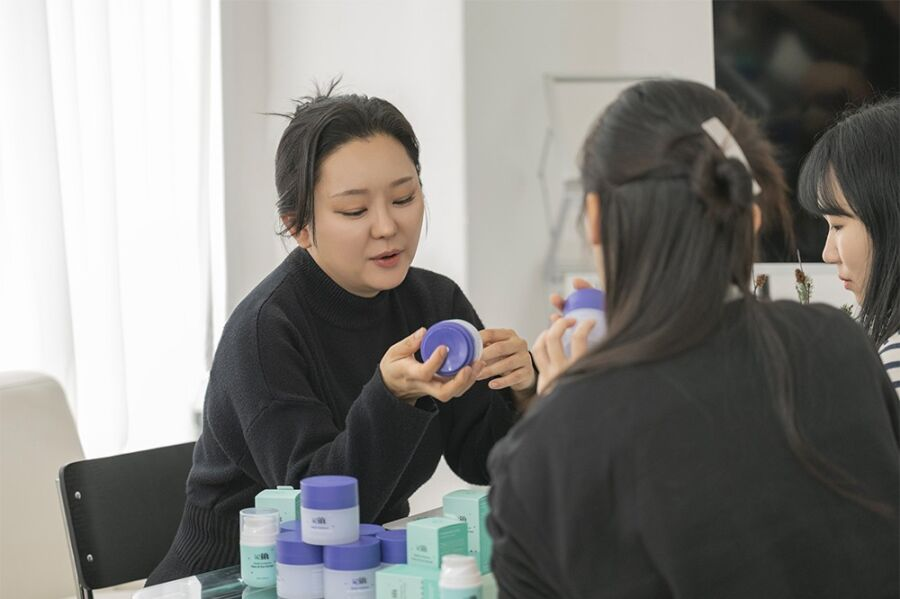
"Time is a cost when you're running a business," she said. "I couldn't sit still. Crowdfunding felt like the most productive thing I could do while the certifications were processing."
The first campaign hit its target. What followed was a strategic pivot: instead of leading with export, Kift would establish a proven performance record in the Korean market first, then use that validation as the foundation for international growth.
This sequence — crowdfunding in South Korea before scaling globally — is increasingly common among makers who recognize that a strong Wadiz track record provides the social proof, review data, and revenue baseline that international retail buyers and distribution partners look for. For overseas brands entering the Korean market, the same logic applies in reverse: a Wadiz campaign is one of the fastest, lowest-budget ways to generate real Korean consumer data before committing to full market entry.
"Wadiz isn't just a place to raise funds," Ha Seul-gi said. "It's where you and your supporters build the brand together."
How Narrow Targeting Produced Stronger Market Traction
Narrow targeting is a structural advantage in crowdfunding; a highly specific target audience creates highly resonant, benefit-driven messaging that drives emotional recognition and higher conversion rates.
Kift's target audience is precise: working mothers who don't have time to apply skincare properly — even when they work in an industry that sells it.
"After having a child, my life changed completely. I was working in beauty every day — creating and selling cosmetics — but I couldn't find time to properly care for my own skin. I started thinking: there must be other mothers like me. That thought became Kift."
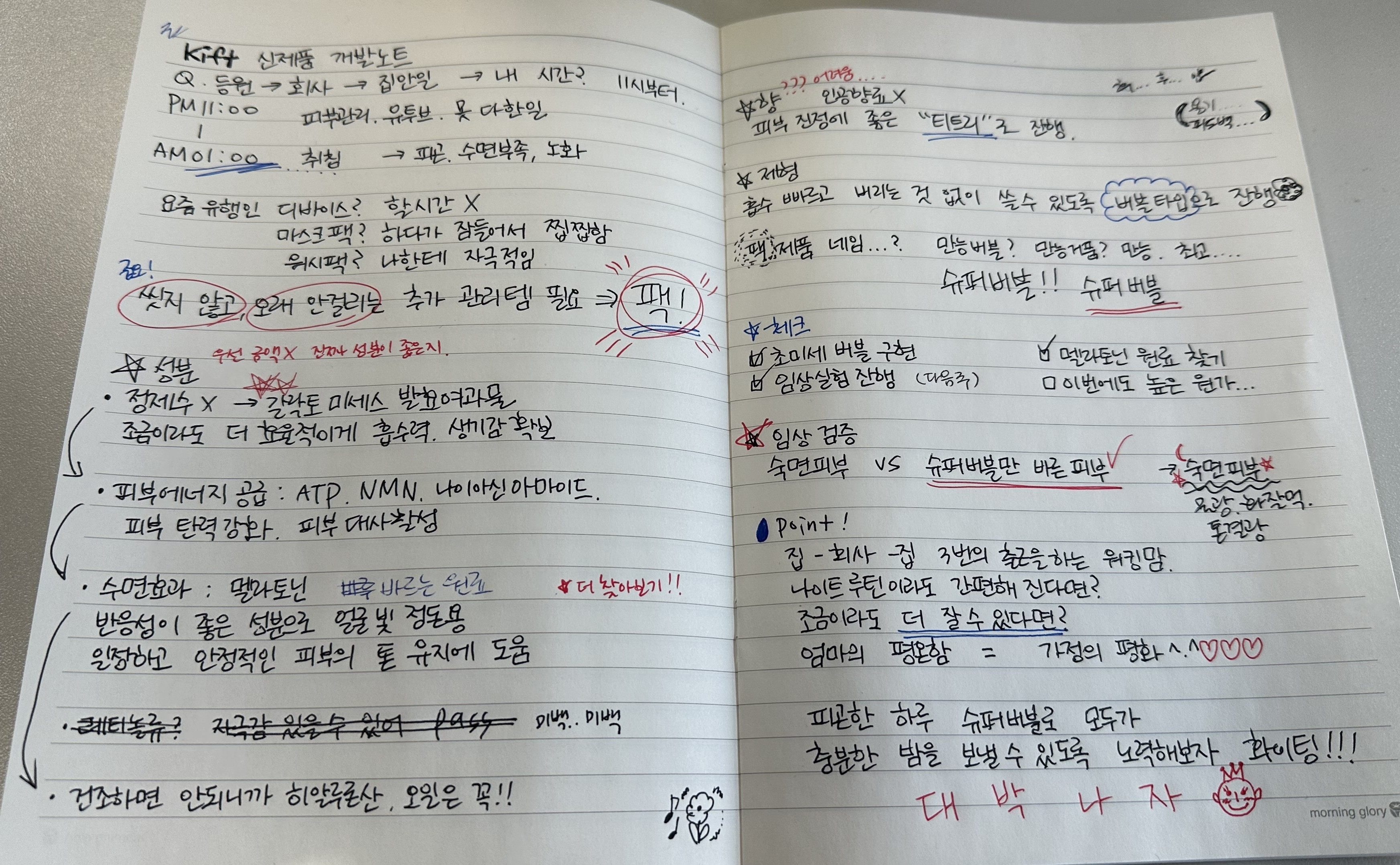
Narrow targeting is often treated as a risk in consumer product marketing, particularly for overseas brands entering a new market without an established local audience. The concern is that a smaller target produces a smaller market. Kift's results suggest the opposite: a highly specific target produces a highly specific message, which produces higher resonance among exactly the people who need the product most. In a crowdfunding environment where conversion depends on emotional recognition, specificity is a structural advantage.
The "Deep Sleep Effect" — Positioning a Korean Skincare Product Around a Real Pain Point
Wadiz supporters respond to intuitive, benefit-led language that mirrors their everyday emotional realities and feelings rather than cold, technical ingredient specifications.
Kift's signature positioning keyword — "deep sleep effect" — is not a conventional skincare claim. It emerged directly from the target audience's most acute pain point, and it illustrates a broader principle relevant to any maker entering the South Korean market.
Maker Ha Seul-gi draws a sharp distinction between the sleep deprivation she experienced as a professional and what she experienced as a working mother. "When work kept me up late, I could still find time to catch up. With a child, that option doesn't exist. You're running on four hours — indefinitely."
The product positioning followed from that insight: if you cannot give mothers more sleep, you can give their skin the appearance of having slept well. The "deep sleep effect" keyword was not built around a formula claim — it was built around a feeling the target customer recognized immediately.
How Kift Marketed a Multi-Functional Product in a Skeptical Market
Multi-functional cosmetics present a structural marketing challenge in any market, and South Korea is no exception. When a product claims to do many things, consumers tend to assume it does none of them well. The message fragments, and with it, the conversion case.
Kift resolved this not by reducing claims, but by shifting the frame entirely.
"We focused less on the fact that the product does a lot, and more on explaining why one product is enough."
Rather than listing features, the campaign story communicated what using the product would actually feel like — what specific change a supporter could expect in her daily routine. That narrative was supported by real user reviews and clinical data, building credibility incrementally throughout the campaign.
Kift also made a deliberate choice to use accessible language throughout. Wadiz supporters in South Korea span a wide demographic range. Complex terms were translated into simple analogies — rice, chef, food — so that any visitor to the campaign page could understand the value proposition without a beauty background.
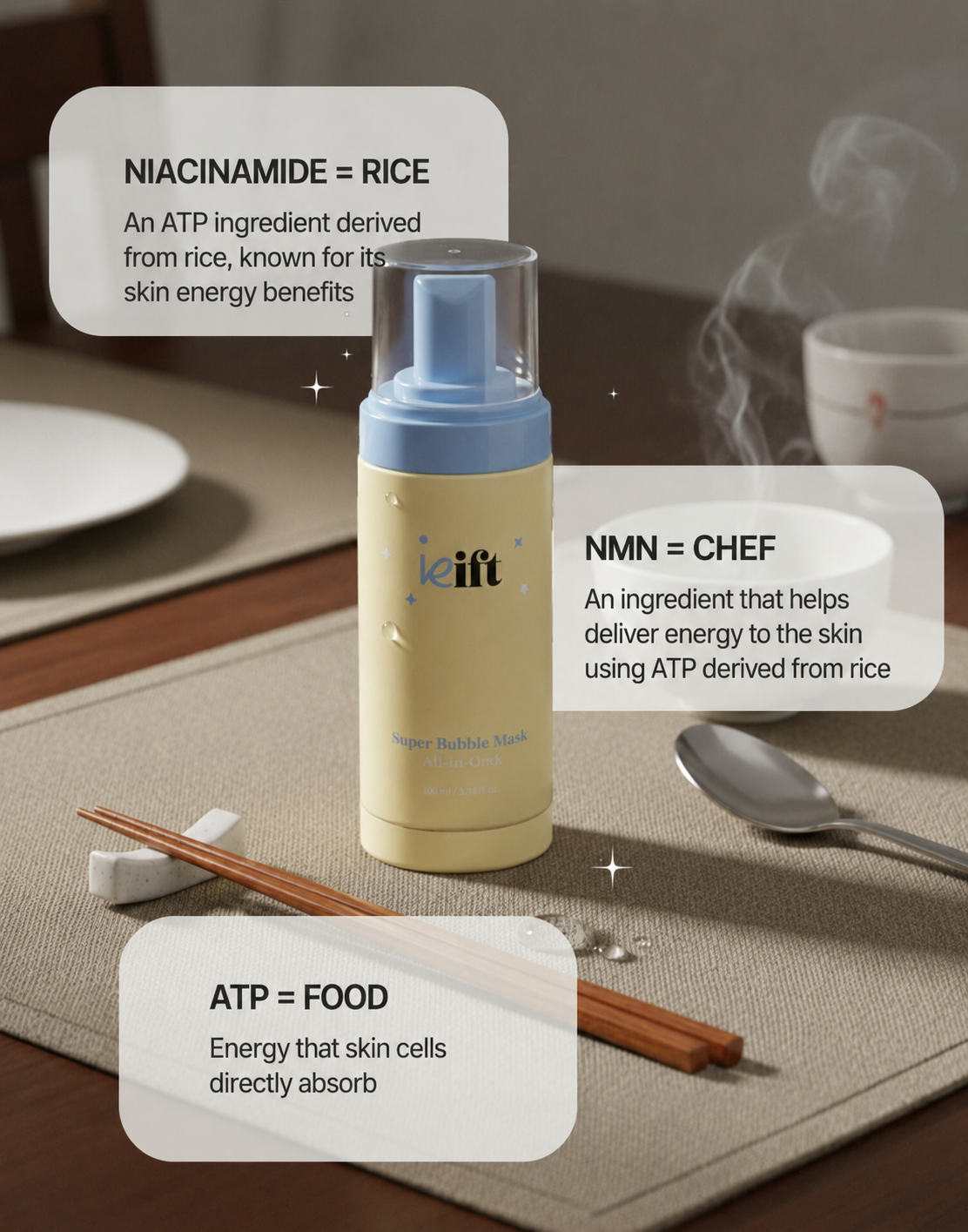
This is directly relevant to overseas makers preparing Korean-market crowdfunding campaigns: localization is not only a language translation problem.Content that works in a home market may need to be restructured — not just translated — to achieve the same conversion effect with Korean supporters.
Why Publishing a "Failure Compilation" Built More Trust Than Positive Reviews
One of Kift's most distinctive content decisions was a Latest News post titled "Failure Compilation.zip" — an unfiltered account of things that hadn't worked: formulations that underperformed, decisions that were reversed, features that were deliberately left out.
The reasoning was direct. No product works for every skin type. The maker's position is that the relevant question for a brand is not whether weaknesses exist, but whether the brand is honest about them.
"I wanted to share not just the good results, but the choices we made and the things we deliberately left out. The people who connect with that process become real fans — and they stay."
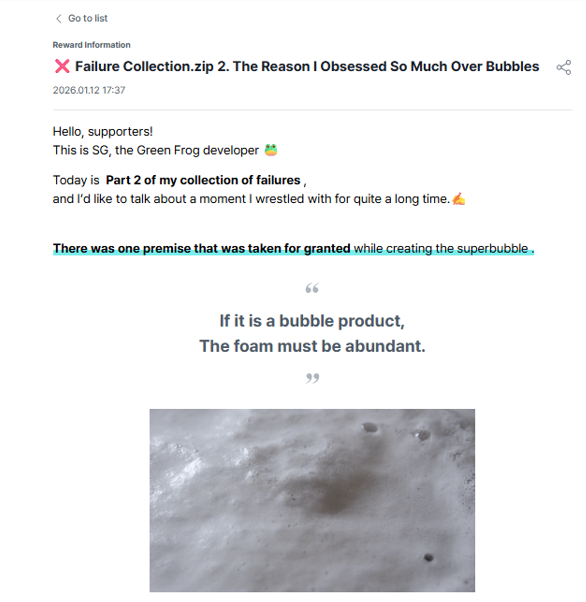
Transparency — about trade-offs, about failures, about product limitations — is one of the most cost-effective ways a small-budget maker can accelerate trust-building with a new audience.
What Kift's Journey Tells Overseas Makers About the South Korean Crowdfunding Market
Maker Ha Seul-gi's summary of what Wadiz gave Kift goes beyond revenue:
"Planning content, watching how customers respond, running ads, learning to explain your product's strengths and weaknesses more clearly — that process itself teaches you everything you need to know to run a brand."
Wadiz campaign is not primarily a fundraising event. It is a structured, low-budget market research exercise that produces real consumer behavioral data — purchase intent, demographic response rates, content engagement patterns — that cannot be replicated through conventional market analysis.
The maker also identifies a structural feature of Wadiz that is particularly valuable for unknown brands entering a new market: the platform places new and established brands on the same discovery surface. In most retail and distribution channels, established brands naturally get all the spotlight. But on Wadiz, even an overseas maker launching in Korea for the first time can compete for supporter attention on a perfectly level playing field.
"Not many platforms give the same starting line to a brand nobody has heard of and a brand that's been around for years," she said. "Wadiz is genuinely unusual in that way."
Frequently Asked Questions (FAQ)
Q1. What is "Latest News"?
A1.Latest News is a dedicated bulletin board that becomes active as soon as your Launching Soon project is officially published. You can post as freely and as often as you like, with no restrictions on formatting. It allows you to tailor your communication by directly filtering your target audience based on supporter types—such as All, Backers (참여), Liked (찜), Notify Me, or Support & Share. What is News?
Q2. Is a Real Product Photo Mandatory for Project Submission?
A2.Technically, there is no hard policy stating that you must submit a separate physical sample file to pass screening. However, you must include sufficient images or videos within your campaign story so that supporters can fully understand the reward's appearance, functions, and quality without exaggeration or false claims.
While high-quality rendering images are permitted for simpler categories (e.g., merchandise, digital assets), real product photos are strongly recommended in the following scenarios:
For overseas makers launching campaigns in South Korea, where establishing upfront supporter trust is crucial.
When you are introducing rewards that have already finished development or are currently in mass production.
For highly sensitive industries such as Cosmetics or Tech/Home Appliances, final physical imagery within the story is crucial for compliance.
➡️Is a photo of the actual item required when submitting a project?
Just Start on Wadiz.
Your step-by-step guide from preparation to funding success—available now at the Wadiz Maker Center.