[Transparency Report] May 2021 Transparency Report - Focused on Key Funding Data #TrustAndFundWithWadiz
Wadiz has been publishing a monthly Transparency Report since August 2020. The Transparency Report is a report that contains the details of reports submitted by members to Wadiz and the results of the actions taken in response, and is primarily structured around funding report data. Through this report, we aim to transparently disclose the actual data on how Wadiz responds to project issues, thereby creating a platform environment where members can use our service with greater confidence.
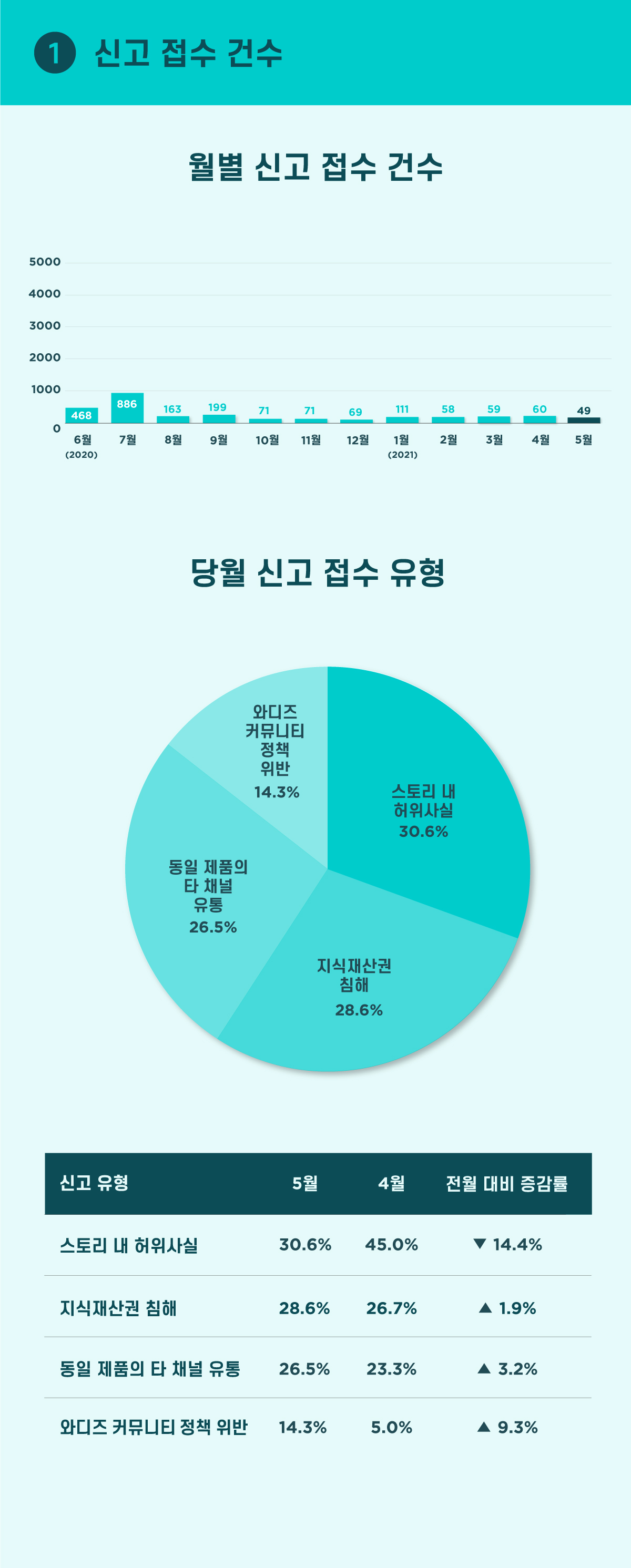
1. Number of Reports Received
- The number of reports received is measured based on the number of reports submitted via the ‘Report’ feature on the right side of the funding project page; if multiple reports are filed against a single project, each reporter is counted separately.
- Report categories consist of reasons that go against the purpose of funding or undermine the Wadiz community order, such as ‘Intellectual property infringement’, ‘False information in the story’, ‘Distribution of the same product through other channels’, ‘Community policy violation’.
- The number of reports received is a key indicator that directly or indirectly shows the potential risks that could cause damage and dissatisfaction to supporters.
2. Number of Reports for Coming Soon Projects
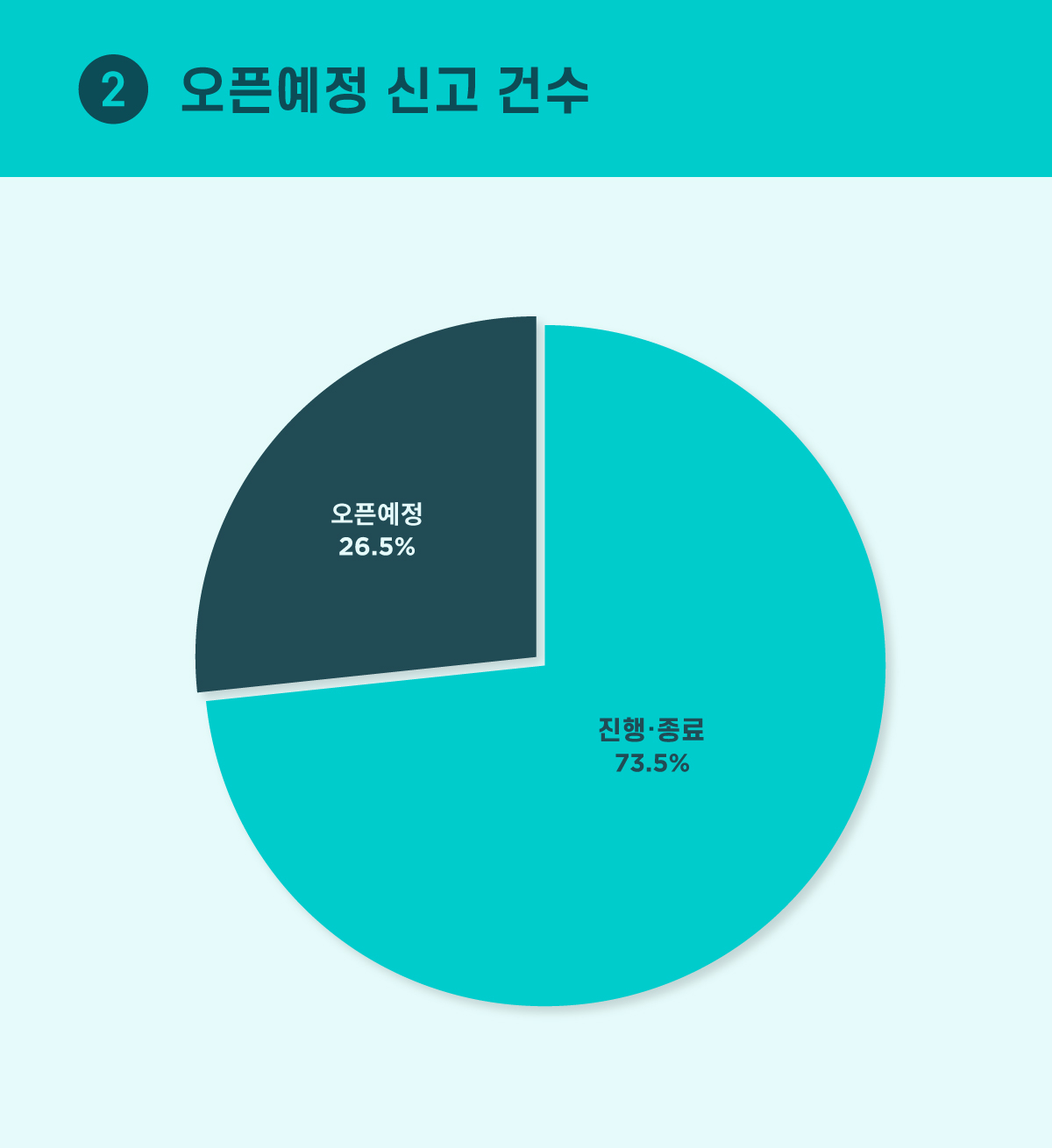
- ‘Coming Soon’ refers to a pre-launch service that allows supporters to preview the project story before the official funding begins; the Coming Soon project page provides a feature to sign up for notifications when the funding officially opens.
- Reports at the Coming Soon stage serve the function of detecting risks before the project officially opens.
- By receiving and processing reports at the Coming Soon stage, proactive issue resolution is possible before the official funding opens.
3. Number of Reported Projects
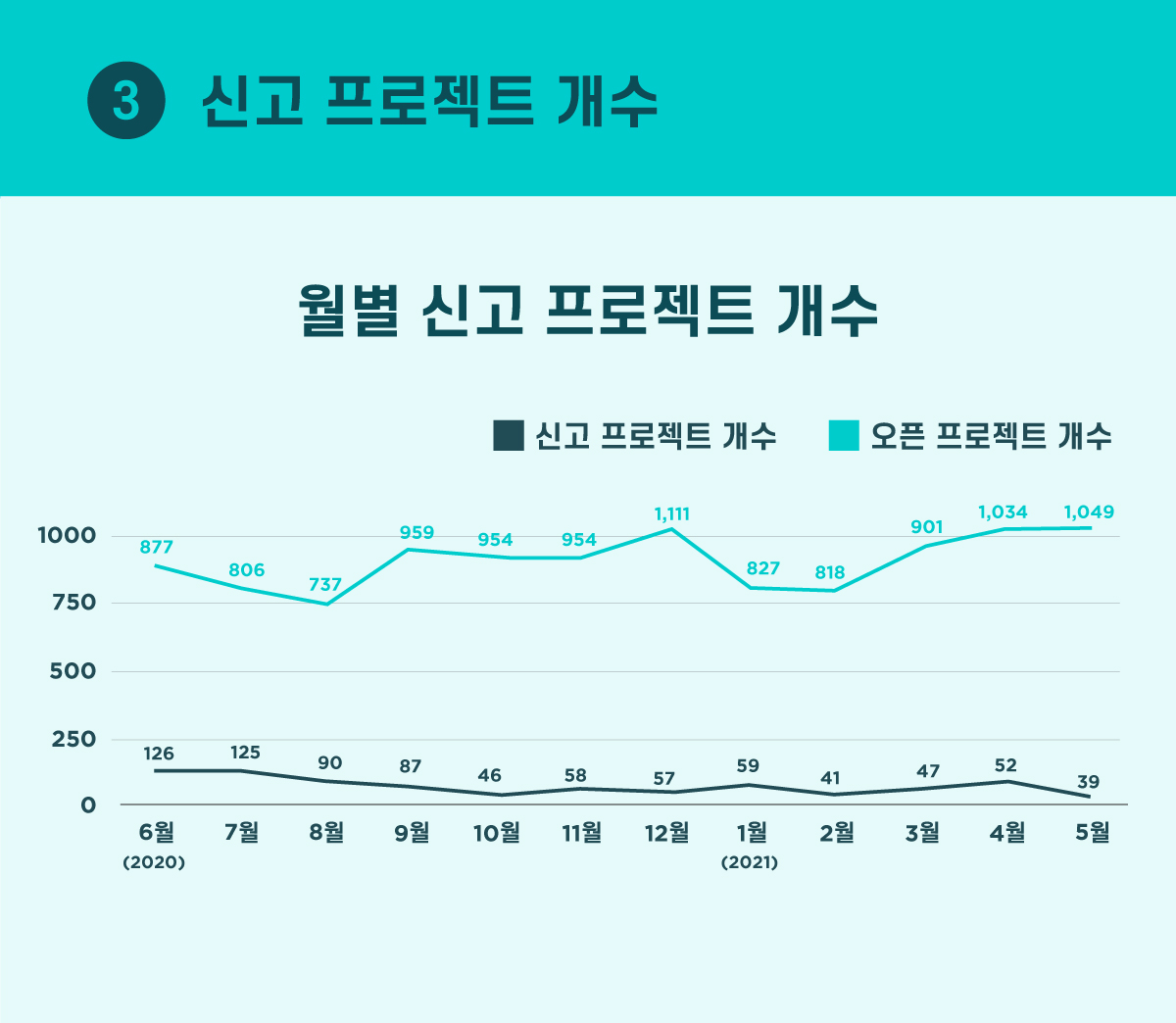
- ‘Number of reported projects’ refers to the number of projects with at least one report filed; even if multiple reporters file reports against the same project, it is counted as 1.
- The ratio of the number of reported projects to the total number of open projects is a key indicator representing the proportion of projects among all projects that could cause damage and dissatisfaction to supporters.
4. Statistics by Category of Reported Projects
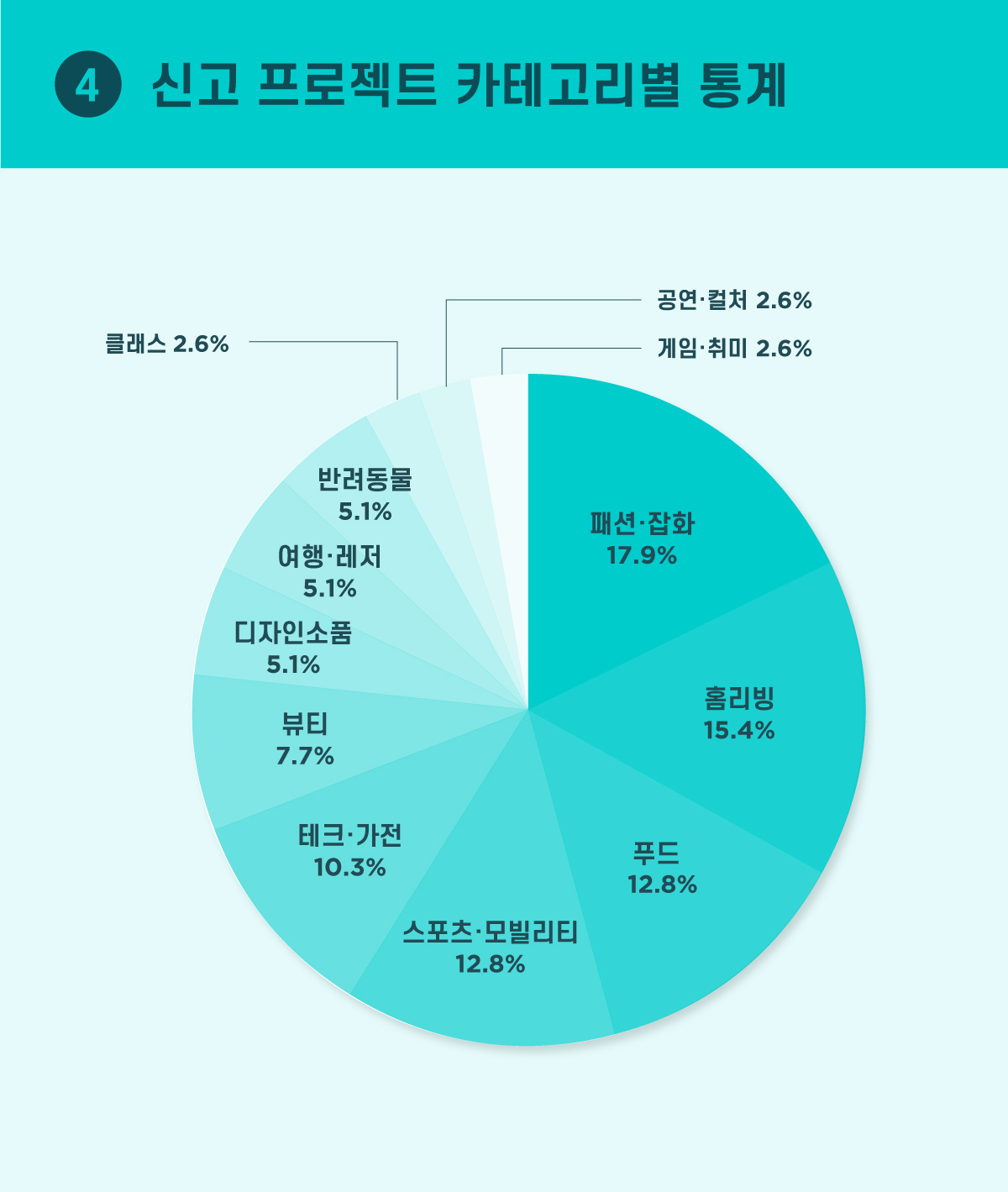
- This data classifies the projects for which reports were received in the current month by 17 funding categories.
- The existing ‘Education · Kids’ category has been split into two: ‘Class’, ‘Baby · Kids’.
5. Processing Results of Reported Projects
- All reports that meet the requirements are subject to a full fact-checking process.
- For projects where an issue is confirmed, actions such as refunding the funding amount and deleting inappropriate content are taken; if the reporting requirements are not met, no follow-up procedures are carried out.
- If the maker’s explanation is needed during the fact-checking process, a formal notice is sent to request it, and if necessary, the report and the request for explanation are disclosed to supporters as news.
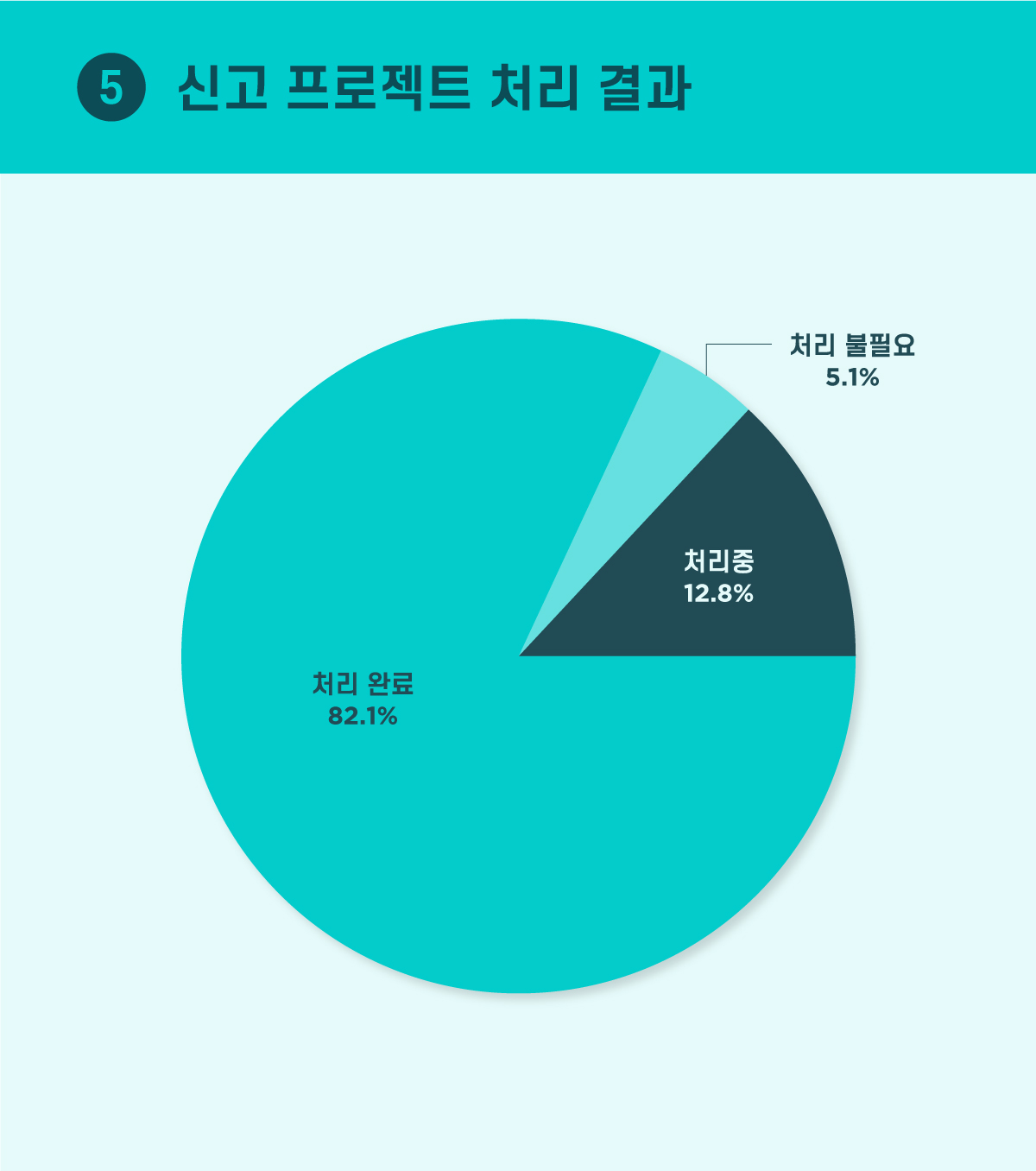
*Resolved: Cases where the report met the requirements and, after fact-checking of the report content, was determined to be ‘problematic’ based on policy, resulting in follow-up procedures such as refunding the funding amount, deleting inappropriate content, or canceling the project. Or cases where the report met the requirements and, after fact-checking of the report content, was determined to be ‘not problematic’ based on policy, and was concluded without further action.
*In Progress: Cases where the report meets the requirements and fact-checking of the report content is currently underway, or where it has been determined to be 'problematic' based on policy and follow-up procedures are in progress.
*No Action Required: 'Reports not meeting requirements' or 'Previously closed issues' where no follow-up procedures were carried out.
└ Reports not meeting requirements: Cases where the report did not meet the requirements, or where there was insufficient supporting evidence for the report content, making it difficult to proceed with follow-up procedures.
└ Previously closed issues: Cases where the report met the requirements, but the issue had already been fact-checked in the past as of the current month and was determined to be ‘no issue’ and closed, or where necessary actions had already been completed through ‘project cancellation’ or ‘refund of funding amount,’ making further follow-up procedures unnecessary.
If you have any questions regarding the above, please contact us at the official Wadiz email (info@wadiz.kr) and we will get back to you.