[Wadipay #17] “At first, wadiz felt like a battlefield. But in the end, I gained people.” Realist Bacon
What is Wadipay?
"Miracles don’t just happen."
We’re carefully compiling the success stories of makers who’ve successfully raised funding and spreading them far and wide, like Wi-Fi, to gift new makers with new miracles.
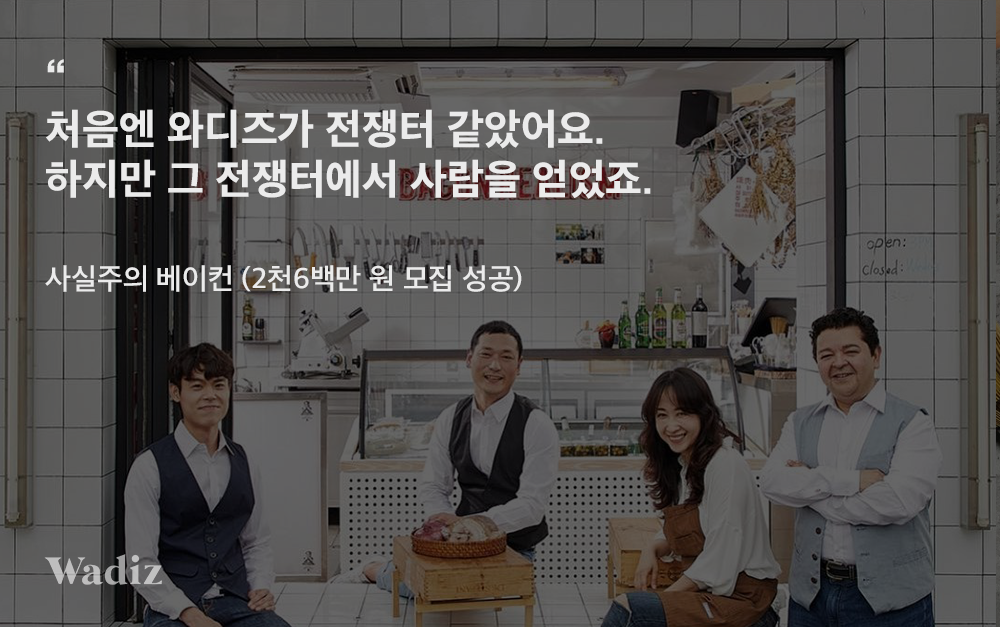
"With new projects popping up several times a day, it felt like a new battlefield.
But once I actually got started, I felt at ease. And at the same time, I gained a community.”
Even before we exchanged greetings, I could sense his philosophy in his free-spirited attire—as if he already knew exactly what style suited him. Throughout the interview, this maker’s eyes sparkled as he spoke about new things and the things he loved.
We present our interview with Nam Yoon-seo, CEO of Realist Bacon—a conversation that was so engaging, we found ourselves constantly asking follow-up questions, reluctant to bring it to a close.
[Realism Bacon Project]
- October 16 – November 6, 2018 (22 days)
- From 587 supporters
- Successfully raised 26,529,000 won for funding
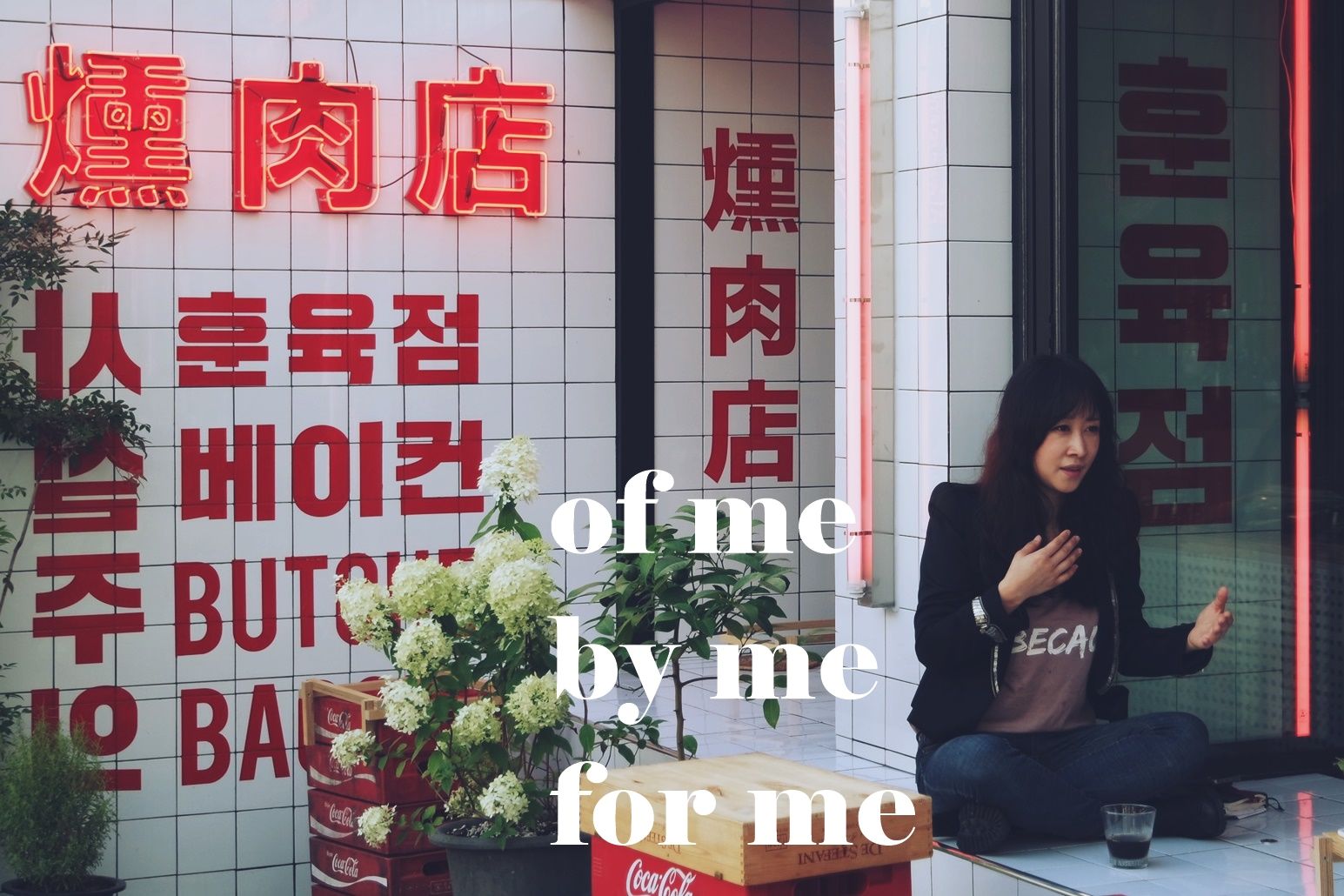
wadiz: Hello. Could you please introduce yourself as a maker?
CEO Nam Yoon-seo: Hello. I’m Nam Yoon-seo, CEO of Realism Bacon.
I hear you’ve been in the branding field for a long time.
I majored in film directing in college. I graduated around the time cable TV channels like Mnet were just emerging, so I started my career in media production and design consulting. I was also in charge of design and branding when Olive TV launched. After switching to the restaurant consulting field, I worked on branding projects for Hyundai Card’s Music Library “Understand Bar” and Geumokdang in Yeonhui-dong.
Although I changed jobs several times, I’ve been doing similar work within the broader framework of branding.
It sounds like you’ve enjoyed your work while gaining experience across various fields. Was there a specific reason you decided to start your own business?
I used to visit Hannam-dong frequently for my work on the Hyundai Card Music Library. There are so many quaint back alleys in that neighborhood, right? While wandering around, I stumbled upon a peaceful spot. One of them really caught my eye. As it happened, the shop that was there at the time was about to move out. So I signed the lease right away. After that, I quit my job and opened the restaurant.
So you found the space before you even decided to start a business. It feels like you started out somewhat on a whim.
I’ve always loved food, but while working at Olive TV, I developed a deeper interest in eating and drinking. From that point on, I’d vaguely thought, “Someday, I’ll open a restaurant.” I think that dream combined with that neighborhood to create some synergy.
That’s how “Smoky Lovers,” a barbecue restaurant, came to be.
Yes, it was an American barbecue restaurant. I chose it not only because I love barbecue, but also because it’s a niche that others don’t easily venture into.
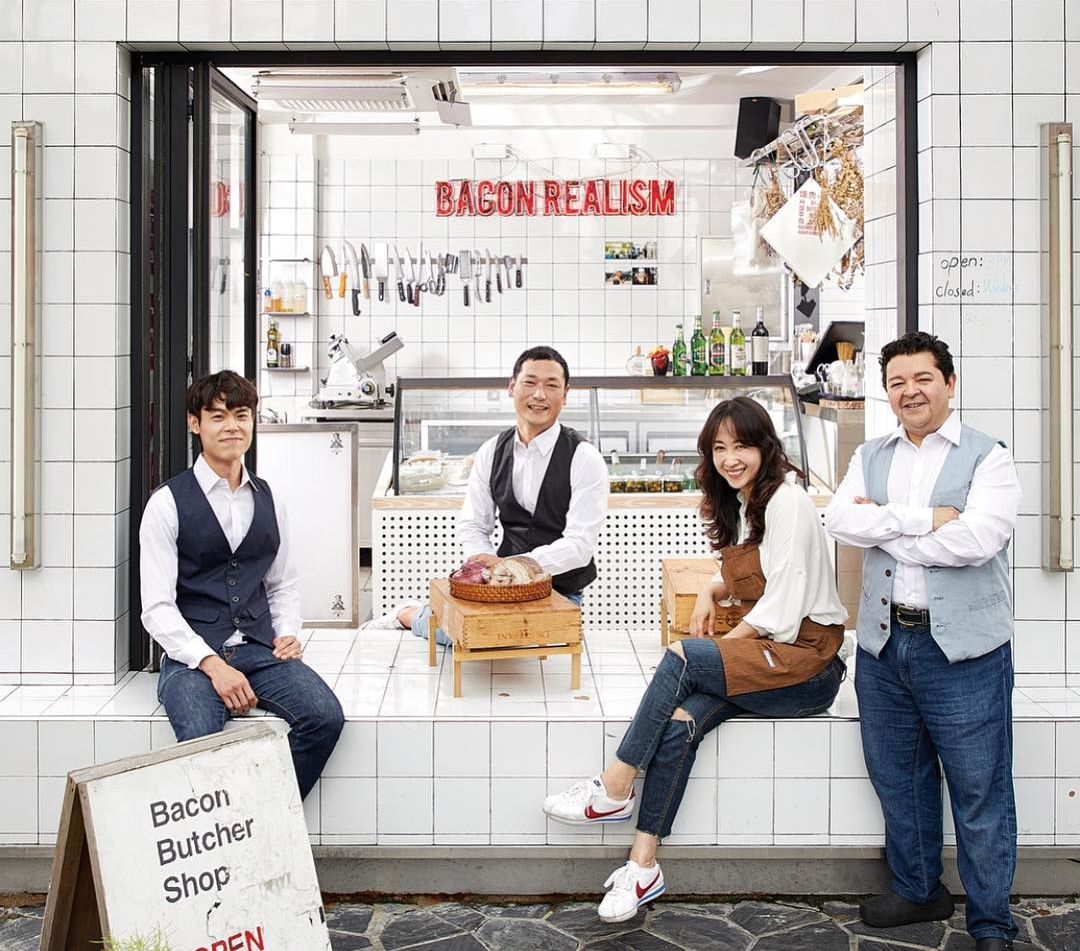
You mentioned that the owner, a Korean chef, an Italian chef, a French chef, and a musical theater actor all came together to create it. That’s a unique combination.
We came together for one reason alone: we wanted to take on the challenge of a new genre. Not many people in Korea had been exposed to the charcuterie genre, and it was difficult to find experienced chefs in that field.
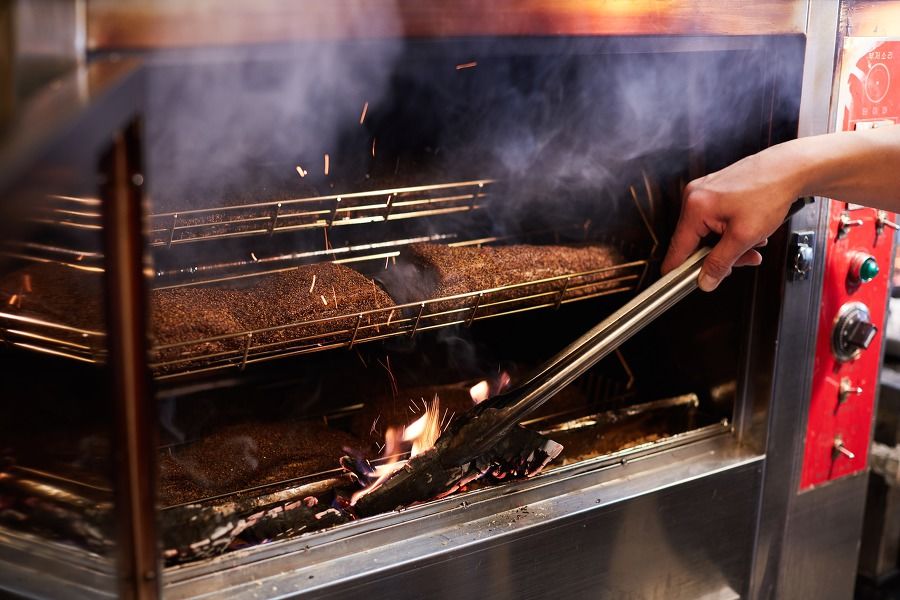
While running Smoky Lovers, I watched videos by international YouTubers and kept practicing new menu items. The culinary know-how I practiced and mastered over those three years is fully incorporated into Realist Bacon. It was only possible because I enjoyed it.
So, was “Realist Bacon” born at Smoky Lovers?
I visited a restaurant run by a chef I’d met while doing food service consulting and had some incredibly delicious meat. It turned out to be bacon. While chatting with the Filipino chef who prepared that bacon dish, I, too, fell in love with the charm of bacon.
We introduced a bacon menu at Smoky Lovers, and it proved more popular than our other BBQ items. Many customers even asked us to sell it separately. That’s how “Realist Bacon” got started.
Smoky Lovers was also very popular, but I decided it was too difficult to run both businesses simultaneously, so I’ve closed the restaurant. However, to accommodate customers who still visit Smoky Lovers, I’m continuing to operate the BBQ catering business, and right now, I’m fully focused on Realist Bacon.
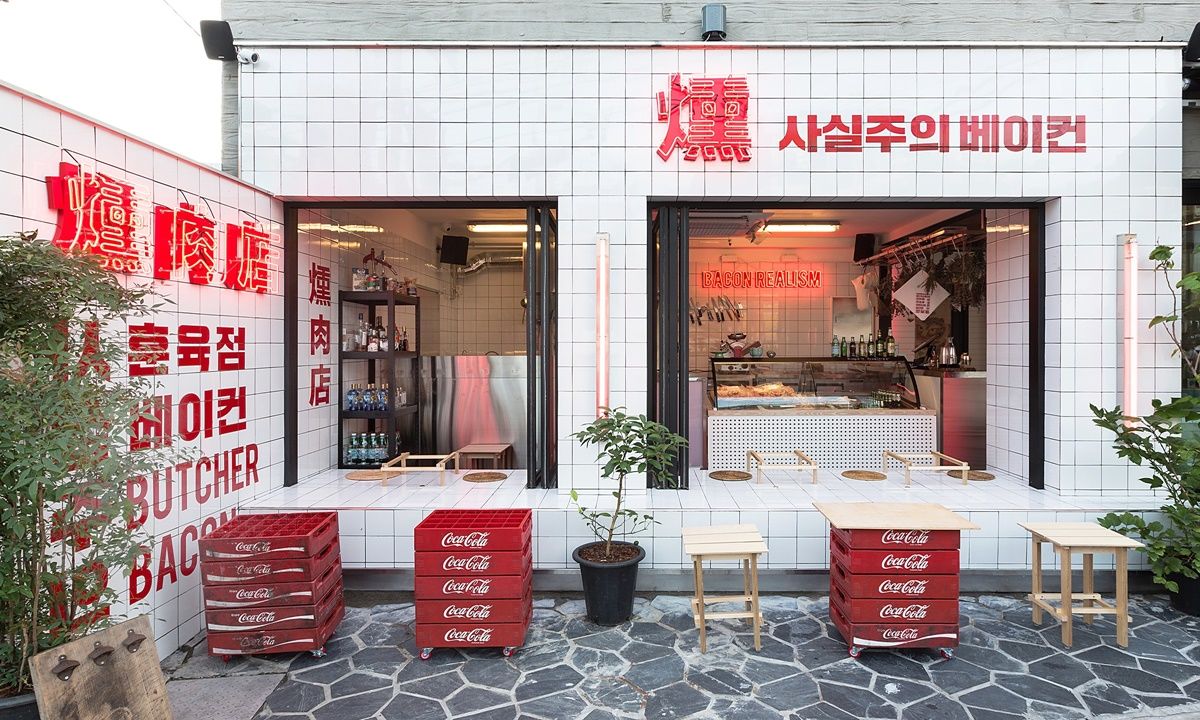 I also really liked the name “Realist Bacon.” It’s catchy, and it clearly conveys our commitment to presenting bacon in its most authentic form.
At first, there was a lot of opposition from those around me. I love art, and among all genres, I particularly love realism. I’m also a fan of the realist painter Francis Bacon. But since I couldn’t exactly name it “Francis Bacon” (laughs), I came up with the name “Realist Bacon” based on the idea that our bacon is all about presenting bacon exactly as it is. People around me tried to dissuade me, saying it was too provocative a name, so I did hesitate, but I pushed through with it in the end.
I really liked it. From the name to the shop’s visuals, the strong impression it made ensured it wouldn’t be easily forgotten.
Having worked in branding for a long time, I’ve come to realize that visual appeal is crucial. Since we didn’t have a strong financial foundation, I figured we needed to emphasize the visuals to attract a large crowd.
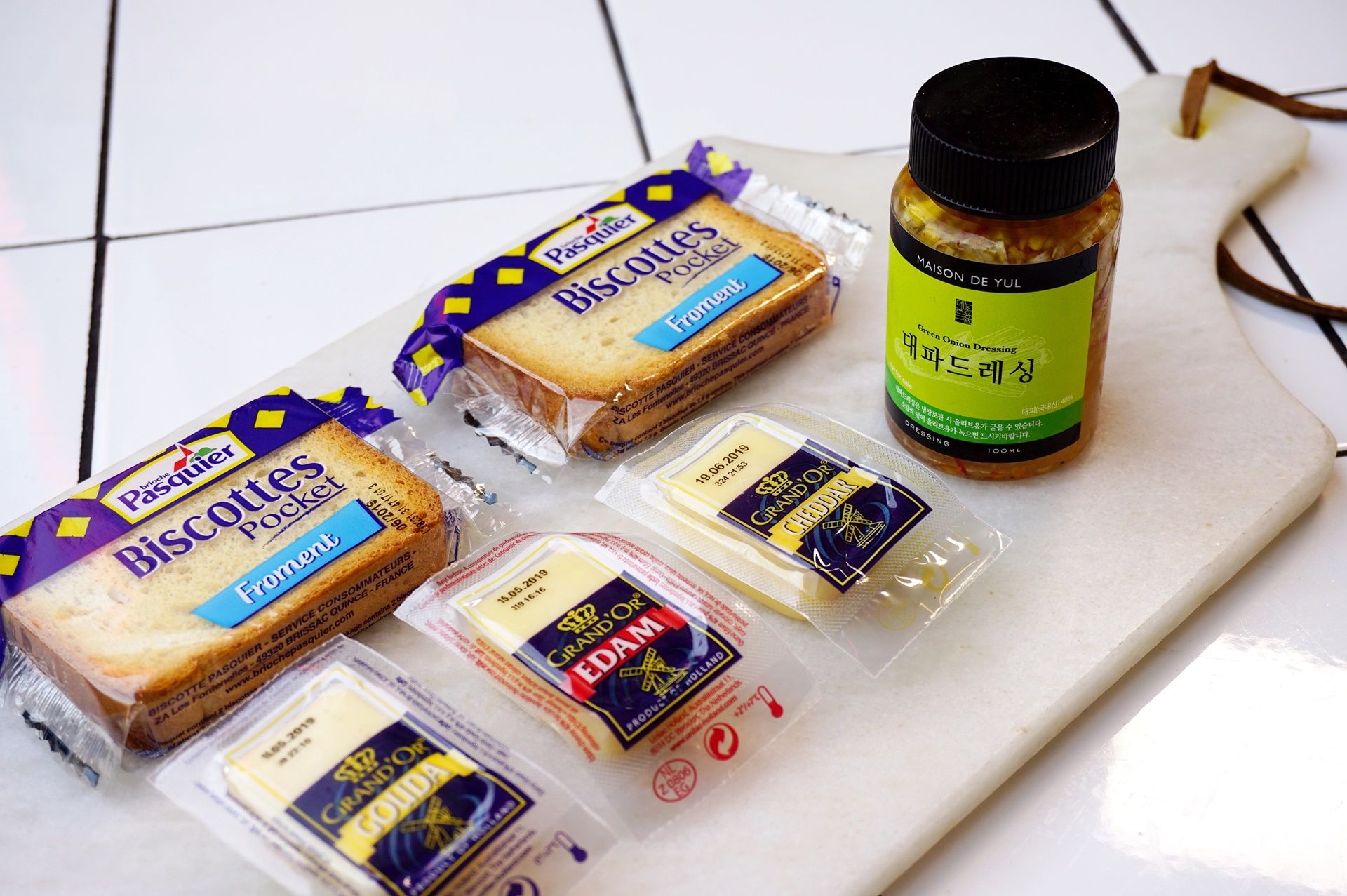
With dressings, three kinds of mini cheeses, and two biscuits,
While visuals are important for capturing people’s attention, the food itself must be delicious above all else to win the hearts of those we’ve attracted. Bacon is an ingredient that’s burdened by the stereotype of being “junk food” and the inherent limitation of being a food that people can easily get tired of.
The key is to keep creating new bacon dishes. Chefs who specialize in Korean, French, and Italian cuisine collaborate to develop the menu. Since bacon is the only main ingredient, we have to focus on the other ingredients to keep people coming back for more.
One of those elements is the sauce. We make sauces that are well-suited to Korean palates. Since our head chef specializes in Korean cuisine, he adds Korean flavors to Western-style bases to create sauces unique to Realism Bacon.
Perhaps that’s why so many supporters in their reviews have praised the sauces just as much as the bacon itself.
When a chef specializing in a single field cooks alone, there are preconceptions that are hard to break. However, when chefs from various fields share their knowledge and fuse it in diverse ways, we can continuously develop new menu items. Even as the CEO, I shouldn’t be stubborn. I don’t think of myself as the owner; I simply focus on my role and strive to uphold the two standards we’ve established.
1. The customer will be satisfied
2. We must enjoy ourselves
The chefs at Realist Bacon say they eat and drink a lot together at various restaurants and have many conversations to develop new menus. That’s why CEO Nam Yoon-seo refers to her colleagues as “family.”
“I think of my colleagues as family. We’re people who eat meals together, after all.”
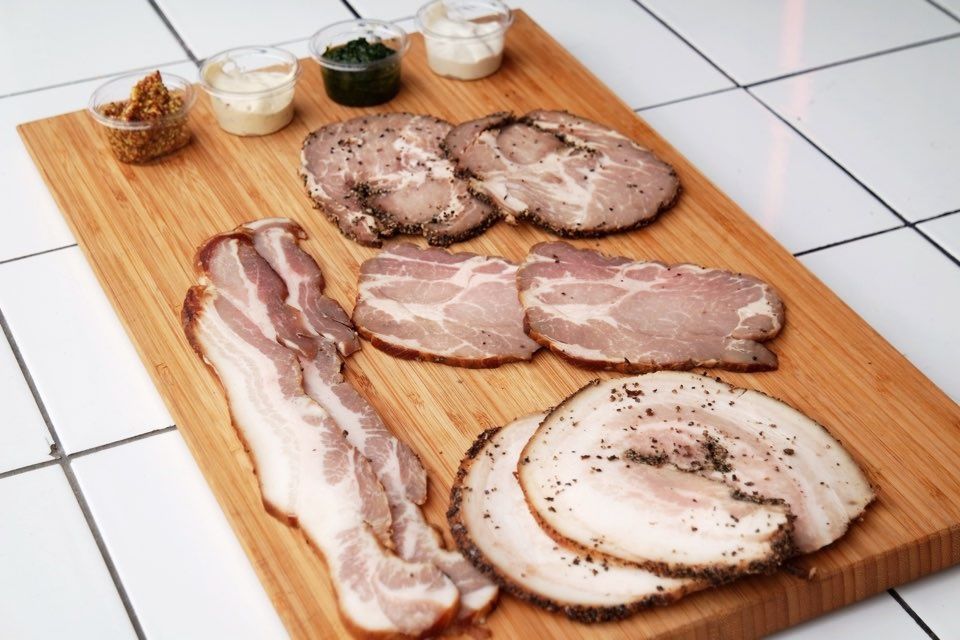 It seems you enjoy creating new things rather than resting on your laurels. Has Bacon changed a lot since its early days?
The bacon I first tasted had a lot of additives. We tried to remove them all.
Is there a specific reason you went to such lengths?
I found that eating a lot of it made my stomach feel uncomfortable. To figure out why, I listed all the ingredients used in bacon production and discussed them with our chefs.
The culprit was sodium nitrite. To put it nicely, it adds umami, but this flavor ultimately weighed heavily on my stomach and made me get tired of it quickly. I realized that for Realist Bacon to stand the test of time, we had to replace this ingredient with something else.
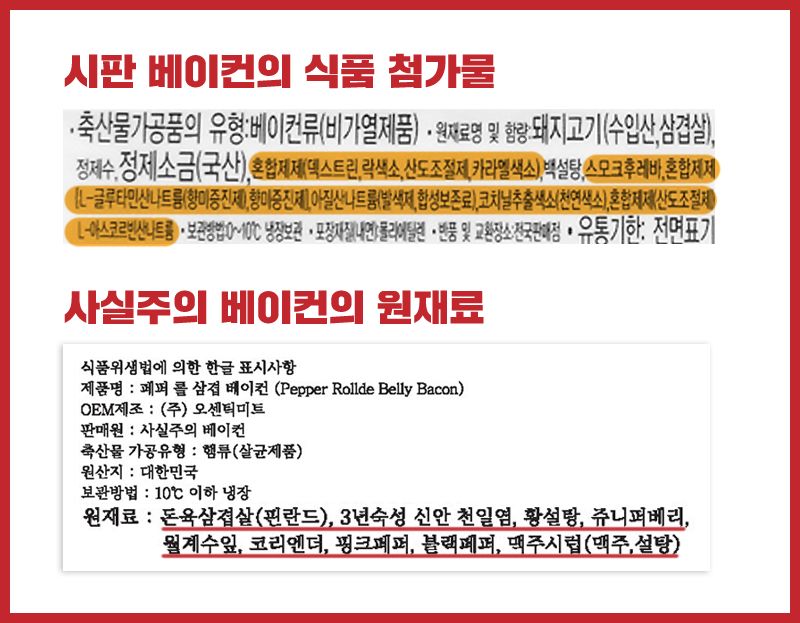
The Difference Between Store-Bought Bacon and Realist Bacon
However, it’s not easy to remove sodium nitrite from processed meats. After all, it’s an additive that not only gives the product an appetizing color but also extends its shelf life.
I tried to find a substitute, but it wasn’t easy. That’s when I thought, “Sodium nitrite definitely didn’t exist back in the old days, so how were people able to preserve food for so long?” So I looked through some old records. That’s when I came across cilantro seeds.
Apparently, the reason cilantro is so widely consumed in Southeast Asia is that the climate is hot and humid, so it was used to preserve food and prevent stomach upset. So, when I tested it with cilantro, the shelf life of the bacon actually did get longer.
Now, by blending cilantro with other ingredients, we’re gradually extending the shelf life even further.
Your passion is incredible. It’s both “realist bacon” and “evolutionary bacon.” The funding amount has also evolved day by day, reaching a 2,600% achievement rate.
I think the supporters really took a leap of faith. Even though they visited our physical store, we met many customers who were unfamiliar with bacon dishes.
Seeing so many people participate without even seeing the product in person really made me realize just how many supporters are open-minded and willing to take a chance.
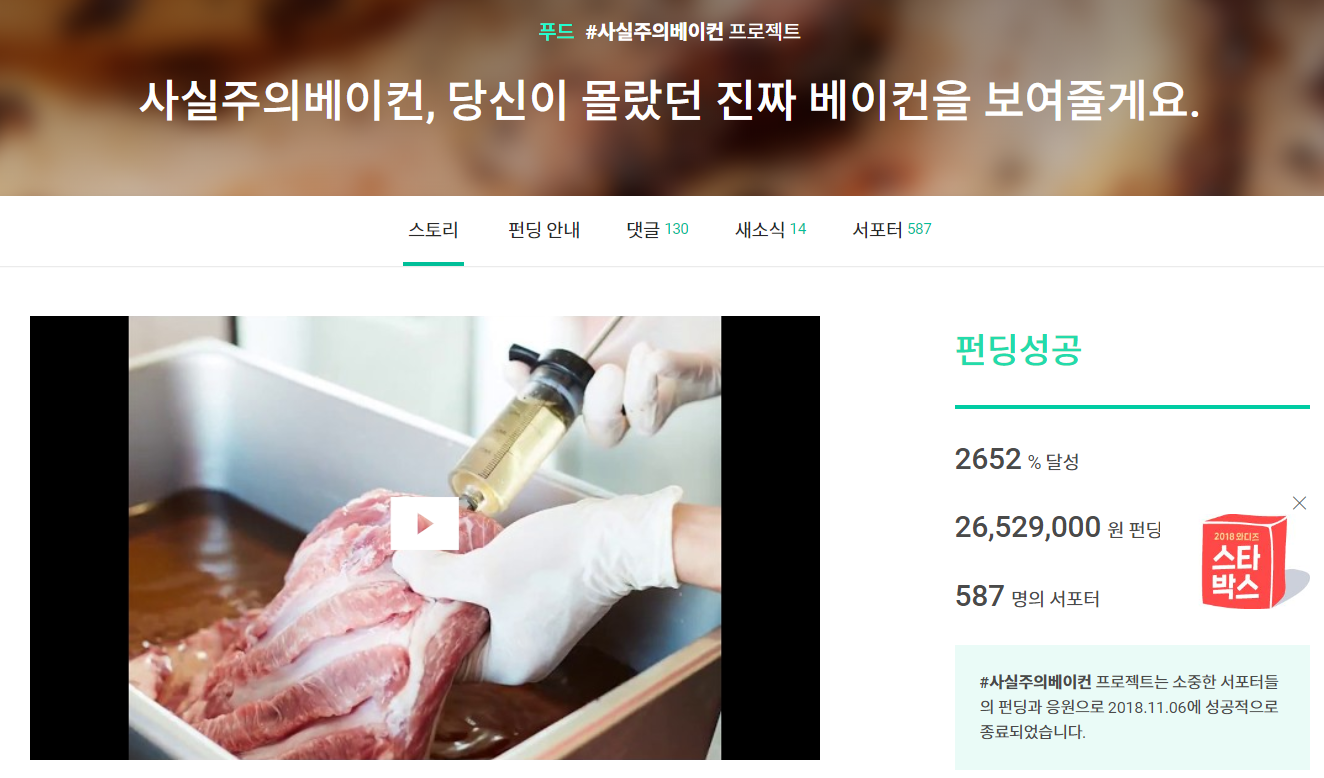
What do you think was the secret to its success?
When I analyzed the supporters who participated in funding, I found that about 60% were from outside Seoul. Since it’s naturally harder to find these kinds of foods in regional areas compared to Seoul, I think that’s why so many people from those areas participated.
We also had a lot of male participants. Based on our experience with Market Kur* and Hello Ne*, we had assumed our primary target audience was homemakers, but on wadiz, many men funded the campaign for convenient snacks or bar snacks.
It was a joy to work on this project because so many people left comments saying they’d try different ways to enjoy the products even with just a little guidance.
The delivery crisis that hit midway through the campaign must have been quite a shock.
Since we had experience handling the volume during Chuseok and Seollal, we already had a system in place for large-scale shipments. However, we didn’t anticipate the delivery disruption. For those who lived within driving distance, I delivered the packages personally, and for those who didn’t, I took them to the post office to mail them. These are, of course, issues I had to resolve myself.
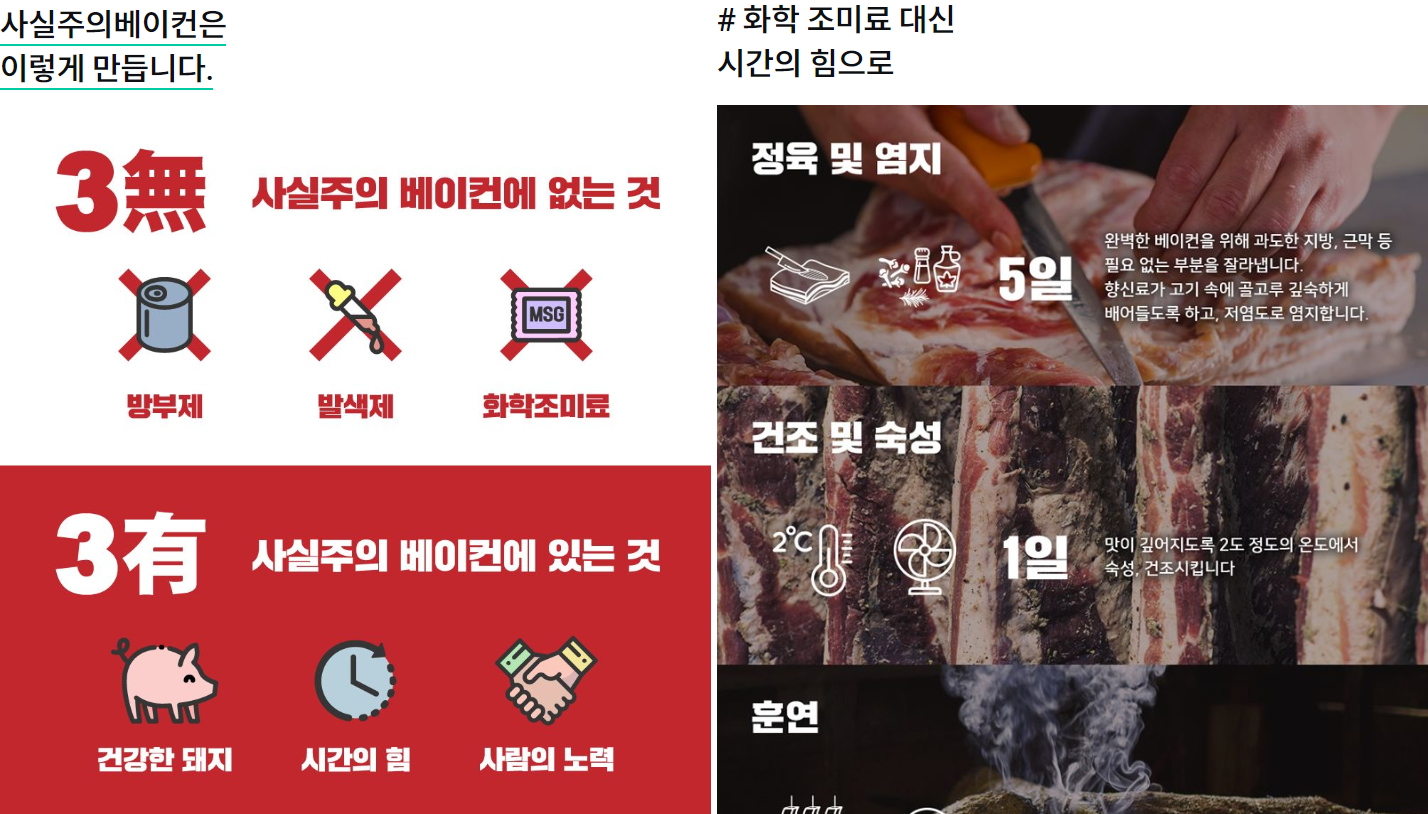
Using imagery to highlight the unique aspects of Bacon’s realism
Since this was a project aimed at shattering preconceived notions about bacon, writing the story must have been no easy task.
It was really, really hard. I felt completely lost about where to start and where to end. Then I started thinking, “What would our supporters be most curious about?” I realized I needed to let them know, “The processed meat products you’ve been eating with concern are changing like this.”
I think the results of the funding campaign speak for themselves. Fortunately, many people related to our story, and that led them to participate in the funding campaign.
Didn’t you do any separate marketing?
We kept promoting it on our blog and Instagram. Word of mouth spread naturally through our Pledge of Support event, and many people who had marked our project as a “favorite” received a notification on the last day of the funding period and participated in large numbers.
* When a supporter marks a project as a “favorite,” we send them a notification on the project’s final day!

You mentioned receiving a lot of inquiries from various sources after the funding ended.
After the funding, we received many B2B proposals asking us to supply the bacon we made. While it’s difficult to meet their price points, making it hard to move forward, I felt proud just knowing that we received so many offers—it showed people really appreciated our bacon.
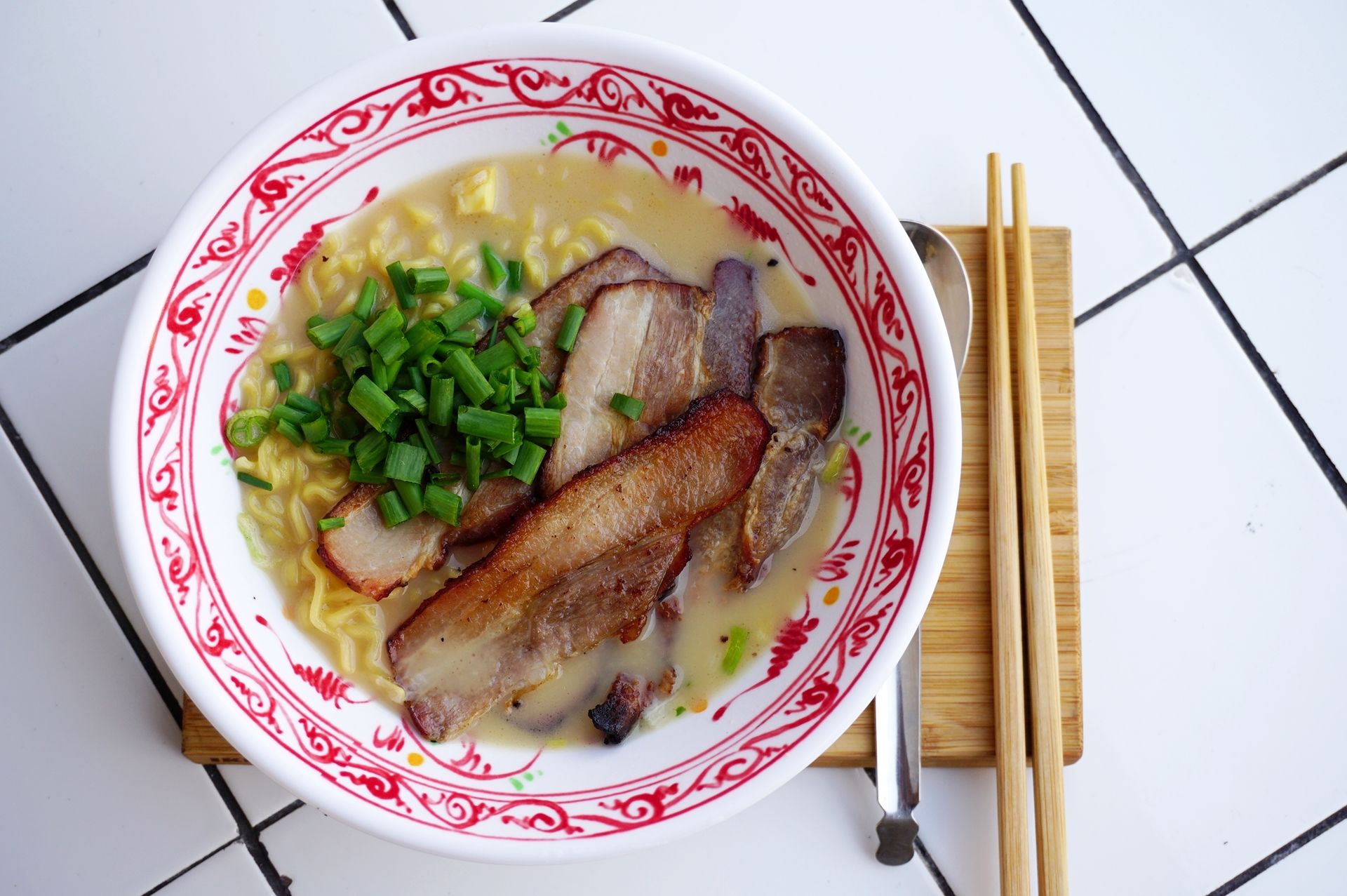
It seems like this is the result of all the hard work you put in. You must have gained a lot of insights from your efforts as well.
I was particularly disappointed with the visuals. Toward the end of the funding period, we switched the main image from raw bacon to a photo of it looking delicious, and the new image was much more effective. I regretted it a little. “Ah! I should have shown them the appetizing photo from the very beginning.”
After all, the fact that our “realist” bacon is different from conventional bacon is something we could have conveyed through the Story. Ultimately, supporters will see an image of the finished dish—one that looks delicious—and feel a sense of happiness through that, which is what motivates them to engage in funding.
While looking at other funding campaigns on wadiz, I also thought a lot about the paradigm of distribution.
CEO Nam Yoon-seo mentioned that she had participated in many other projects before launching this one. She laughed heartily, saying she couldn’t help it because there were just so many delicious and appealing food products out there. (Especially when she talked about the diet tteokbokki project.) While the taste was certainly a factor, she seemed particularly impressed by the convenience.
I noticed that most of the people who order our bacon are those who don’t have time to cook every meal from scratch. I thought we needed to make everything even more convenient for them. So, we shared simpler cooking instructions and included our bacon sauce in the package.
I’ve also been thinking a lot about packaging. Since there are so many small households these days—including single-person households—we reduced the package size to 200g, but we’ve received feedback that even that’s too much. I’m considering creating a 100g package.
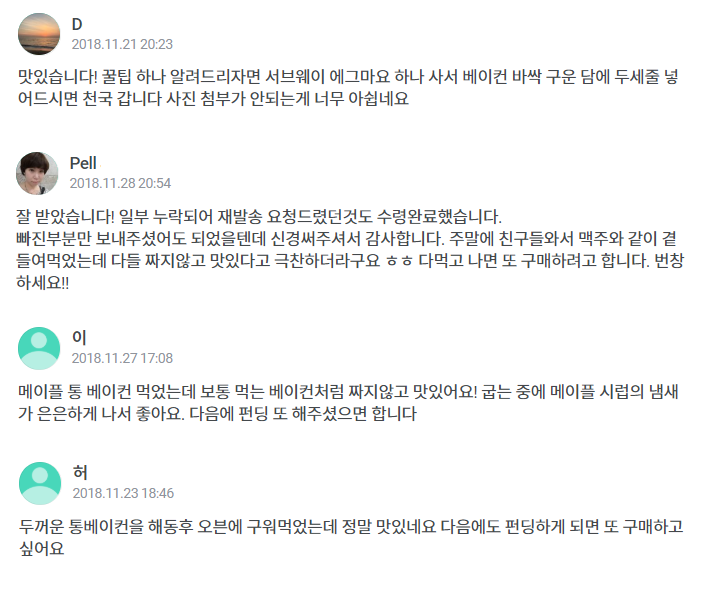
Supporters who voluntarily leave review comments
This single funding campaign gave me a lot of insights—and presented me with some challenges at the same time.
I don’t know about other makers, but I was scared at first. With new projects popping up several times a day, it felt like a new battlefield. But once I actually got started, I felt at ease. At the same time, I gained something valuable: I met backers who cheer the philosophy and products of Realist Bacon. I think that’s the biggest reward.
I’m sure our supporters will be satisfied to discover a bacon they can trust and enjoy. How do you envision Realist Bacon growing as a brand in the future?
First, our goal is to introduce Realist Bacon to more people. We plan to create products across a range of price points to appeal to a diverse consumer base.
And what we value most is the question, “How can we live better lives together with others?” Everyone is living such hectic lives these days. That’s why people often resort to instant foods just because they’re convenient. But it is possible to have food that’s convenient, delicious, and healthy all at once.
Realist Bacon aims to be exactly that kind of food—we want to help as many people as possible live a little better.