[Wadipay #18] "I was planning to wrap everything up and move to the U.S. Then..."
What is Wadipay?
"Miracles don’t just happen."
We’re carefully compiling the success stories of makers who’ve successfully raised funding and sharing them widely, like Wi-Fi, to bring new miracles to the next generation of makers.
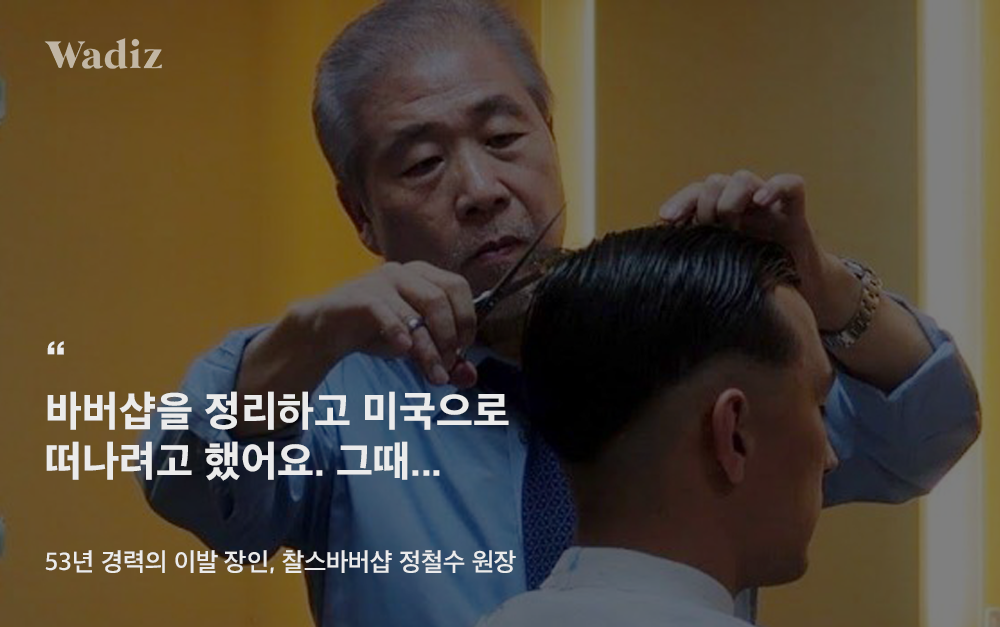 "This is my first time writing a review. It’s nothing short of perfect… I’m simply amazed." Amid beauty salon reviews dominated by advertisements, there’s one shop that stands out for its heartfelt reviews and an astonishing 4.9-star rating out of 5. It’s Charles Barber Shop, whose 53 years of experience in styling countless people’s hair has earned it recognition even among the younger generation.
The reason Charles Barber Shop has been loved by people of all ages—from young children to seniors in their 90s—is thanks to the brilliant collaboration between a barber with 53 years of experience and a young man who recognized his talent.
[Charles Barber Shop Project]
- December 20, 2018 – January 13, 2019 (25 days, ongoing)
- From 246 supporters
- Currently raising 20,616,000 won for funding
wadiz: Hello. Could you please introduce yourself?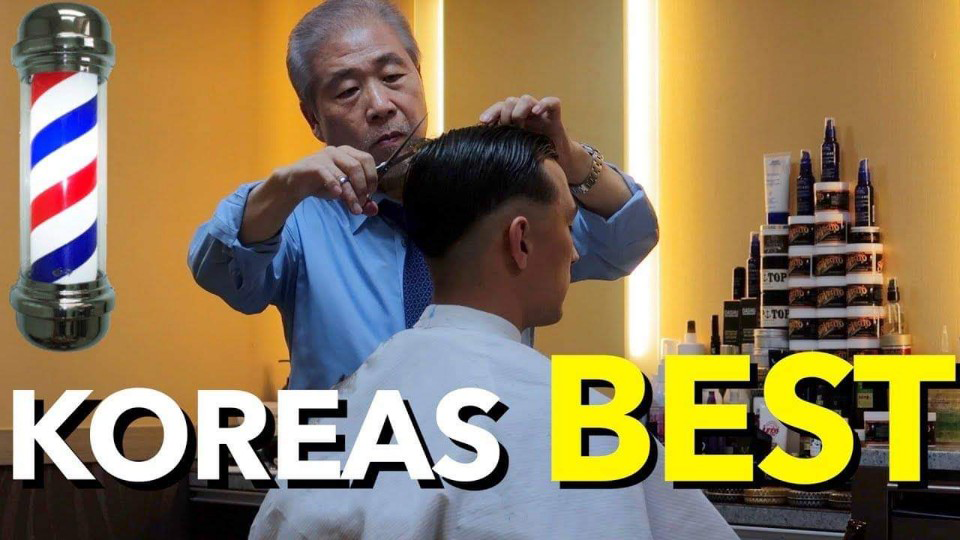 Owner Jeong Cheol-su: Hello. I’m Jeong Cheol-su, owner of Charles Barber Shop. I’ve worked at the Chosun Hotel and the Shilla Hotel, where I was responsible for cutting the hair of prominent figures in politics and business.
You have a career spanning a whopping 53 years. When you’ve stayed in one place for so long, it’s not easy to set out for a new venture. It can be scary, too. Leaving behind a hotel barbershop to open a new one—that must not have been an easy decision to make.
Actually, at my age, I was more driven by a desire to share my skills than by a desire for money. I wanted to teach these skills to more young people. I was just thinking that it would be great to grow the barbershop with a partner who recognized my sincerity—and who also had a youthful sensibility—rather than someone who was only in it for the money. That’s when I happened to meet CEO Kwon. We naturally connected, and I saw his passion.
I heard that before Charles Barber Shop was founded, you were planning to move to the United States.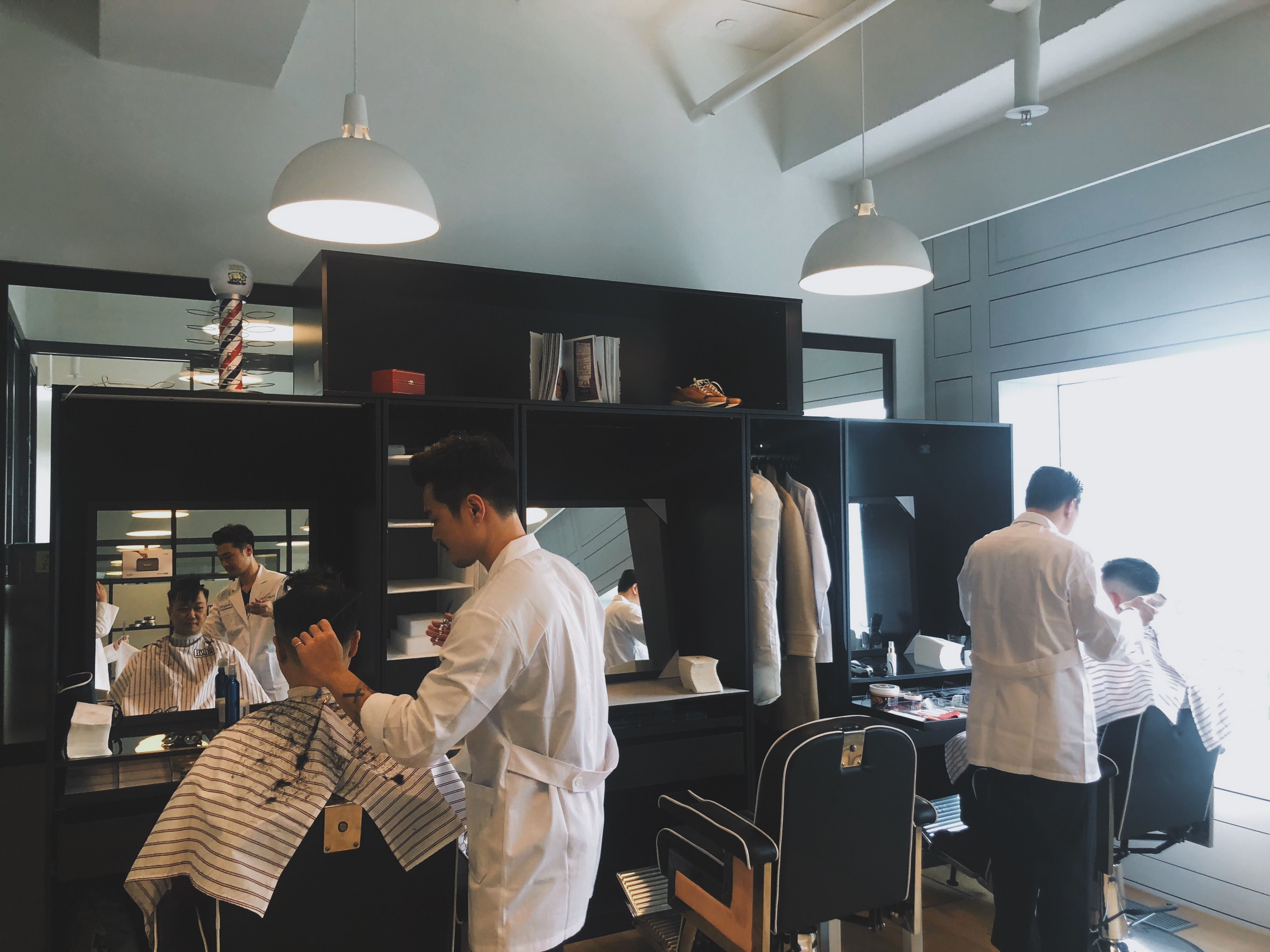 Before opening Charles Barber Shop in Hongdae, I was running a barbershop inside a hotel. Then I ran into financial difficulties. To be honest, I was considering moving to the U.S., where I have relatives, to find a job at a barbershop there. Just then, the chairman of the building where Charles Barber Shop is now located—a man who had been my regular client for over 30 years—reached out to help, offering to provide a space for the shop. After much deliberation, I decided to stay in Korea so I could be close to my family and grandchildren. That’s how Charles Barber Shop came to be established at the entrance to Hongdae.
It must have been very rewarding to have served your customers with such sincerity for 53 years. I’m curious about what first led you to pick up a pair of scissors.
Even back when I was in high school, barbershops were overflowing with men. Business was really booming. Coincidentally, the owner of a nearby barbershop asked me to help out a bit—fetching water from the stream, cleaning, and doing other tasks. Since I had no choice but to work in the rice paddies and fields with my family if I didn’t have a job, I first set foot in the barbershop hoping to earn money while doing relatively easy work. As it happened, the owner of that barbershop was a man renowned in Seoul for his skill, and I naturally ended up learning the trade under him.
But as those once-thriving barbershops gradually disappeared and chain hair salons proliferated, the number of places where artisans like that barber can work has dwindled. It’s truly a shame, isn’t it?
To be honest, since I’ve mainly worked in hotels, I haven’t been directly affected. The clientele is clearly different. So, even though I haven’t experienced it firsthand, I know that neighborhood barbershops are struggling. I’m also aware that barbershops located in institutions or office buildings are facing difficulties. Now, it seems that crisis is spreading to the hotel sector as well. Many hotels are closing their barbershops. Still, it’s fascinating to see that as more young people are entering the industry and the “barbershop” brand is gaining recognition, standalone barbershops are starting to regain their vitality.
What’s the difference between a traditional hair salon and a barbershop?
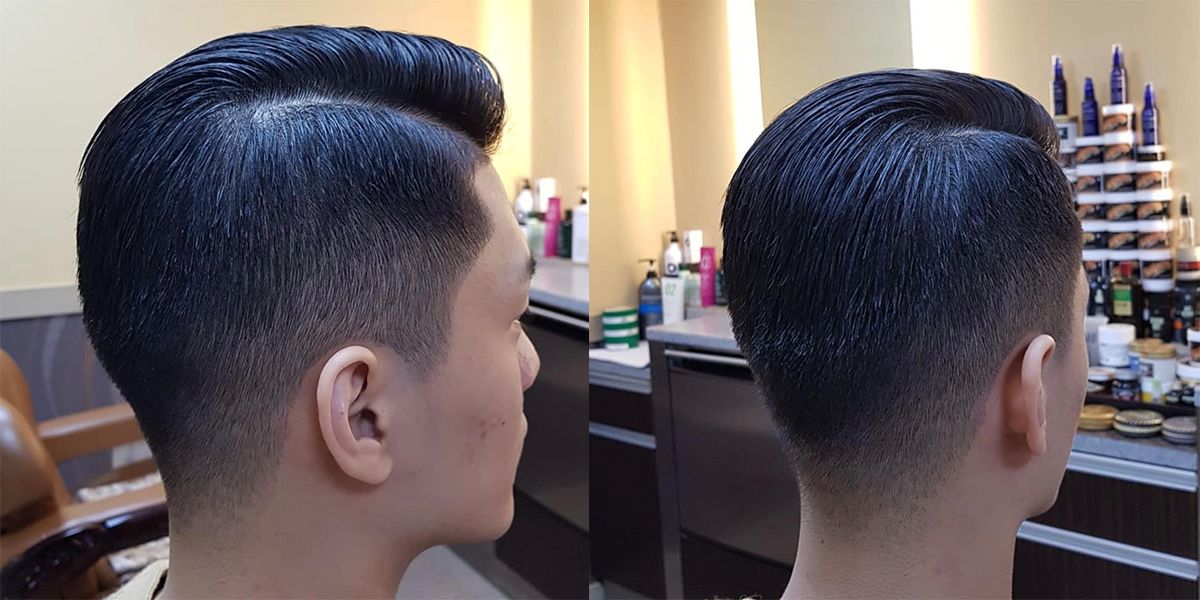
Hair stylists and barbers use different techniques and hold different certifications. While hair stylists focus on volume and beauty, barbers focus on the precision of lines and angles, so their approaches to cutting are different.
While most hair salons style the sides of short haircuts in a two-block style, barbershops create a natural gradient using 1mm, 2mm, and 3mm settings. This creates a sculpted, stylish look. Because of this meticulous process, a haircut takes about an hour.
You might wonder, “Why does a haircut take so long?” But a barbershop is a space where men can relax and unwind. With an all-male clientele and a masculine interior atmosphere, it’s a place where you can take a break while listening to the rhythmic snip-snip of the scissors.
With a sense of style even younger than that of a young barber, he has perfectly mastered even the latest trendy cuts. This is something that can only be achieved through constant observation and study.
I’m quite active on Facebook, YouTube, and even Instagram, and I watch a lot of content. Since I already have the technical skills, it’s no problem to replicate a style once I’ve learned it. In fact, watching so much has been a huge help. I also frequently attend barbering demonstration events hosted by younger colleagues in the industry.
Perhaps thanks to these efforts, my customer rating is 4.9 out of 5. Most people get intimidated by the bold scissor work of hairdressers as soon as they walk into a salon, making it hard for them to express the style they want. Without exceptional service and skill, it’s difficult to earn reviews like these.
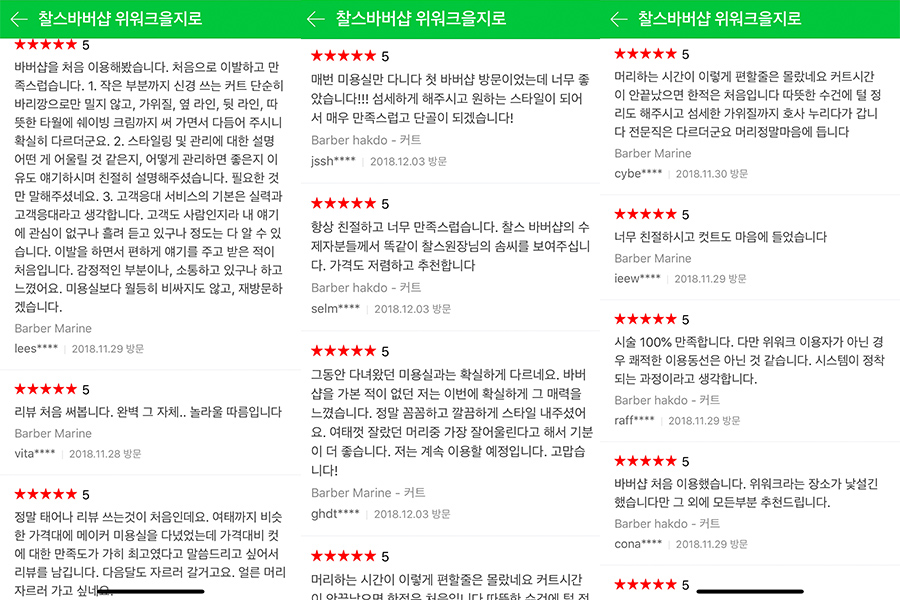
These reviews are a testament to the work done by the barbers at the Euljiro WeWork location. One of the things I teach my barbers is confidence. A barber speaks through their craft, so they must be confident in their skills and in the client’s hair. It’s only when they begin a cut with that confidence that the client truly feels at ease. Kindness, of course, is a quality they must possess as a matter of course.
I’ve heard that you’re also dedicated to discovering and training young barbers to carry on the tradition of the barbershop.
It’s still in its early stages. I use an apprenticeship-style approach: I have them observe my techniques right beside me, let them practice on model hair, and offer guidance. After 3 to 6 months of training, those who pass a test make their debut as full-fledged barbers.
Recently, through a partnership with the Lee Yong Academy, we’ve been collaborating on basic certification courses. Going forward, we plan to develop a specialized barbering program that incorporates Charles’s techniques. Ultimately, our goal is for Charles Barber Shop to provide stable employment through a job placement program.
Throughout the interview, I could sense your pride in the craft of “haircutting.” It must have taken many years and an equal amount of effort to reach that level of pride. I’m curious about the mindset required to reach the level of a “master craftsman.”
To be honest, I’m a bit cautious. If I say the wrong thing, I might come across as a know-it-all. Drawing on my own experiences, I’d say you have to work hard. And you have to persevere. That’s the first thing. Effort means honing your craft. Flashy talk is all well and good, but what truly earns a barber recognition is their manual skill. Not only must the end result be excellent, but the customer must feel no discomfort throughout the service—to the point where they feel as though they’re taking a relaxing break.
Customers who find that sense of peace often feel comfortable enough to open up to me. I believe that knowing how to listen to the inner thoughts of a customer—or rather, of a person—is also a virtue of a master barber. In conclusion, I believe a true master in this field is someone who provides the best service through top-notch manual skills honed over many years of perseverance, and who quietly listens to the stories customers share in a comfortable setting.
Acquiring skills you can be proud of, and listening attentively to the voices of those around you while you work—the mindset of a master craftsman described by Director Jeong Cheol-su seems to extend far beyond the profession of barbering alone.
By Director Jeong Cheol-su’s side—who has become a master barber through 53 years of unwavering dedication—was the young man who created the <CHARLES Barbershop> project.
wadiz: Hello. Could you please introduce yourself as a maker?
Hello. I’m Kwon Jeong-hyun, CEO of Lee Charles Co., Ltd., which operates Charles Barbershop.
How did you first learn about Charles Barbershop?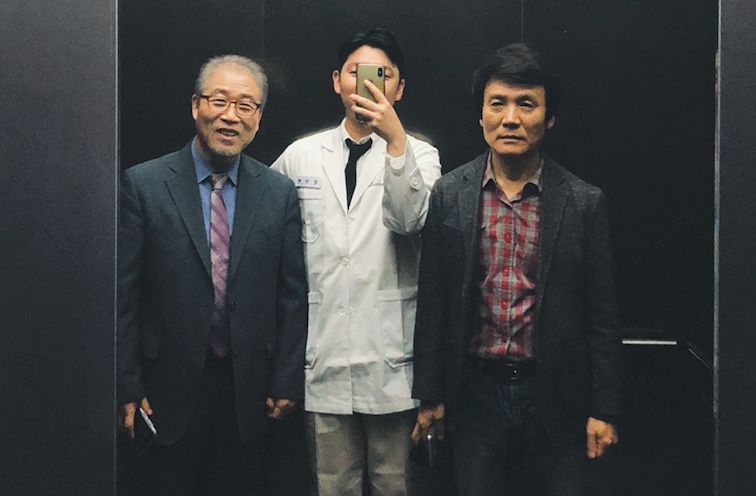 Last year, the company I was running was in a tough spot. We were essentially on the verge of closing down. Still, I didn’t want to give up on what I was doing, so I started a project—though it’s hard to call it a “business.” It was called <THE New Gray>. It was a makeover campaign for middle-aged men. I started taking before-and-after photos of people around me—my friend’s father, my friend’s father-in-law, a team member’s uncle-in-law—and gradually built up a collection of stories. Around that time, Dean, who was serving as the manager of the Charles Barbershop flagship store at the time, reached out to me.
“Would you be able to style our salon director as well?” That direct message marked the beginning of my connection with Charles Barber Shop.
So the <CHARLES Barber Shop> project was born out of the <THE New Gray> project.
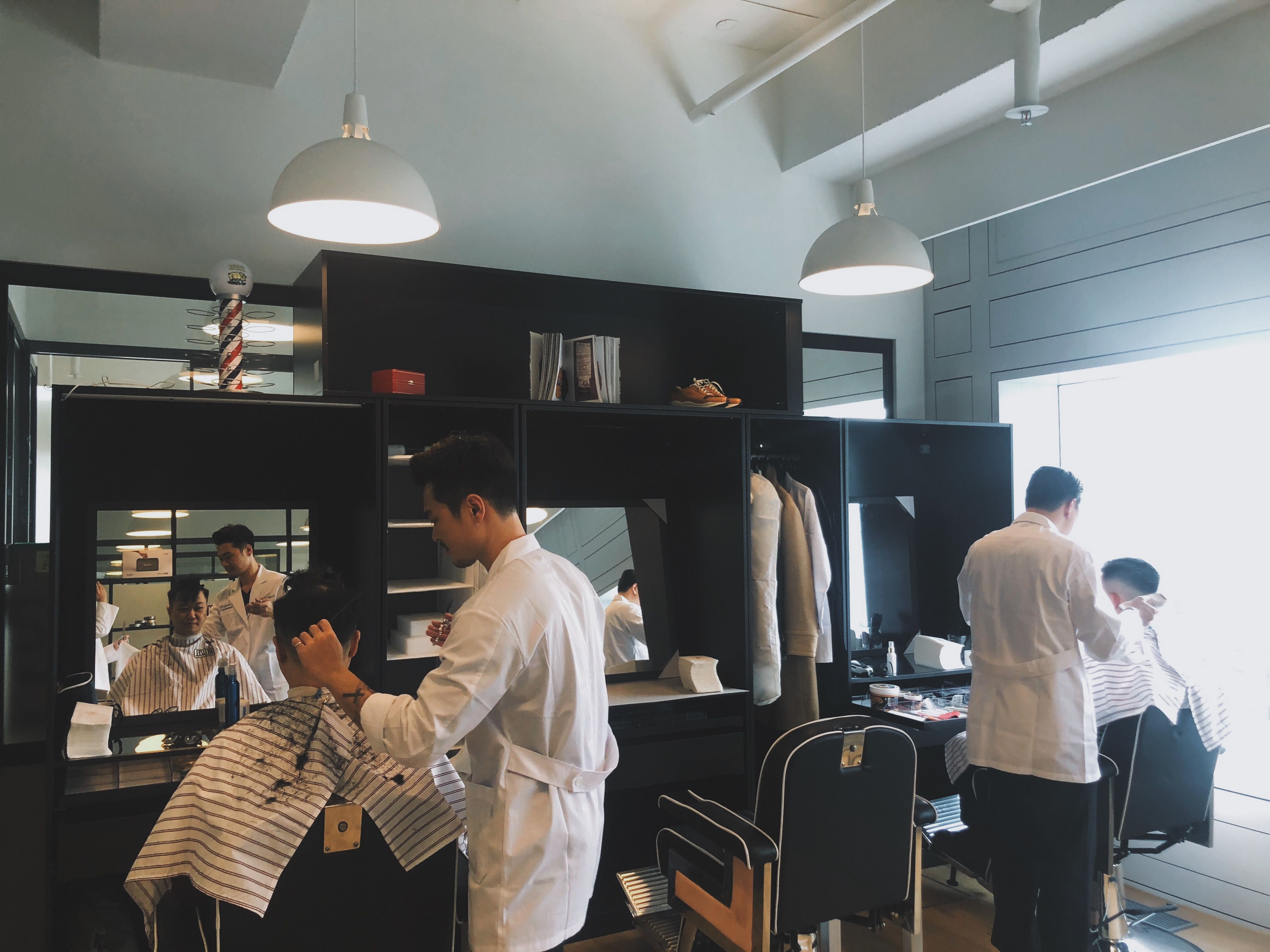 Yes, I went to Charles Barber Shop in person to do the styling. And I heard their story. As soon as I heard their story, I was convinced this place had the potential to become South Korea’s number one barbershop. A barber with 53 years of experience, the chairman of a leading company whose name is known to everyone—he was responsible for styling the hair of their children, and most of his regulars, who had been coming for over 30 years, were prominent figures in politics and business. I wanted to introduce this barber, with his exceptional skills, to the world. It wasn’t about business. I just wanted to help.
First, I approached WeWork, where I was a tenant. I asked if we could hold a Charles Barber Shop pop-up event. They readily agreed. That’s how we ended up hosting pop-up events at the WeWork Euljiro and Gwanghwamun locations, and the events were such a success that we received inquiries from every WeWork Korea branch. After that, a mutual trust naturally developed between the shop owner and me. And so, the collaboration between a young man and a master barber began.
It’s almost like a story straight out of a movie. I’m even more curious to know the specific reasons why you were so confident that Charles Barber Shop would succeed.
I was familiar with barbershops a few years ago. But they were the kind of places with intimidating tattoos, unfriendly service, and where the entire styling process—from start to finish—was done exclusively with clippers. On top of that, they were expensive. Up until then, barbershops were nothing more than pretentious hair salons to me. But after visiting Charles Barbershop, getting my hair styled by the owner himself, and receiving service from his apprentices, my perception changed completely.
I realized that a barbershop is a place that understands men’s hair best and does it best. It’s a space just for men where they can escape the weariness of daily life for a moment and enjoy some relaxation. That’s why I decided to collaborate on the Charles Barbershop project.
Your deep affection for Charles Barber Shop really shines through. What kind of place do you hope to make Charles Barber Shop in the future?
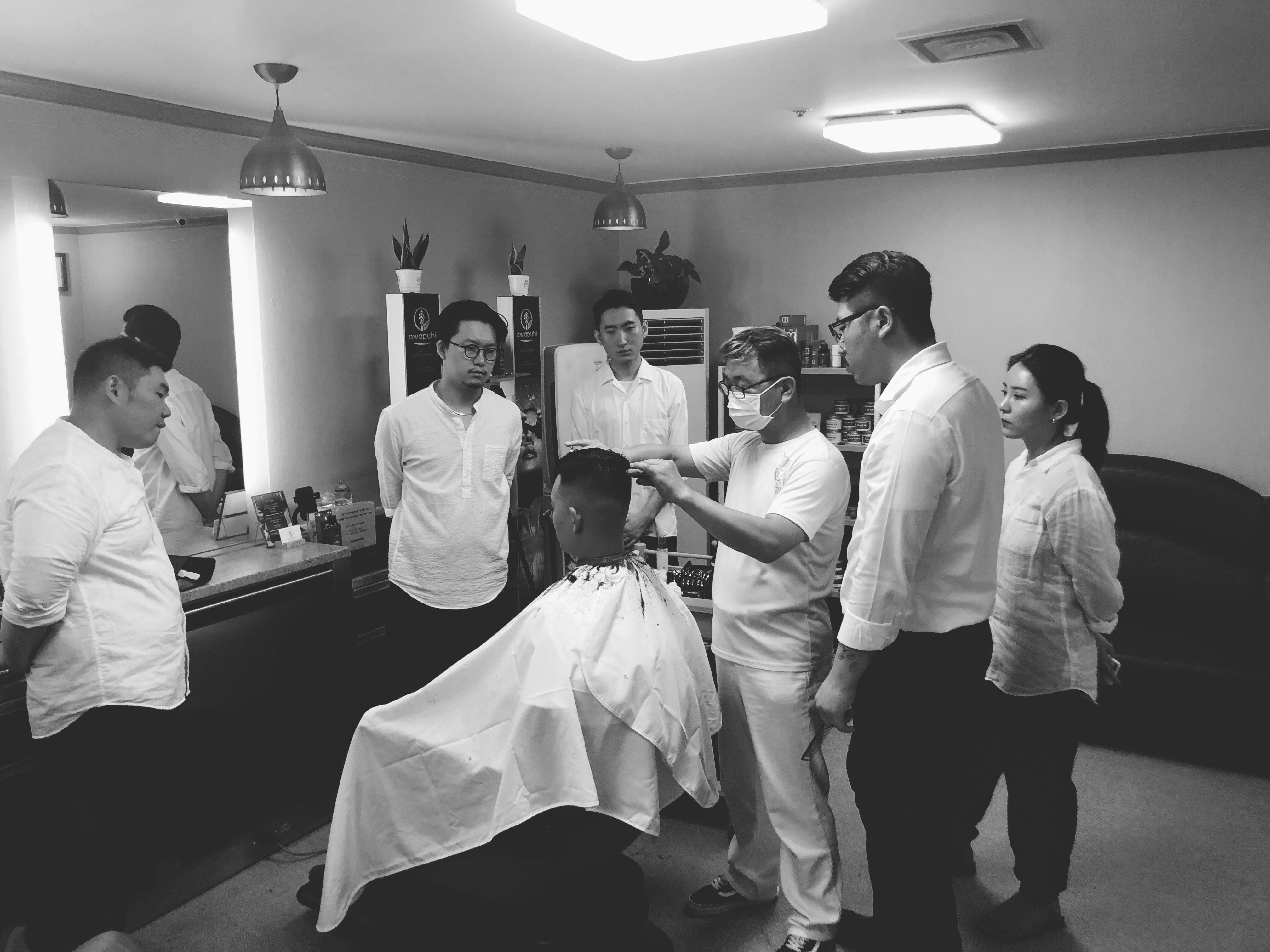
Charles Barber Shop aims to uphold three principles moving forward. First, we want to carry on the legacy of our craft. We collaborate with South Korea’s top barbers—including our lead barber, Jung Cheol-su, who has 53 years of experience, and others with over 30 years of experience—and we’re passing this expertise on to younger barbers. We aim to foster active communication across generations to ensure this legacy is never lost.
Second, we will preserve the essence of a traditional barbershop. Rather than embracing the alien Western culture permeated by hipsters and tattoos, we aim to create a space where Korean men can feel comfortable coming in to relax. Third is popularization. Barbershops, long tainted by an image of being seedy establishments and unable to adapt to the times, have fallen into decline. Now, with a proper brand, quality service, and reasonable prices, we aim to bring men—who have been turning to beauty salons—back to barbershops.
Charles Barber Shop and local barbershops are joining forces to tackle these three goals. We’ve already begun assisting them with retraining, branding, and marketing. Once the wadiz project concludes, we plan to visit the areas currently under discussion in person to help rebuild these barbershops.
We sincerely hope that neighborhood barbershops, with their warm, community-oriented atmosphere, will rise again alongside Charles Barber Shop. Now, let’s move on to the topic of funding. Why did we choose to run a wadiz campaign?
It was to make this culture more accessible to the public. We wanted to introduce more men to quality barbershops and this culture. Second, we wanted to establish a stable revenue base. Charles Barber Shop has been growing at a very rapid pace—opening one new location per month from October through December. To keep up with the pace of store expansion and customer growth, we needed to ensure a seamless booking system. That’s why we offered Rewards in the form of vouchers that can be used at any of our locations.
It was clear that you planned this project with a meticulous strategy. Thanks to that, we surpassed our funding goal by 1,400% in just one day.
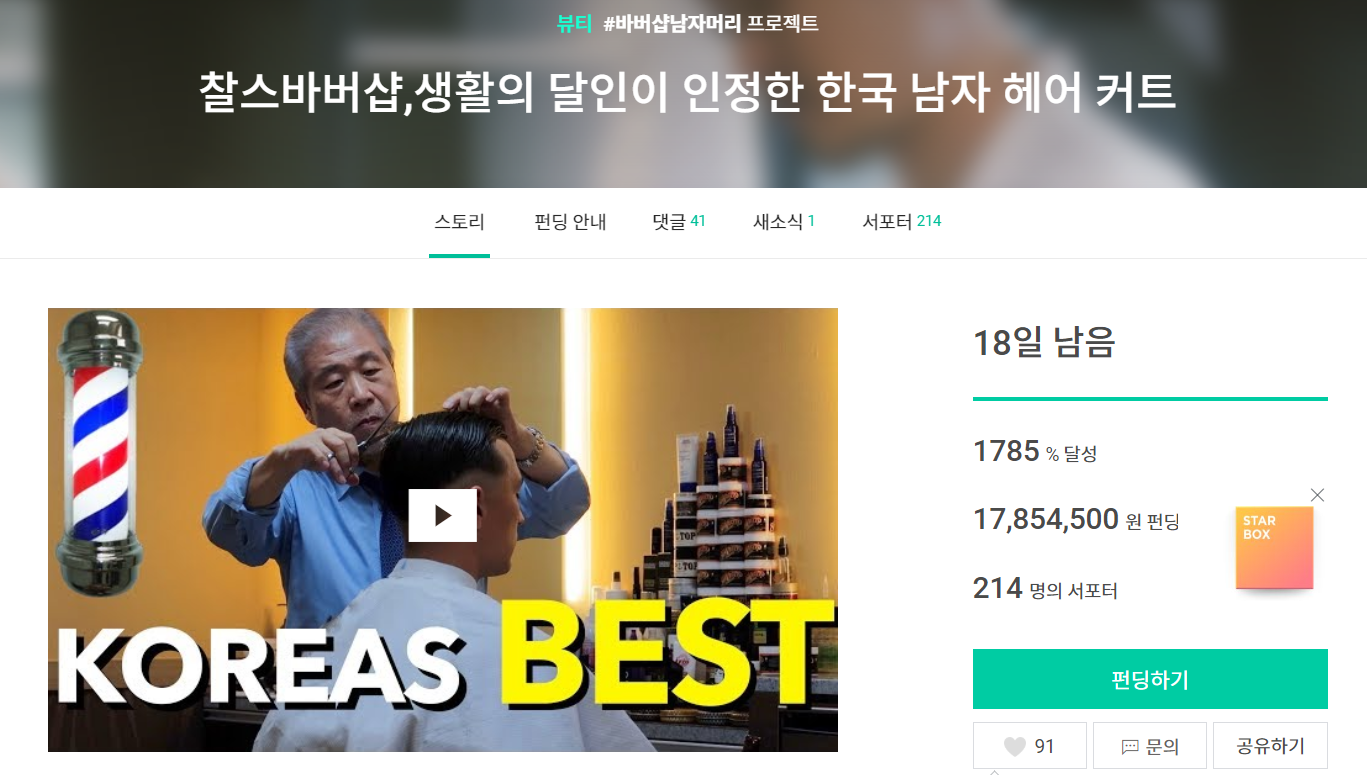 I think we were able to generate this level of response precisely because it was a new service. Awareness of barbershop culture is also starting to take hold, and I believe the show *Master of Daily Life*, which aired last September, also helped raise our profile. Rather than saying we did a great job, I think it’s more a case of timing, luck, and customer demand all aligning perfectly—for which we’re very grateful.
You’re being quite humble. I’m sure that luck was accompanied by hard work. Since this project offered an offline service—rather than a physical product—as a reward, I imagine you put a lot of thought into everything from selecting the target audience to crafting the Story.
The reason we hadn’t run many projects on wadiz before was that we were a service-oriented company. However, seeing the previous <SANGGEOK-dong Photo Studio> project gave us confidence and showed us the potential. After that, we actually launched the New Gray photo book project, and its success naturally led us to consider offering barbershop haircut services as Rewards. Our target audience was all men in South Korea, and since we’d already built up a genuine Story over time, crafting the Story wasn’t particularly difficult.
Perhaps because of your experience with the previous <NEW Gray Photo Book> project, the story was concise and easy to read. Did you gain a lot of insights from the first funding round?
Unfortunately, we don’t have an in-house designer. Compared to other projects, our funding page isn’t particularly visually appealing. So we decided it was best to showcase what we do best: our brand story. We tried to tell a story that was honest, relatable to many people, and resonated deeply with them.
What did you gain from the wadiz funding campaign?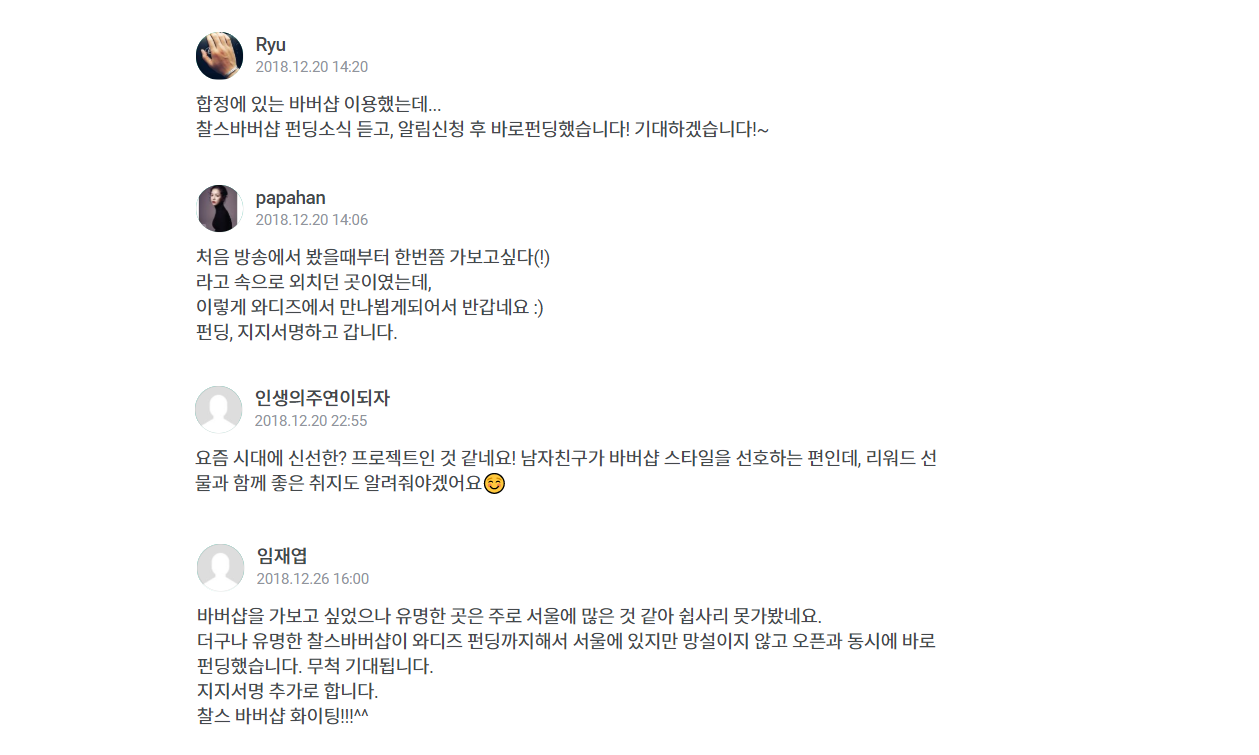 I gained courage. To be honest, I was quite timid for an entrepreneur. “Will other people actually like our service or product?” Because of that, I kept clinging to my ideas, giving up, starting over, and then deciding against launching—repeating this cycle over and over. Then I discovered wadiz, and since then, we’ve had consecutive successes with the New Gray photo book and the Charles Barber Shop funding campaigns. I realized that the success of a funding campaign depends on truly putting your heart into the project.
Thanks to that, I gained a lot of confidence. I met so many people who cheered us on. And I was able to develop the belief that we can do it—and that even if we fail someday, we can always start over. For me, wadiz is a place that lets me dream again.