We redesign tradition to suit modern uses. Maker Mimidal
We met Mimidal, the first featured “wadiz K-maker”—a brand that creates traditional products by adding modern functionality to Korean heritage. We interviewed CEO Han Sang-mi, who creates innovative design products rooted in Korean tradition. We discussed the process of modernizing tradition, drawing on her experiences with starting the business and funding.
Mimidalhas
has run five funding campaigns on wadiz, connecting with 3,588 supporters on the platform. Its flagship product, the Goryeo Celadon series, was selected as official merchandise by the National Museum of Korea following its funding campaign and gained such popularity that 20,000 units were sold in about two months.
I wanted to create products rather than works of art.
- The Founding Story of Mimi Dal CEO Han Sang-mi

Editor (hereinafter E): Hello, CEO Han Sang-mi. It’s been a while. I saw you at an event in March when you were named wadiz’s Representative Female Entrepreneur. How have you been since then?
Han Sang-mi of Mimidal (hereinafter Han): I’ve been incredibly busy preparing new products! We’re working on new products every day in such a hectic rush that my team members even call it “Chaotic Mimidal.” Following the Goryeo Celadon cases, we plan to unveil a new Goryeo Celadon line soon.
This time, we’ll be weaving fabric with Mimi Dal’s uniquely reinterpreted patterns, so I think the Goryeo celadon series will better capture the Mimi Dal aesthetic.
E:Since some of you may be hearing from the CEO for the first time through this interview, I’d like to start by asking how you began creating traditional products. How did you get started with entrepreneurship and traditional design?
I didn’t set out with the firm resolve that “I absolutely must start a business” before launching it. Around 2017, I traveled to Japan and noticed that there were so many everyday household items there that incorporated traditional elements. That felt incredibly fresh to me. So, I looked into what kinds of traditional products existed in Korea and how they were made.
As I expected, there weren’t many traditional products suitable for everyday use. Most were souvenirs for tourists—things like refrigerator magnets or snow globes—intended purely for decoration.
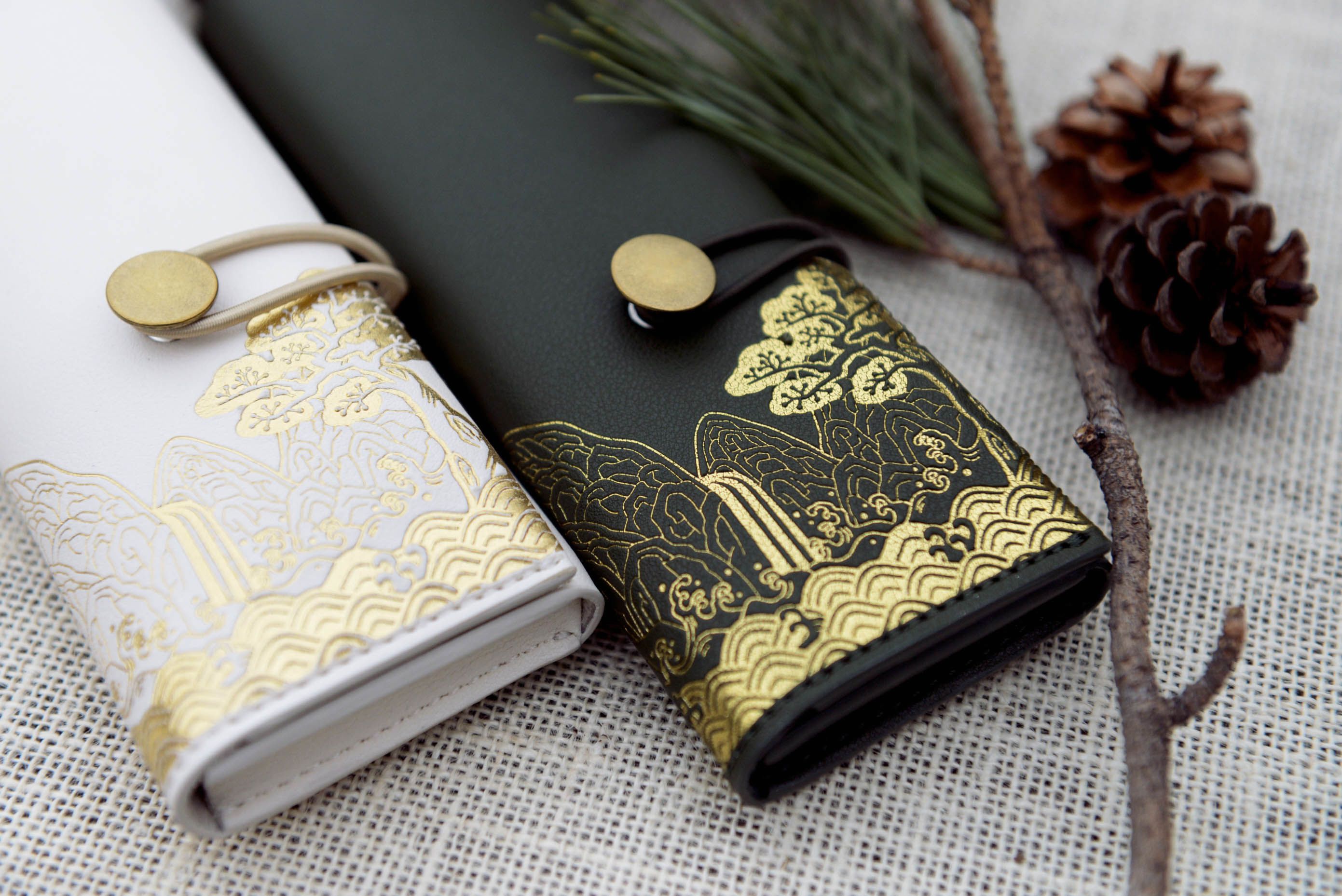
Mimidal’s “Ilwol-O봉do” Pencil Case
Korea has so many wonderful traditions, but I felt there was a lack of traditional products that Koreans could actually carry with them in their daily lives. So, I started incorporating traditional designs—ones that the younger generation would also appreciate—into practical items. My first attempt was the “Ilwol-O봉do” pencil case, and after producing the product, I launched a funding campaign. After running about three funding campaigns to gauge market potential, I officially launched my business.
I understand you majored in metal crafts at E University. When people think of creating something traditional, they often picture artists making artworks. Is there a specific reason you chose to make products rather than artworks?
When Iwas in college,I was active in a product planning club. When people hear “metal crafts,” they usually think of creating artworks through handcrafting, but I often found myself wanting to make products rather than artworks. To me, an artwork is a medium that embodies the artist’s thoughts. A product, however, is the process of creating something that others need. I believe these two approaches have fundamentally different directions. Art begins with the artist’s ideas, while products begin with the consumer’s needs.
Rather than just imposing my own ideas on others, I wanted to identify what others needed and turn that into a product. Also, seeing people carry the products I made with them in their daily lives and use them practically gave me a great sense of accomplishment. That’s why I decided, “I need to create my own brand.”
There’s a special bond with the supporters who supported my funding campaigns.
- The Story of Mimidal’s Funding and Growth
From a brand strategy perspective, Mimi Dalseems to be a brand that makes good use of funding for growth. You’ve run a total of five funding campaigns on wadiz. Has the process of preparing for a campaign changed between your first one and now?
Back whenwe firststarted, not many people knew about Mimidal, so to introduce it to a wider audience, we ran funding campaigns every time a new product was released. When we ran our first funding campaign, we just hoped that people would come in droves once we launched it. However, after doing it several times, I realized that funding is a structured process that must be thoroughly planned from start to finish and executed strategically according to that plan. I’ve gained my own insights through these five campaigns, and I’ve come to design them based on analysis—checking metrics like conversion rates as we approach launching soon.
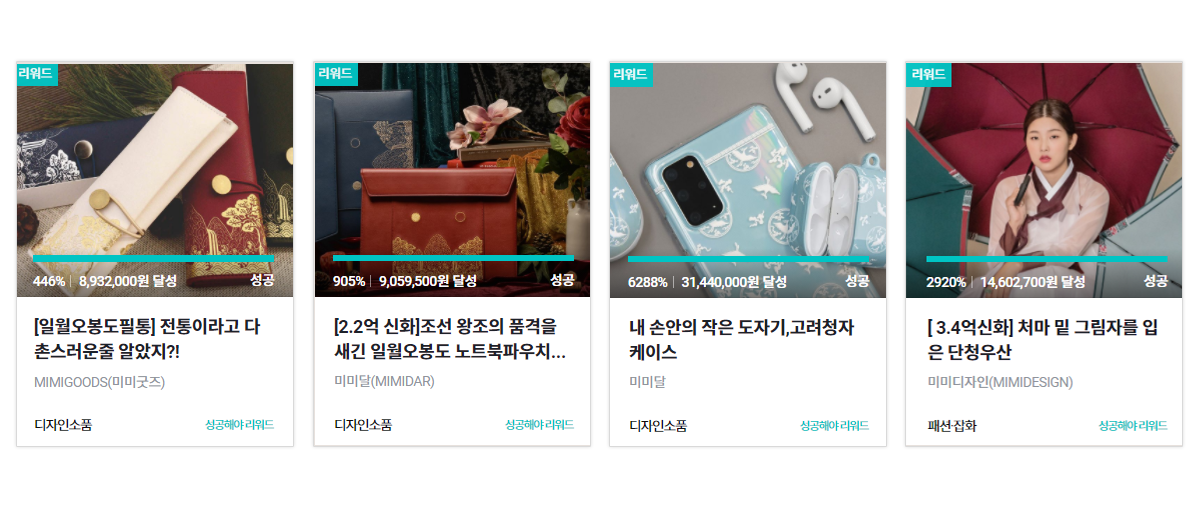 The four funding campaigns run by Mimidal
E Mimi Dal’s Goryeo Celadon series gained popularity after the funding campaign, even being selected as official merchandise by the National Museum of Korea. And recently, it became a hot topic when a photo of a BTS member using the product was posted online. I imagine there have been many changes like this since the campaign.
First of all, after seeing the funding’s results and the products, many merchandisers from various distribution channels reached out to us. We also received proposals from many brands suggesting potential collaborations. Currently, we’re working with you can find Mimidal products at the Royal Palace Museum Shops and online platforms such as Ideas, Hot Tracks, Ten by Ten, Yes24, and Kakao Makers, which are makers. I think the biggest change is that the funding campaign opened up these opportunities and created connections with other brands.
EAs some of you may have alreadyseen, the collaboration with Haply—a brand that modernizes hanbok—felt incredibly refreshing to me. In a way, you could view them as competitors since you’re both creating traditions, yet you chose to collaborate. What was the intention behind this collaboration?
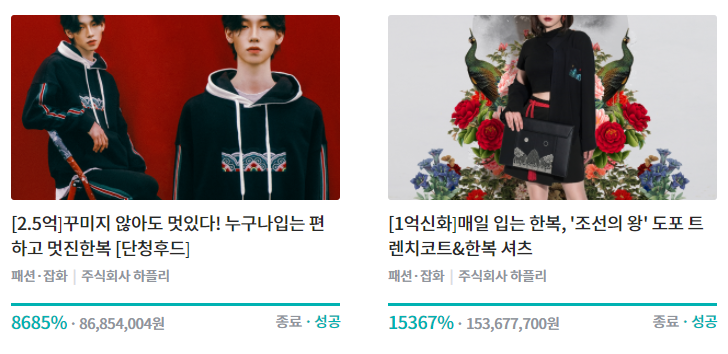 The Collaboration Project with Haply
I wanted to show many people that tradition can be this fresh and beautiful. I thought it would be more effective to do this with Haply rather than Mimi Dal promoting it on its own. Through the collaboration with Haply, it was great to be able to showcase both the items Mimi Dal can easily present (pouches) and those that are harder to showcase (clothing). Although Mimidal doesn’t currently produce clothing, by collaborating with Hapli to create the “Joseon King’s Trench Coat & Hanbok Shirt,” we were able to apply Mimidal’s designs to apparel.
E The final productturned out great, and the funding results were also incredibly successful. Did you know that Mimi Dal has amassed a whopping 3,588 supporters on wadiz? (Laughs) I’ve heard that some of those supporters even reached out again after the Goryeo Celadon series became a hit.
Han: Yeah, that’s right. Back then, many people reached out saying, “We participated in the ‘Ilwol-O봉do’ funding campaign, and we’re happy to see Mimi Dal doing so well.” I feel like the supporters we met through funding are watching the brand grow.Since otherchannels are primarily for purchasing products—it feels like “buy and done”—the people we met through funding tend to remember the products and the brand for a long time. They keep an eye on the brand over the long term and share in our joy as they witness its growth. I guess you could call it a “fan” mentality? I feel like we share a deeper, more enduring bond with the supporters we’ve met through funding.
E Ifind that when I backa funding campaign, I end up following that brand closely. Unlike other purchases, when I back a campaign, I feel a sense of cheering them on—thinking, “I really hope they reach 100%, or even 1,000%!”
Striking a balance between traditional beauty and modern functionality,
we move forward while preserving the value of tradition.
- The Present and Future of K-Maker Mimidal
EWhat sets Mimidal apart as a brand, allowingsupportersto fall completely in love with its charm?
As a traditional product has gained popularity in recent years, many people have started making traditional items. I think it’s truly wonderful that so many people are taking an interest in tradition and helping to popularize it. However, it seems there are just as many people who approach tradition purely from a visual perspective. MiMimidal strives to avoid the mere visual consumption of tradition when planning our products. Rather than simply copying the patterns of Goryeo celadon and applying them to our products, we adopt a creative approach that captures the meaning and history behind Goryeo celadon.
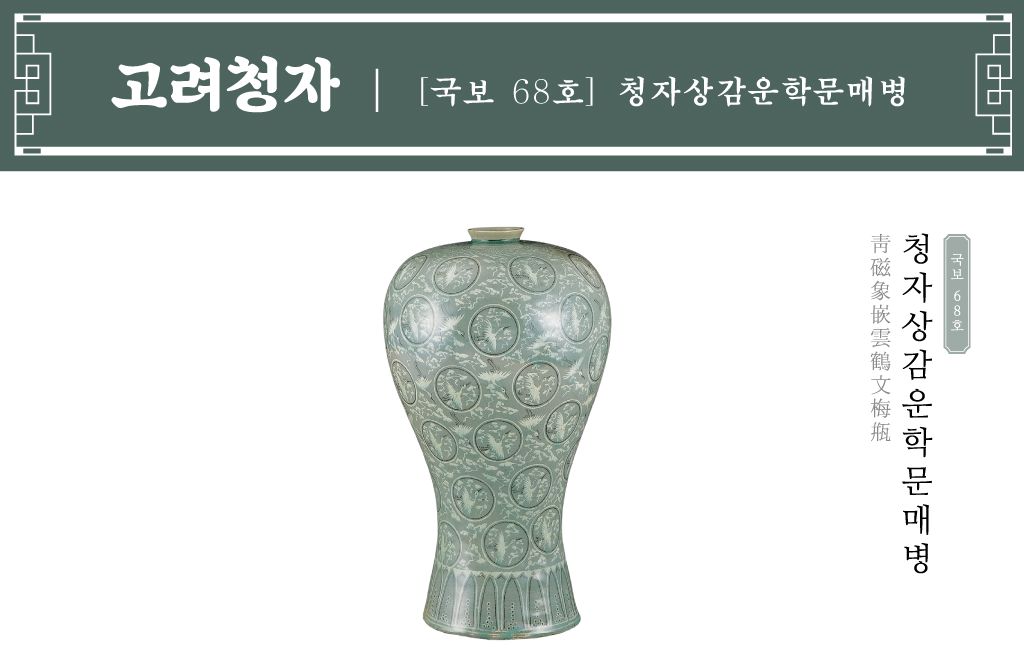
For example, forMimi Dal’s Goryeo celadon series, we first researched the Story of Goryeo celadon to find inspiration. It’s said that during a time when jade was extremely rare and expensive, people searched for a substitute material with similar properties. They eventually began crafting blue pottery from clay—a material that was blue, lustrous, and hard, resembling jade the most. This blue pottery, originally created as a substitute for jade, evolved over time, leading to the creation of Goryeo celadon—blue pottery adorned with beautiful patterns—during the Goryeo Dynasty. Inspired by this Story, I began to ask myself,“If clay was used instead of jade in the 3rd century, what material could we use instead of clay in the 21st century?” andlet the Story unfold from there.
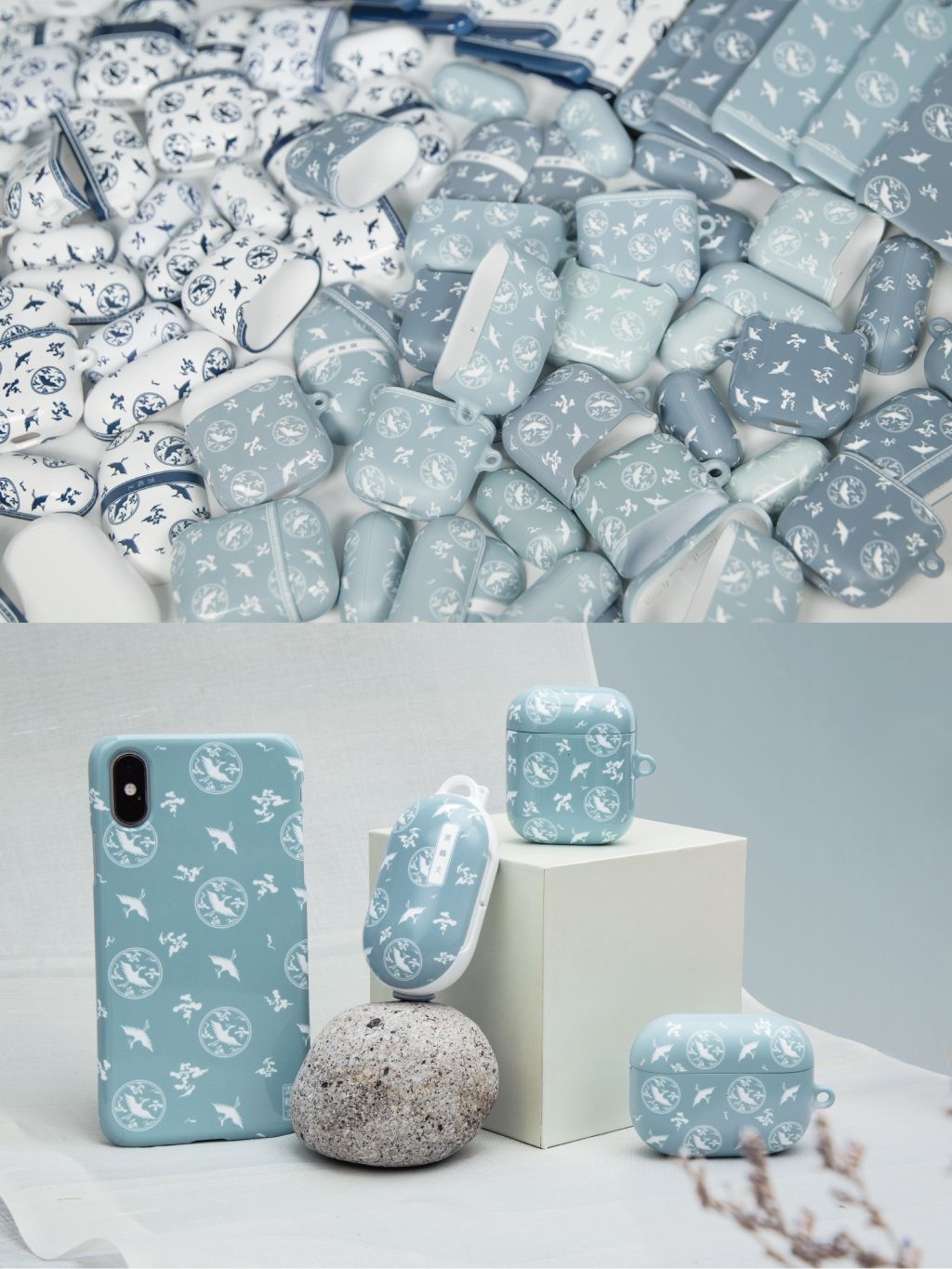
That’s how I arrived at the conclusion: “Let’s create unbreakable Goryeo celadon that people can carry with them every day in the 21st century.” After pondering shiny, hard materials, I came up with the idea of a case. In this way, Mimidal strives to infuse the stories behind cultural heritage into our products. I believe that’s what sets us apart.
Listening to CEO E, I realized, “This must be a process that requires a great deal of imagination.” On the other hand, I was also wondering where CEO Han Sang-mi what are the specific points?
When working on a design and adapting tradition, that’s when I struggle the most. Sometimes, simply taking a traditional design and applying it to a modern object can feel a bit excessive. So, I redesign it by infusing Mimi Dal’s aesthetic—but during this process, if I alter the traditional form too much, I sometimes worry,“Am I inadvertently damaging the tradition?” It’s a process where I’m constantly being careful and searching for that balance.
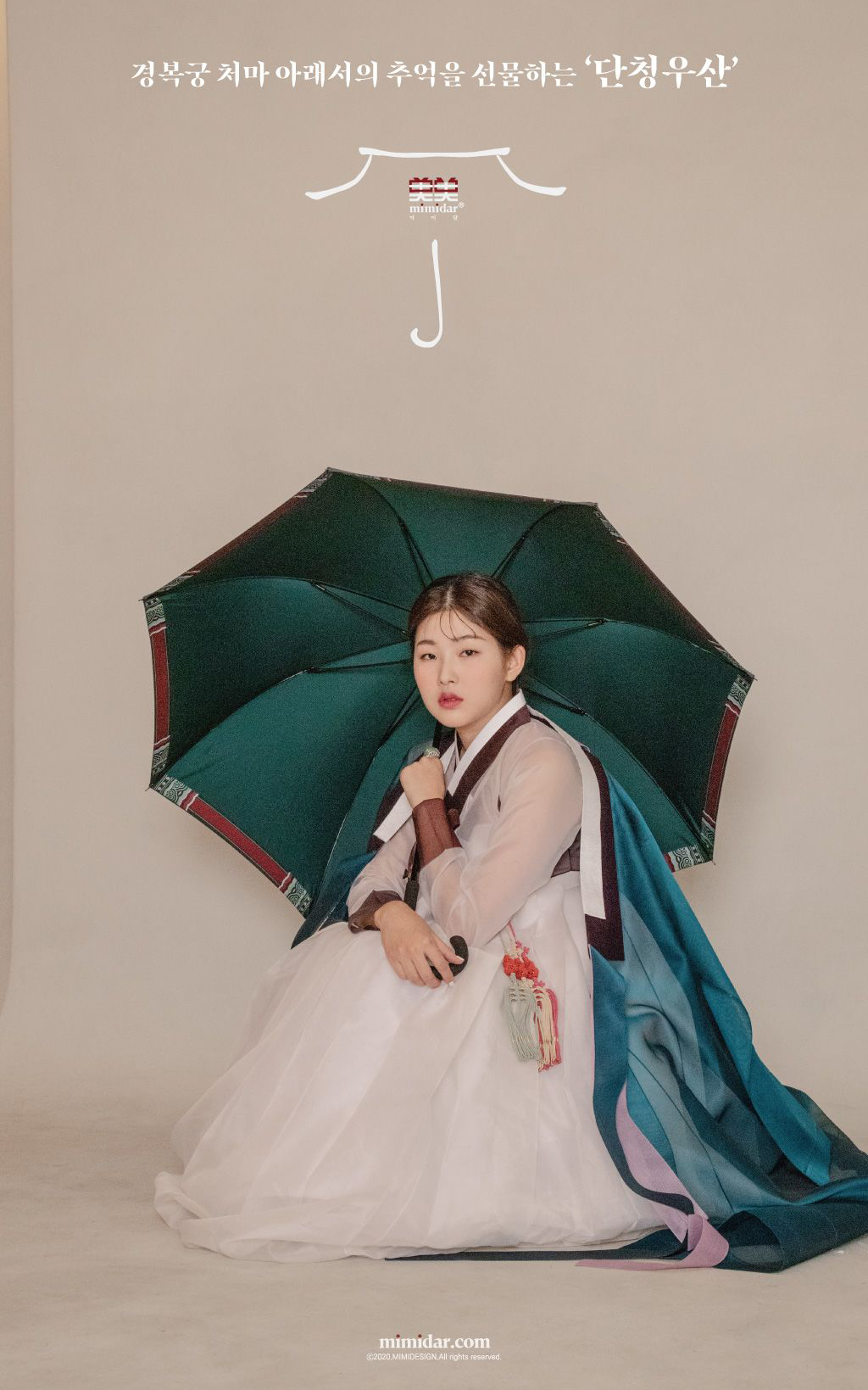
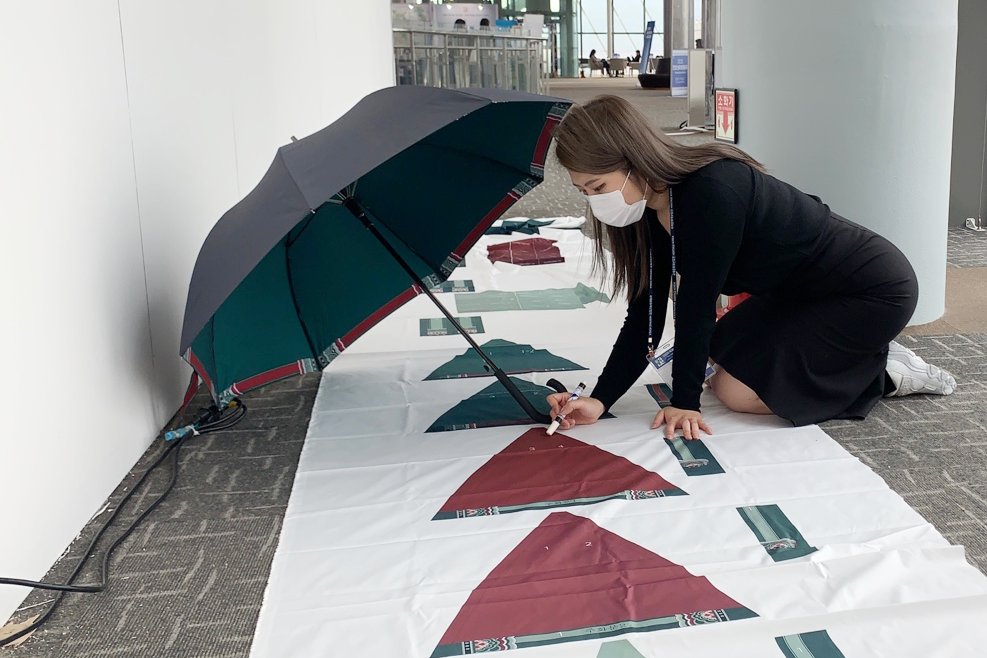
Dancheong Umbrellas and the Dancheong Umbrella Creation Process
For the Dancheong umbrellawe recently conducted funding for, I designed it by adapting the Dancheong patterns, then took the designs to a Dancheong master to show them in person and receive feedback. While it might be difficult to call it strictly “historical accuracy,” it was an effort to find a balance where the design could be beautiful without compromising the value of Dancheong.
I think it’s amazing howCEO Han Sang-micreates products while staying true to the values she holds dear. My admiration for Mimidal just keeps growing. (Laughs) How do you think Mimidal and CEO Han Sang-mi will continue to grow in the future?
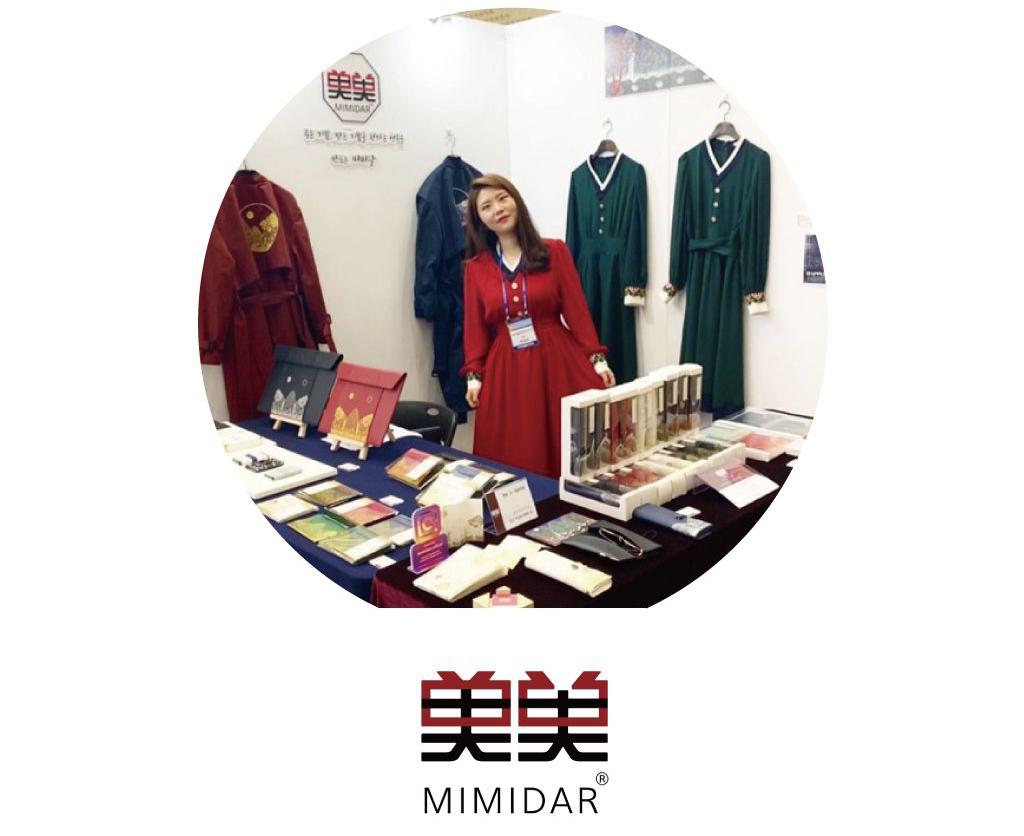
Recently,a photo of a BTS member using a Goryeo celadon case, we received a lot of messages from fans both in Korea and abroad. I’m so grateful and honored that an artist who is helping spread K-pop and Korean culture worldwide has joined Mimi Dal in every step we take to promote Korean traditions.
Thanks to this opportunity, we’ve been able to launch our international sales a quarter earlier than originally planned. International purchases and shipping are now available on the Mimi Dal website. Furthermore, as the Goryeo Celadon Case has achieved overwhelming success, we’re more determined than ever to work harder, and we feel a greater sense of responsibility toward our new products. Building on the success of the Goryeo Celadon Case, we plan to launch a new “Goryeo Celadon Jacquard Bag” that incorporates Mimi Dal’s unique style. Moving forward, Mimi Dal aims to become a brand that leads the way in popularizing Korean traditions.
▶ This content was first featured on the wadiz blog. If you’re curious about more stories from the blog, check itout here!