[The Company Has 'UP'ed] The Global Challenge of the Youngest Media Company CEO: Cho Chung-yeon, CEO of SetoWorks
Secrets No One Ever Told You
The Very Personal and Trivial Secrets of a Veteran Entrepreneur
Be sure to take this with you!
- One Question You Must Ask Yourself Before Starting a Business
- Practical Tips to Help You Avoid a Spectacular Failure
- How a CEO with a Pure Liberal Arts Background Survives in a Non-Tech Startup
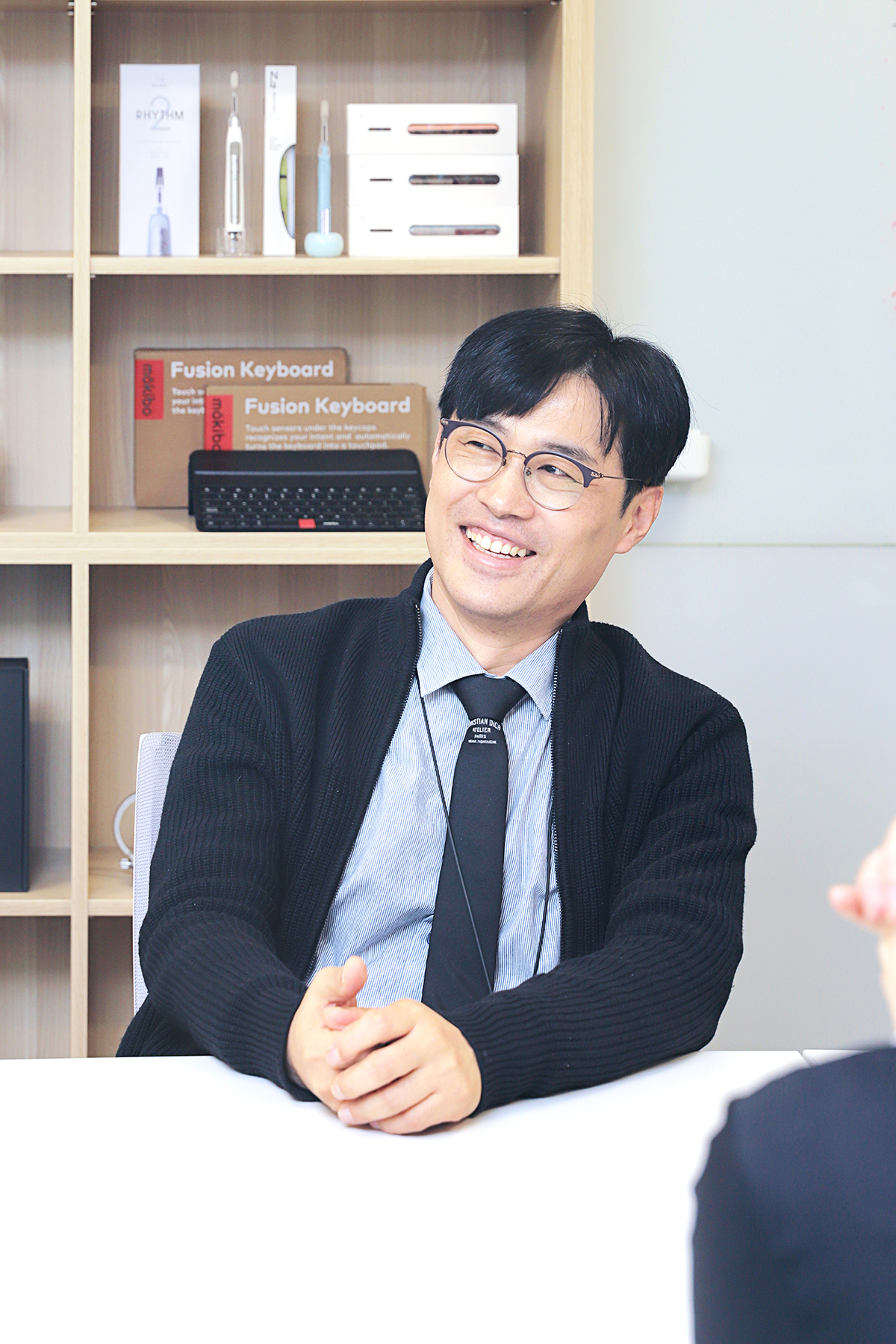 CEO Jo Chung-yeon
Born in 1973. Majored in Journalism and Mass Communication. By the time he was about to graduate from college, he had exactly two thoughts in mind: I need to make a lot of money, and I need to join a media company. The IMF crisis he faced during his senior year was a formidable opponent, but it couldn’t stop the entrepreneurial DNA flowing through his veins. In the early 2000s, when print media was beginning to fall out of favor, he was a controversial figure who turned the industry upside down by wielding the “sword” of free newspapers. He left his mark on the free newspaper industry—not once, but three times—with major publications such as * Metro News*, *Focus News*, and *City News*. Eight years have passed since he left the media industry—where he had spent 15 years—and moved into the world of startups, feeling more relief than regret at the advent of the iPhone. Half of that time has already flown by, and he’s now more accustomed to being called the “CEO of SETOWORKS.”
SETOWORKS
A global marketing solutions company that CEO Cho Chung-yeon—who first gained attention for pioneering Korea’s first free newspaper—joined in 2016. Its core businesses are global content production and funding management, targeting markets worldwide—including the U.S., Japan, Taiwan, and China—beyond Korea. With its 10th anniversary approaching, the company is preparing to expand its business into a global commerce and branding agency responsible for everything from local market research, content production, and planning to marketing, logistics, and customer service. Led by CEO Cho Chung-yeon, who has a keen eye for global trends, local staff working at overseas branches are providing accurate and swift support to help Korean companies expand overseas and foreign companies enter the Korean market. setoworks.com
In a market dominated by tech-based startups, how does a founder with a non-tech background—
and even as a “pure humanities” graduate who has made entrepreneurship his “career” for 20 years.
We’ve distilled it down to five key points and present them here in his own words.

#1. News Over Meals
My first career was at a newspaper association. I was in charge of international affairs. I was so busy keeping up with the latest international issues—both from yesterday and today—that I barely had time to eat three meals a day. It was hectic, but it was fun. Since this was the early 2000s, I was able to practice analyzing the state of the domestic and international newspaper industries at a relatively young age—identifying problems and figuring out how to solve them.Seeing the global trends made me feel a tingling excitement. I made up my mind: I was going to start a business.
I launched *Metro*, a free daily newspaper that everyone tried to talk me out of, and turned a profit within six months—even at a time when people thought it was impossible for a newspaper company to make a profit. I’ve always hated operating at a loss, so I threw myself into it with everything I had, and it paid off. It took hard work, but luck was on my side, too. Fifteen full years went by like that. Living a life where I was closer to the news than to my meals naturally gave me an eye for the global market. When I wound down the business? Of course, it hurt. I endured it, thinking it was just the way the market works. I never imagined that Steve Jobs, holding an apple, would be the one to bring me down. I walked away cleanly. The process was, of course, arduous. But when I finished everything and returned to my room, I felt strangely good.
UP ▲ Thoughts of someone who’s tasted the thrill of entrepreneurship after a failed startup
Ah, so I don’t have to do that anymore. I only have to look out for myself.
And one more thing. Ah, I can do anything now. What should I try next?
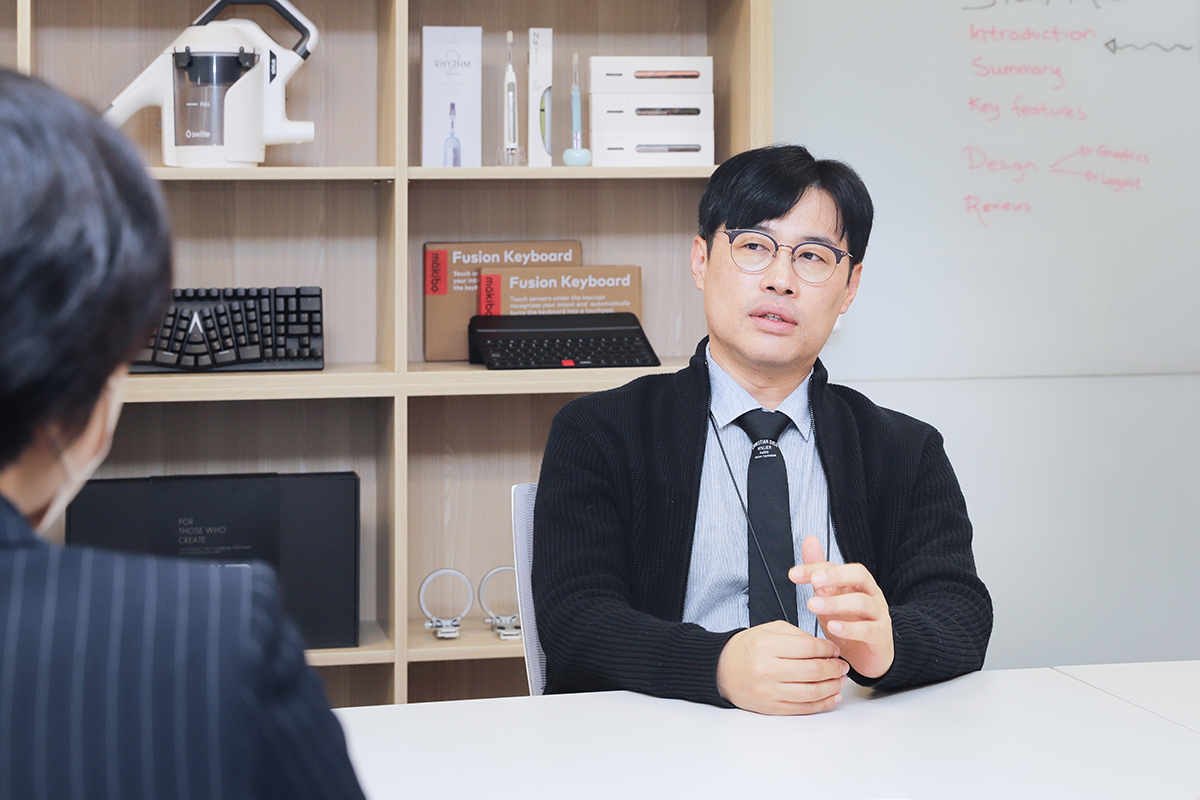
#2. If you do nothing, nothing happens
There’s something I tell my kids: Even if you have nothing to do, just go outside! Because if you just stay at home, nothing happens. Even if it’s just going for a walk, how happy you’ll be if you happen to meet a cute puppy. When I came home after closing the business I’d run for over 15 years, starting in my mid-20s , I made a point of getting out no matter what. Even if I had nothing to do, I’d go out anyway.Because when you go out, you see, learn, and feel something—no matter how small or trivial it may be. I believe there’s truth to the saying, “A mountain is made of small pebbles.”
When you taste failure for the first time after a string of successes, when you feel down because it seems like the whole world has turned its back on you, when everyone you meet just offers empty words of comfort like, “Are you okay?” or “This must be tough”—just go out, no matter what. If you start with even the smallest effort to get out there, something will come of it. “I succeeded because I was lucky?” That’s all a lie. When you combine the abilities you already have with relentless effort, an opportunity will surely come—an opportunity to seize your luck.
UP ▲ March beyond the Korean Peninsula—even if not all the way to outer space
It’s important to step outside your comfort zone, both personally and professionally.
If you’ve decided to start a business, you must go overseas. You need to expand your horizons.
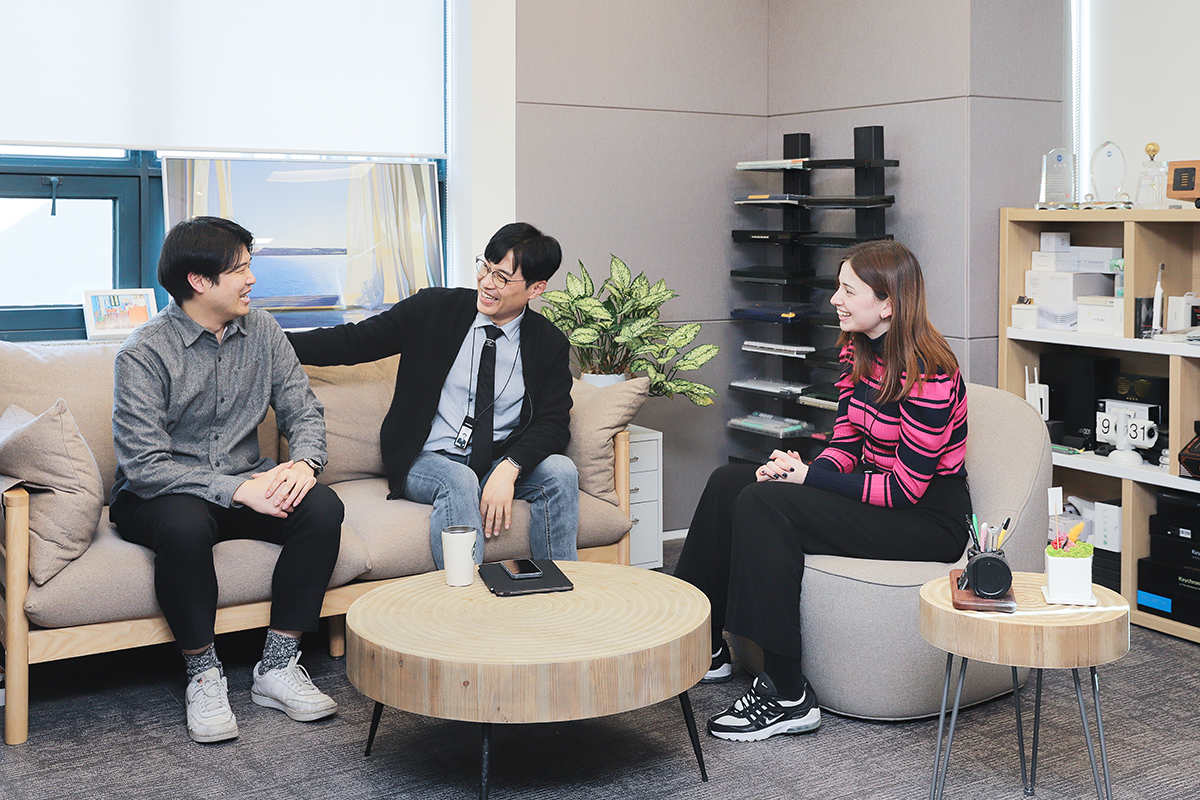
#3. Am I cut out to be a leader?
Anyone can start a business. It’s appealing, isn’t it? You get to do what you want, and if it goes well, you’ll be hugely successful—people will call you “CEO” all the time. But that’s not the whole story. A swan looks elegant on the water’s surface, but beneath the surface, it’s a battle. Before you start a business, you need to first assess whether you’re cut out for it.As the businessgrows, the number of people you’re responsible for increases, and eventually, even the people you got along with will start leaving one by one… Am I really the kind of person who can handle that? I want to tell aspiring entrepreneurs to ask themselves this question over and over again .I’ve seen many teams that started out seeing only the rosy side of things, only to fall apart. I was one of them, too.
Nevertheless, if you’ve made up your mind to start a business, you should go for it—provided you’re the type who hates conformity, loves a challenge, and enjoys seeing results that match your effort. That’s exactly who I am. (In fact, CEO Jo Chung-yeon’s MBTI type is ESTJ, the strict manager and executive. He admits to being a firm believer in the MBTI.) I think it’s thanks to this personality that I launched about three newspapers and then, out of the blue, joined Setoworks on my fourth attempt. For people who are naturally suited to entrepreneurship, once they step onto this path, it’s hard to go back to being a salaried employee. It just fits them so well by nature.
UP ▲ Things I’ve Tried Since Starting My Business
I once sold a wet mop on a lunchtime live-commerce broadcast watched by 150,000 people.
How many did I sell? One unit. And yet, I’m doing just fine.
#4. Hone Your Instincts, but Be Careful with Your Words
You ask how to succeed in starting a business? I’d like to know that myself. If anyone knows a surefire method, please share it. Still, as a fellow entrepreneur, if I had to say one thing, this is what I really wanted to tell you: Do this if you don’t want to fail spectacularly. Is that harsh? It’s important, though. No one ever told me this. If you keep this in mind, it’ll serve you well. Everyone just assumes they’ll succeed; they never even dream of failing.
If you’ve assessed yourself and determined that you have what it takes to be a leader, you now need to develop your discernment. When you start a business, you’re constantly faced with a never-ending stream of decisions and choices, and it’s nearly impossible to objectify the criteria for those judgments. If you develop the “sense” to read social currents and trends, even if you fail, the fall won’t be as hard. Next is the written word. Never rely solely on verbal agreements. A promise that isn’t written down and stamped isn’t a promise at all. You might laugh it off now, but there may come a day when my words come back to haunt you. Contracts are your lifeline, everyone. Make it a habit.
UP ▲ To win the battle of probabilities, you need to get comfortable with data
When something clearly doesn’t feel right, but you can’t quite explain why You’ll.
You can say something like this: “According to the data, the probability of profit is only 20–30%. Why should we do this?”
#5. I like things that start with “ㅋ”
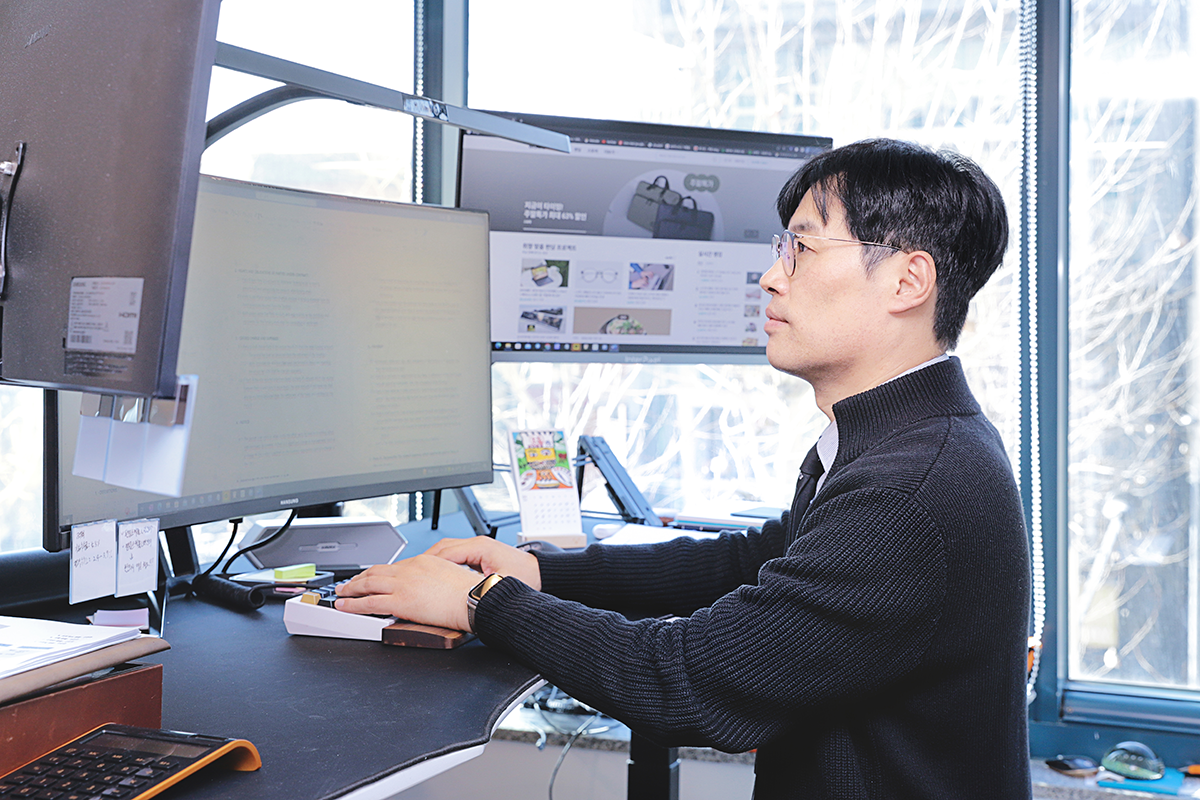
For example, things like keyboards or coffee. Saying it like this might sound like I’m playing a script, but that’s really all there is to it outside of work. My weekly routine now isn’t much different from when I started my first business in my 20s. On weekdays, I usually arrive at 9 a.m. and work until 9 p.m. On weekends… yes, I come into the office. I want to catch up on backlogged work and do some meditation. (Remember? The CEO’s MBTI is ESTJ—the very embodiment of a business leader.) I love how quiet the office is on weekends. I sit there alone, sipping coffee and letting my imagination run wild. I wonder, “Is there anything fun I could do?” Coming up with new business models is another hobby of mine, if you will. Oh, wait—that doesn’t start with “ㅋ.”
For after work or on weekends when it’s hard to come into the office, I’ve set up a workspace at home that looks exactly like the one at the office so I can focus on work there too. From a height-adjustable desk to a monitor and my favorite mechanical keyboard. It’s part of my effort to blur the line between work and home. I wanted to eliminate the extra time it takes to get into the zone. That way, I can get more work done… I’ll stop here. I’m worried I might come across as a workaholic. Well, that’s not exactly wrong, though.
UP ▲ What Entrepreneurs Do When They Take a Break
Curcoffee and a mechanical key. Sometimes I work out, too.
It’s not that different from what you all do. It’s just that I think about work a little more…?
CEO Jo Chung-yeon and SetoWorks share quite a few similarities. This is different from the typical context where an entrepreneur is defined by the company’s brand image. He’s cautious yet quick. He prefers side paths over the beaten track. While everyone else is agonizing over option A, he’s already considering the next steps—B, C, D, all the way to Z. He even wonders, “Isn’t there another language out there?” In an era where IT-based startups are making their mark, this is why we’re excited about the future of a global agency led by someone with a liberal arts background—and, more specifically, a former media executive.
CEO Cho Chung-yeon spoke with the proudest expression he’s shown lately—except when introducing the keyboard he’s currently obsessed with—stating that SetoWorks operates on a debt-free basis. What could be a more pride-worthy statement for a startup? By the way, SetoWorks is hiring 365 days a year—globally, no less.
-
Check out the hottest startup industry news right now
Text by Kwon Ye-rang, Photos by Park Bo-seul