[Accommodations] Early reviews are crucial for hotel operations—to ensure they reflect authenticity,
There’s a maker who is building “local community hotels”—neither expensive, hard-to-book Airbnbs, nor guesthouses far from the city center, and certainly not motels—drawing on their experience of staying at hotels in over 150 cities across 70 countries worldwide.
Here’s the story of AZMT, a maker that brings to life the dream of forming a “deep” connection with even places you’re visiting for the first time.
Connecting destinations and travelers
This is “Alive,” a local community hotel
Hello, I’m Shin Hye-eun, Creative Director at AZMT. AZMT is a brand that started with the project name “Arrive”—meaning “to arrive”—and is dedicated to creating local community hotels. Our first location, “Si Hwa Yeon Pung” in Jeonju through wadiz funding in July 2023.
The hotel’s name is derived from the four-character idiom “Sihwayeonpung” (時和年豐), which means “peaceful times and bountiful harvests every year.” We chose this name with the hope that guests will create beautiful memories and forge meaningful connections during their stay here.
With the goal of creating a safe and comfortable hotel where travelers can connect with the local community, we’re leading this project alongside the CEO, who has built and operated nine small-scale hotels in Seoul.
A flight attendant who has visited 70 countries around the world
What she found most disappointing while traveling domestically
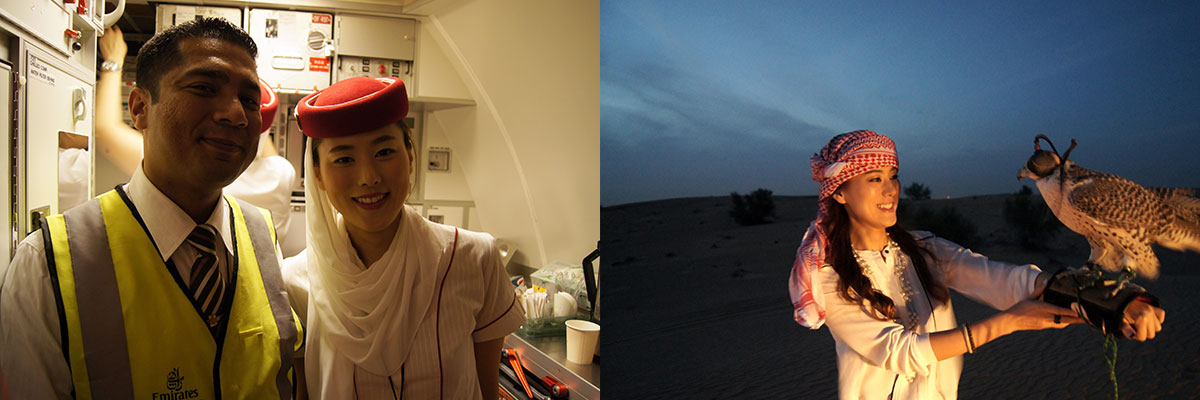
A photo of AZMT Creative Director Shin Hye-eun from her days as a flight attendant
Before joining AZMT, I worked as a flight attendant and stayed at a wide variety of hotels in over 70 countries around the world. However, when I actually traveled to various regions across Korea, I found there were relatively few places to stay.
Decent Airbnbs were either too expensive or booked up quickly, while guesthouses lacked good access to city centers. And staying at a motel while traveling just felt a bit uncomfortable.
AZMT set out to solve exactly that problem. We aim to provide hotels that capture the local atmosphere as much as possible at reasonable rates, located close to the heart of the city so travelers can fully enjoy their destination.With the hope that travelerscan enjoy these spaces without any hassle, we developed our unique concept, starting with Jeonju Siwha Yeonpung.
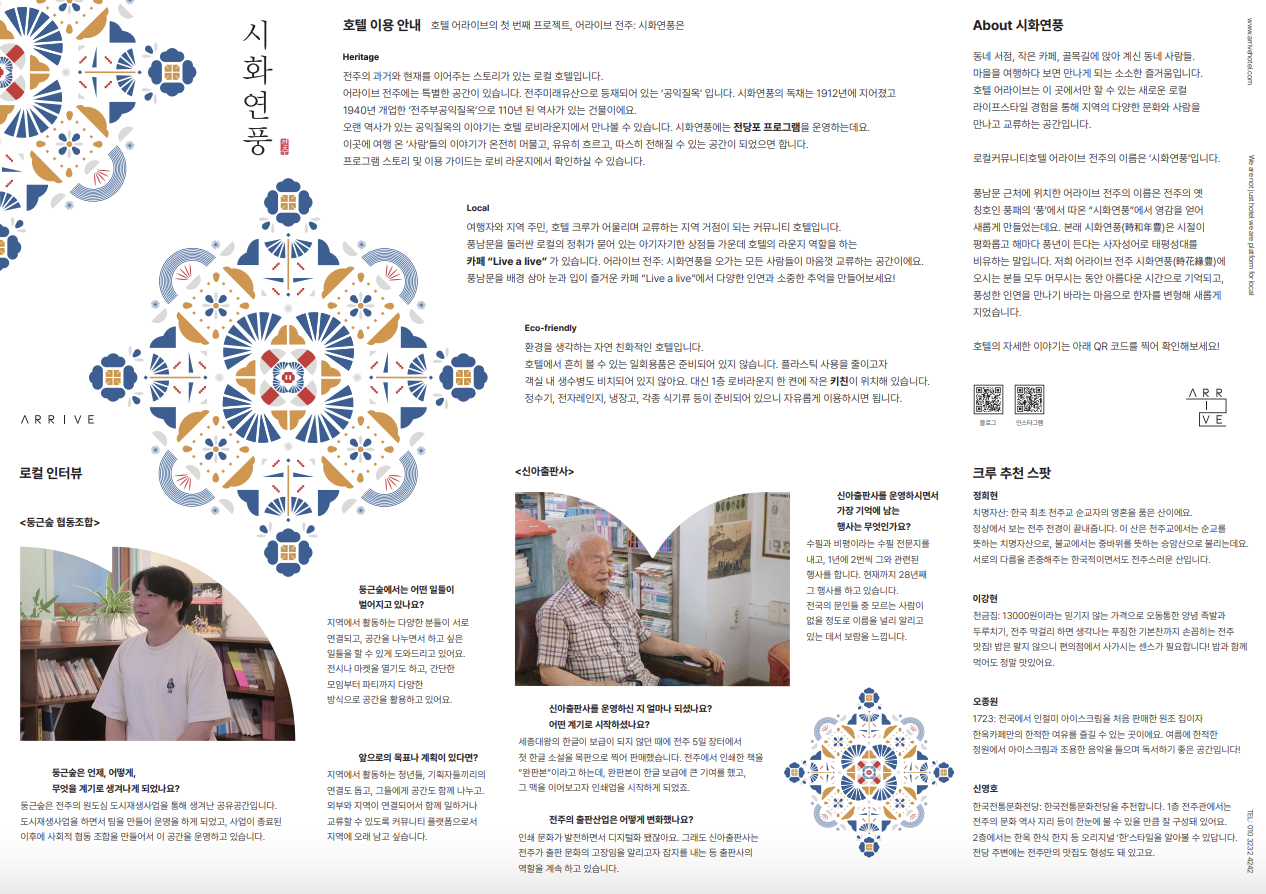
A map featuring an introduction to Sihwa Yeonpung, interviews with local creators, and recommended spots
My main role involves space planning and filling the hotel with engaging content. When I worked as a flight attendant, I published a webzine called “Take Off” that featured travel tips. During my time as a travel writer, I published an essay titled “Setting Off in Pursuit of a Strange Breeze” and a high school textbook on “Travel Geography.”
These experiences have been invaluable in planning the hotel’s spaces and creating related content. In particular, the map we provide at Jeonju Siwha Yeonpung features interviews with local partners we’ve collaborated with, as well as content highlighting recommended spots curated by our hotel crew. We made a conscious effort to ensure the hotel’s concept was consistently reflected in the content.
The Journey of a 110-Year-Old Pawnshop’s Rebirth as a Hotel
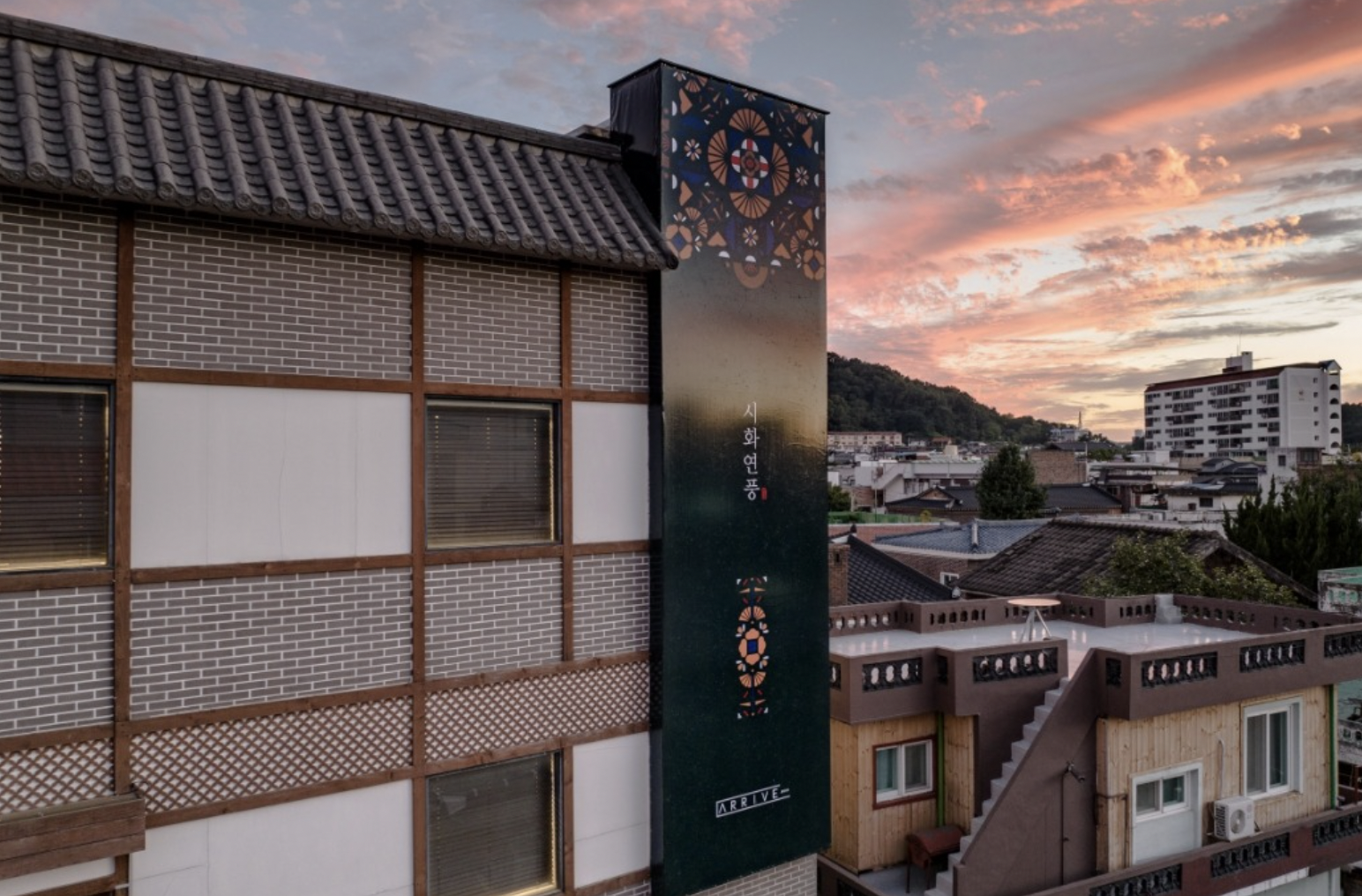
At first, we traveled extensively—not only in Seoul but also to Yangyang and Gangneung in Gangwon Province, Busan, and Jeju Island—to find the perfect location for the first Alive Hotel . Among these places, we discovered that Jeonju had a well-developed and interesting tourism infrastructure beyond its widely known Hanok Village. We were also drawn to the fact that it’s a hub for various local creators.
The building, now reborn as Siwha Yeonpung, was originally constructed in 1985. The standalone structure itself was completed much earlier, in 1912, and was used as a “Gongik Jilok” (Jilok: a Japanese-style pawnshop)—that is, a pawnshop. It’s a place steeped in 110 years of history and is registered as a Jeonju Future Heritage site.
What’s more, I loved that it’s close to Pungnam Gate—one of Jeonju’s four major gates and the only one still standing—as well as Nambu Market and Weridan-gil. I also appreciated that it’s tucked away in an alley, which fits perfectly with the concept of a “local community hotel.” I felt this was the most suitable location and building to realize our goals.
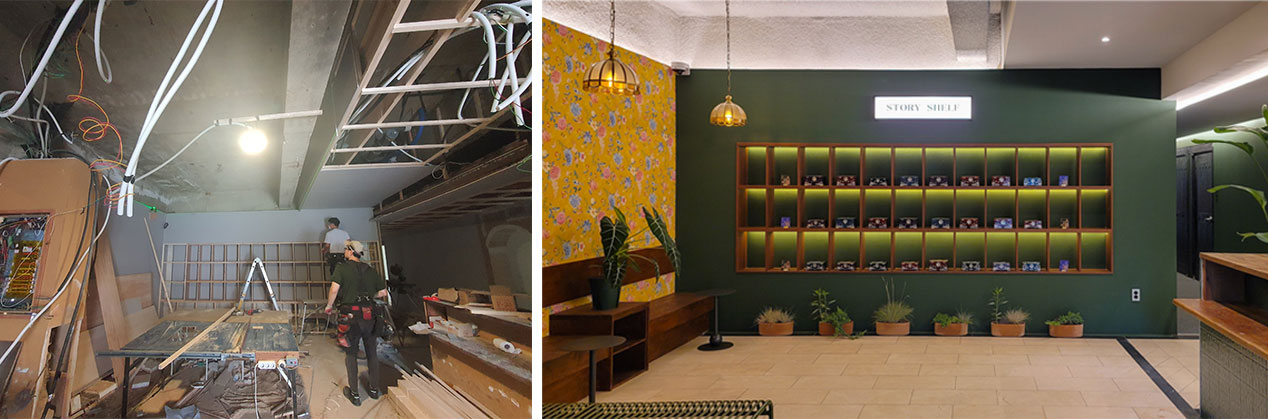
After deciding on this location for our first branch, we began planning the space and working on the interior design. Rather than creating a brand-new feel, we strove to naturally preserve the vintage, aged charm of the building. We also developed a pawnshop program unique to Siwha Yeonpung, reflecting the building’s history as a former pawnshop.
When guests bring in items they no longer use, they can attach a card describing the story behind the item, set their own price, and display it in the hotel’s pawnshop. Other guests can then come and purchase those items, or even display their own items there. The proceeds from the pawnshop are donated to the local community.
Sihwa Yeonpung’s pawnshop serves as a bridge connecting travelers with one another—and with local residents—even if they’ve never met in person. It’s truly fascinating to see the pawnshop filled with new items every time.
Those early reviews, which are so important for running a hotel,
were left with great affection by our wadiz supporters.
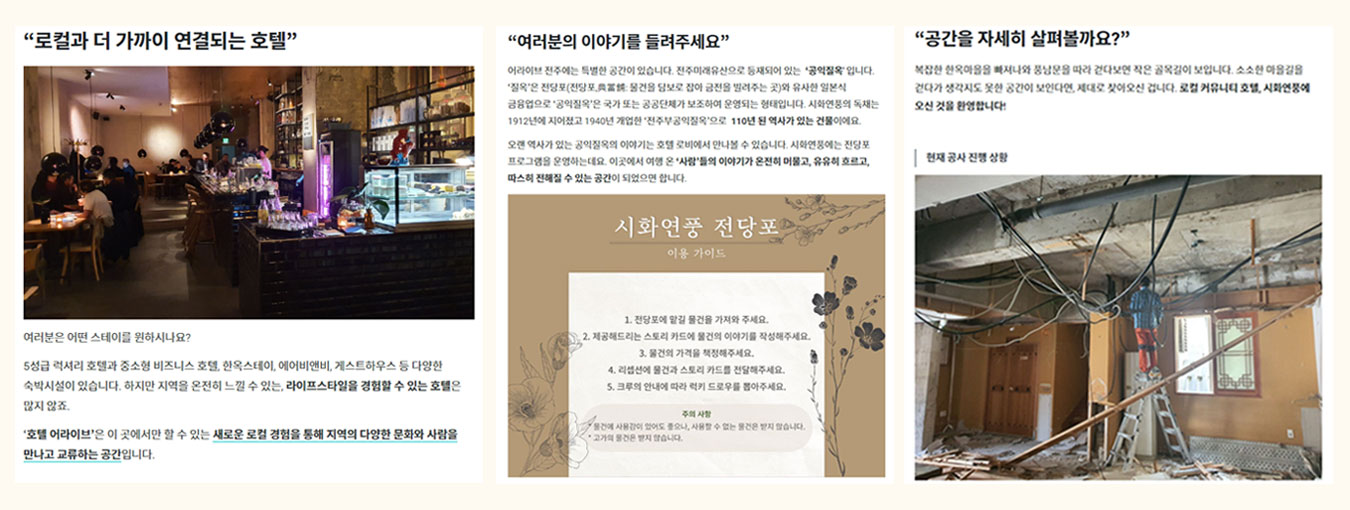
By introducing the local area of “Jeonju” and running the pawnshop program, our hotel, Sihwa Yeonpung, is a place with a richer history and more content than a typical hotel.
That’s why we wanted to launch our first project on wadiz, a platform that allows us to effectively convey our unique Story.It’s not easy to provide the level of detail we want on typicalhotel booking sites.
It’s clear that the guests who found Siwha Yeonpung through wadiz have a special understanding of and affection for our space. As we were finishing the hotel, we thought, “Even if opinions are divided, we want to create a space with distinct content and character. Surely there are plenty of people who would appreciate such a place?” It felt like that hope had come true.
Early reviews are crucial for a hotel, and during the three-month soft-opening period following our September 1 launch, our supporters visited us frequently and left positive reviews, which greatly helped us in terms of both revenue and brand recognition.
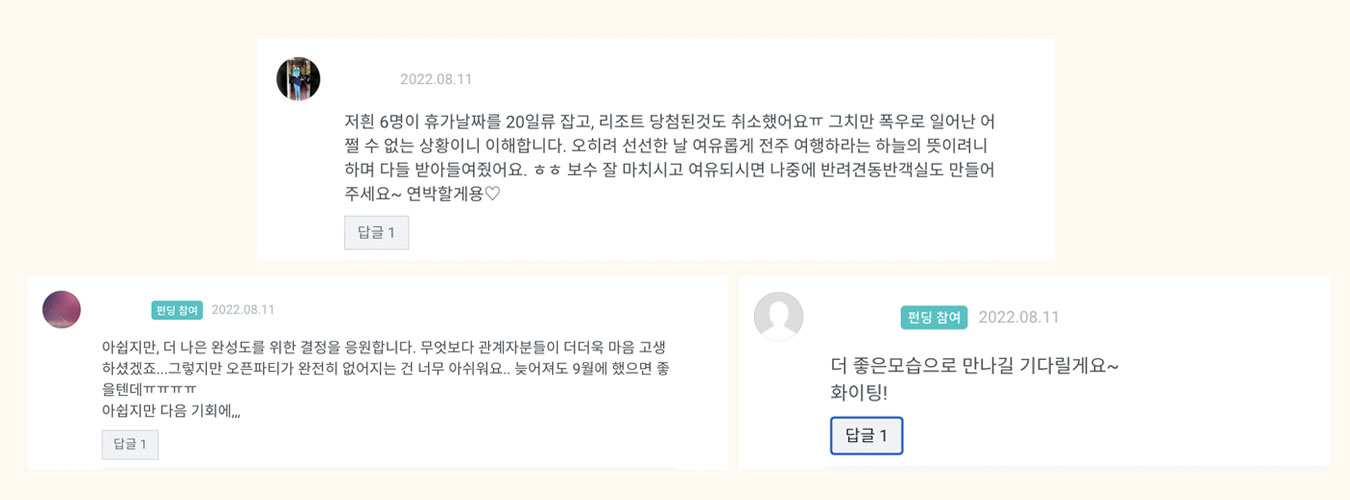
AZMT Maker: Earning Supporters’ Trust and Cheer Through Prompt and Thoughtful Responses
Of course, there were challenges since we were preparing the hotel and running the funding campaign simultaneously. One such challenge was a water leak that occurred during this summer’s severe downpours. As a result, we had to postpone the opening, which was scheduled to take place soon in August, to September.
Fortunately, the wadiz representative handled the situation well, and we also made an effort to keep our supporters informed of the progress quickly and honestly through the News.I remember staying up all night with our staff on the day we decided to cancel the opening party and postpone the opening due to the torrential rain damage, sending out notification emails and making phone calls to our supporters.
But at that time, our supporters were actually the ones who worried about us and showed understanding of the situation. We were truly grateful. In return, we worked hard to fully compensate them through merchandise shipments, refunds, and reservation changes.
After all , funding is a project that involves not only the final product but also the variables that arise along the way. That’s whyI believe we were able to communicate with our supporters in a flexible and close-knit manner.
Moving forward, as a wadiz maker,
I’ll continue to introduce more local businesses through funding.
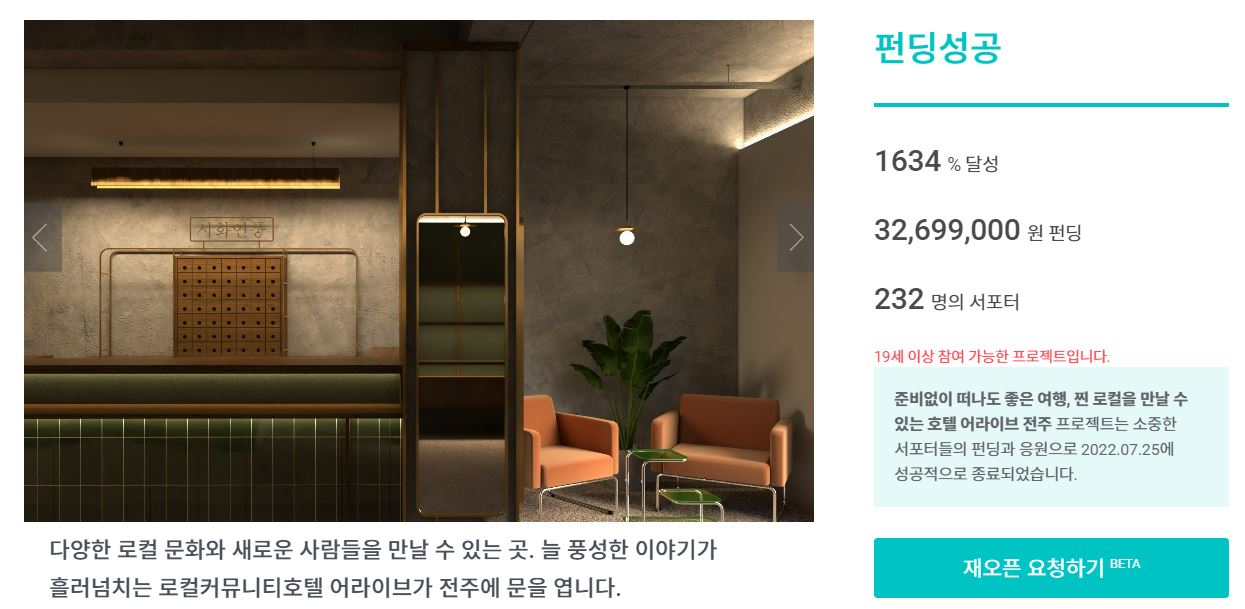
Hotel Alive Jeonju’s first funding campaign, which successfully concluded last July
We’re still a small brand, but thanks to wadiz, we’ve been able to solidify our business direction and received tremendous help in raising brand awareness. That’s why I’d especially encourage those of you running small brands like ours to give wadiz funding a try.
The process of creating something together—not alone, but in collaboration with the wadiz team and our supporters—is incredibly valuable for personal growth and refining your business direction.
That’s why we plan to return to wadiz with new funding sometime between December and January. We plan to open a café just a two-minute walk from Sihwa Yeonpung in Jeonju, where hotel guests, local residents, and local creators can interact. We aim to further strengthen Sihwa Yeonpung’s role as a Community hub by having local creators host classes or organize parties where they can connect with one another.
Also, around next spring, we’re preparing to open additional Alive Hotels in Busan and Suwon. We’re paying particular attention to areas that have plenty of places to visit—like cafes and small bookstores—but lack places to stay, so please stay tuned to see where and with what concepts we’ll continue to develop local hotels.
Written by Jeong So-jeong,Edited by Han Ji-hye
▶ This content was first featured on the wadiz blog. If you’re curious about more stories from the blog, check itout here!