[Wadify #5] "We were able to identify customer needs early on through wadiz funding" Blink Project
What is Wadipay?
"Miracles don’t just happen."
We’re carefully compiling the success stories of makers who have successfully raised funding and sharing them widely, like Wi-Fi, to bring new miracles to the next generation of makers.
"Before diving into full-scale production, the biggest advantage of Wadiz funding is that you can identify customer needs and
and gather data—that’s the biggest advantage of wadiz funding."
There’s a person who created shoelaces that don’t need to be tied because tying and untying them was a hassle, and another who flew 26 hours to Denmark to introduce the pillow his mother uses to a wider audience. During middle school, he conducted over 1,000 transactions on the secondhand marketplace “Jungangnara,” which opened his eyes to distribution and sales—leading him to realize, “There’s nothing in this world that can’t be done.”
We met Jeong Woo-sung, CEO of Blink Project—the maker of “1-Second Sneakers,” which reached 681% of its funding goal, and “Nordic Sleep,” which reached 790%!
wadiz: Nice to meet you, maker! First, could you please introduce yourself?
Blink Project: Hello. I’m Jung Woo-sung, CEO of Blink Project. I majored in acting in college, but people around me kept saying, “You can’t make money as an actor.” I wanted to prove that it was possible to earn a decent living while acting, so I opened an online store for women’s shoes with a friend.
Back then, blog marketing was just taking off, so even though we only promoted the store through blogs, it became a huge success. That was my first startup. After going through various ups and downs, I eventually built what is now Blink Project.
Wa: If you had to define Blink Project in one sentence, what would it be?
Bl: A place that makes life more meaningful. We discover and nurture brands that make our lives more comfortable. We currently operate four brands, and we aim to create and grow brands that can be interpreted in fun and creative ways, regardless of product category.
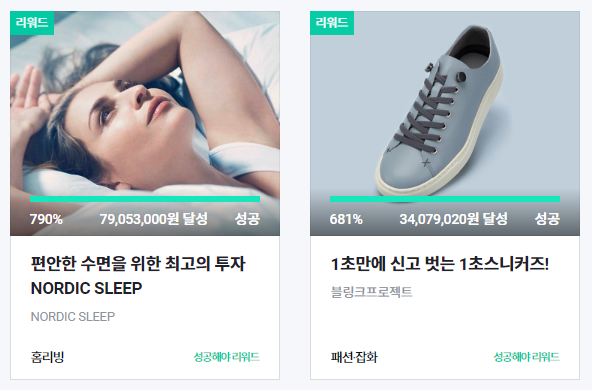
Wa: You’ve successfully launched two funding campaigns—one for 1-Second Sneakers, which you developed in-house, and another for Nordic Sleep, a collaboration with the Danish headquarters. I imagine the significance of these two projects was a bit different.
Bl: The differences weren’t that significant. Since we created the products or collaborated while considering whether they aligned with our vision, the essence remained similar. If there’s a difference, it’s that we invested a lot of resources into developing 1-Second Sneakers ourselves, whereas with Nordic Sleep, we put a lot of effort into adapting the product for the Korean market and importing it.
Wa: I imagine developing a product from scratch is more labor-intensive and carries greater risk.
Bl: Creating any new product is hard, but shoes were especially difficult. Since we had to accommodate the foot shapes of many different people, even making the molds wasn’t easy. But we knew from the start that product development is never easy, so we decided to enjoy the process as much as possible.
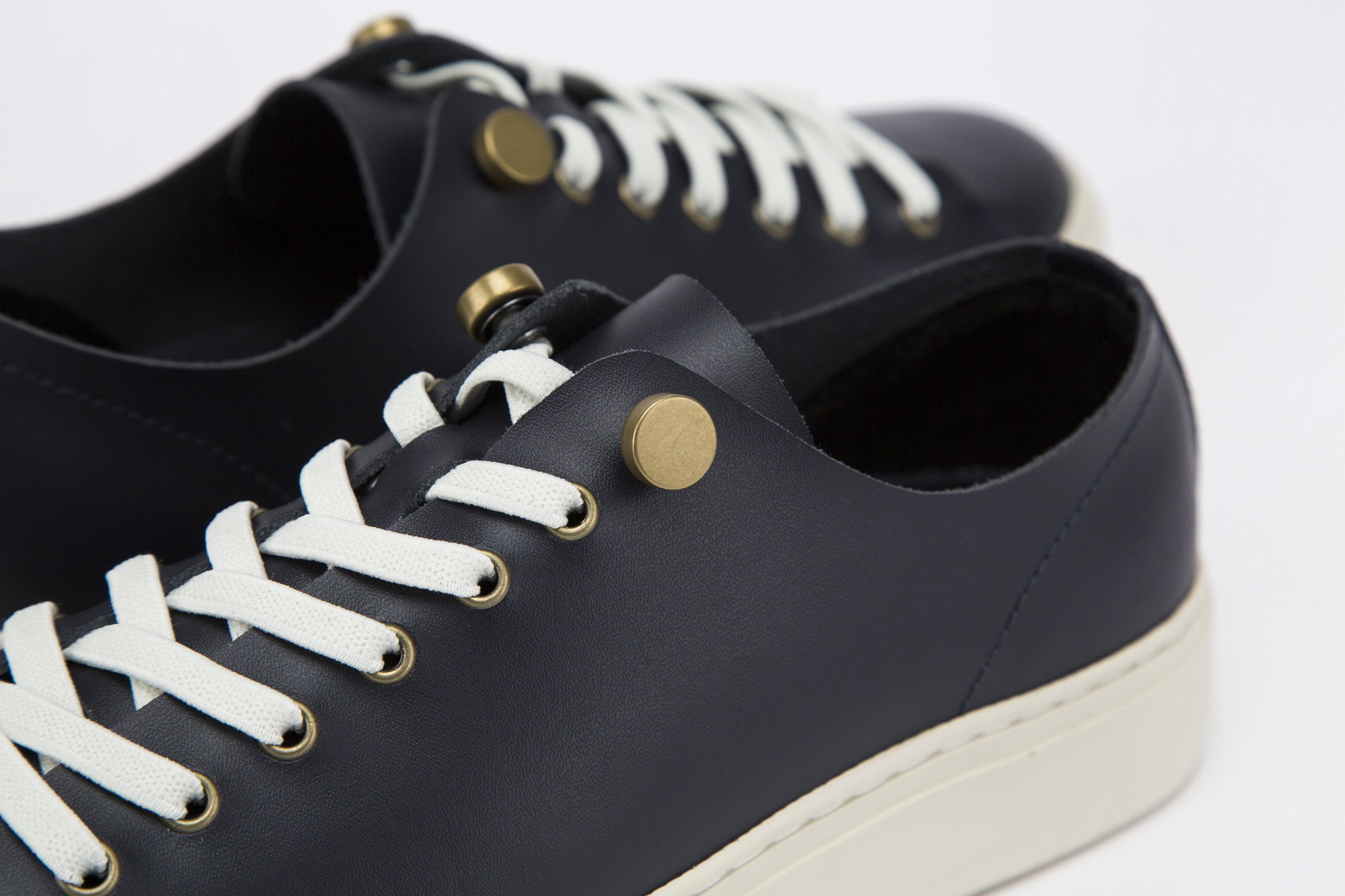
Wa: You also developed the “stud laces” (stretchable shoelaces)—the signature feature of 1-Second Sneakers—yourself, right?
Bl: Yes, that’s right. I’d always found tying and untying shoelaces a hassle. Stretchable shoelaces already existed, so I figured that if we just refined the finishing touches, we could make them so you wouldn’t need to tie them at all. It was just a small shift in thinking, but we ended up getting a patent, and now we’re even exporting them overseas.
Through this process, I realized that when you don’t have capital, you just have to take action no matter what. For a startup, time is more important than capital. I found that trying something and failing—rather than hesitating and wasting time—leaves you with more in the long run.
Wa: That’s right. For a small companies don’t have the luxury of waiting until all the conditions are perfect.
Bl: Yes. When you’re developing a product and running a business, you’re bound to run into some challenges. My approach is not to stop when that happens, but to push through those challenges. Whether it’s the product, branding, or service, it’s nearly impossible for a startup to get off to a proper start with all the conditions perfectly in place.
Studrace started that way, too. We went through dozens of trials and errors to achieve the results we have today. Going through those challenges made me realize that no effort is ever wasted.
Wa: Creating a new product seems to be a process that brings both joy and pain. With your second funding round for the Nordic Sleep pillow, I imagine there was less of that joy and pain.
Bl: I found a new kind of joy in it. Since sleep plays such a significant role in our quality of life, I’ve always believed that pillows are an important product that enhances the value of our lives. One day, I bought a Nordic Sleep pillow for my mother, who usually has trouble sleeping, and she was extremely satisfied with it. This pillow was so famous that it had consistently ranked number one in the Japanese home shopping pillow category.
Seeing how much my mother loved it, I wanted to bring it to Korea, so I kept contacting the headquarters in Denmark for about a year. It seems other large corporations had also reached out extensively, trying to secure a license to distribute Nordic Sleep. But since they just sent a single representative who immediately started talking about prices, the headquarters didn’t see any reason to proceed.
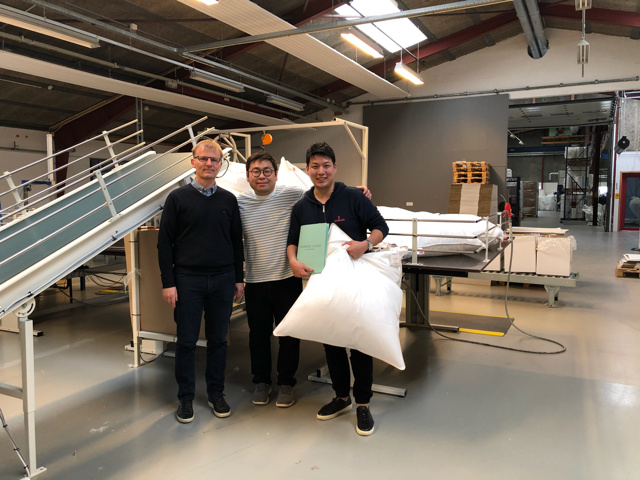
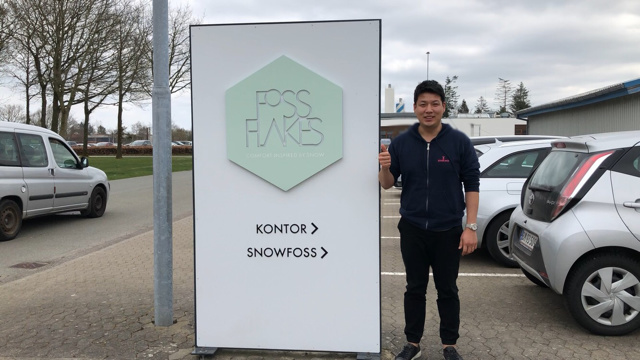
Then an opportunity came my way, so I flew to Denmark myself. Watching the pillow-making process firsthand and feeling the product gave me even more confidence. Even though the headquarters was located in a village quite a distance from Copenhagen—which should have been physically exhausting—I had a wonderful time.
Wa: You can really see the joy in your expression as you talk about it. How did you convince the Danish headquarters?
Bl: I had only one request: to make the pillows in the Korean style. Europeans mainly use square, cushion-shaped pillows, but we prefer rectangular ones, right? So I asked them to produce them in the standard Korean pillow size, tailored to the Korean body type.
Headquarters said it wouldn’t be easy to produce a separate Korean-style version because of the minimum order quantity. So I told them we’d cover the minimum order quantity ourselves and asked them to just go ahead and make them. I viewed the minimum order quantity as the bare minimum risk we had to accept to stay true to our mission and help people achieve a better sleep life. In the end, we succeeded in persuading headquarters, and upon returning to Korea, we launched our funding campaign.
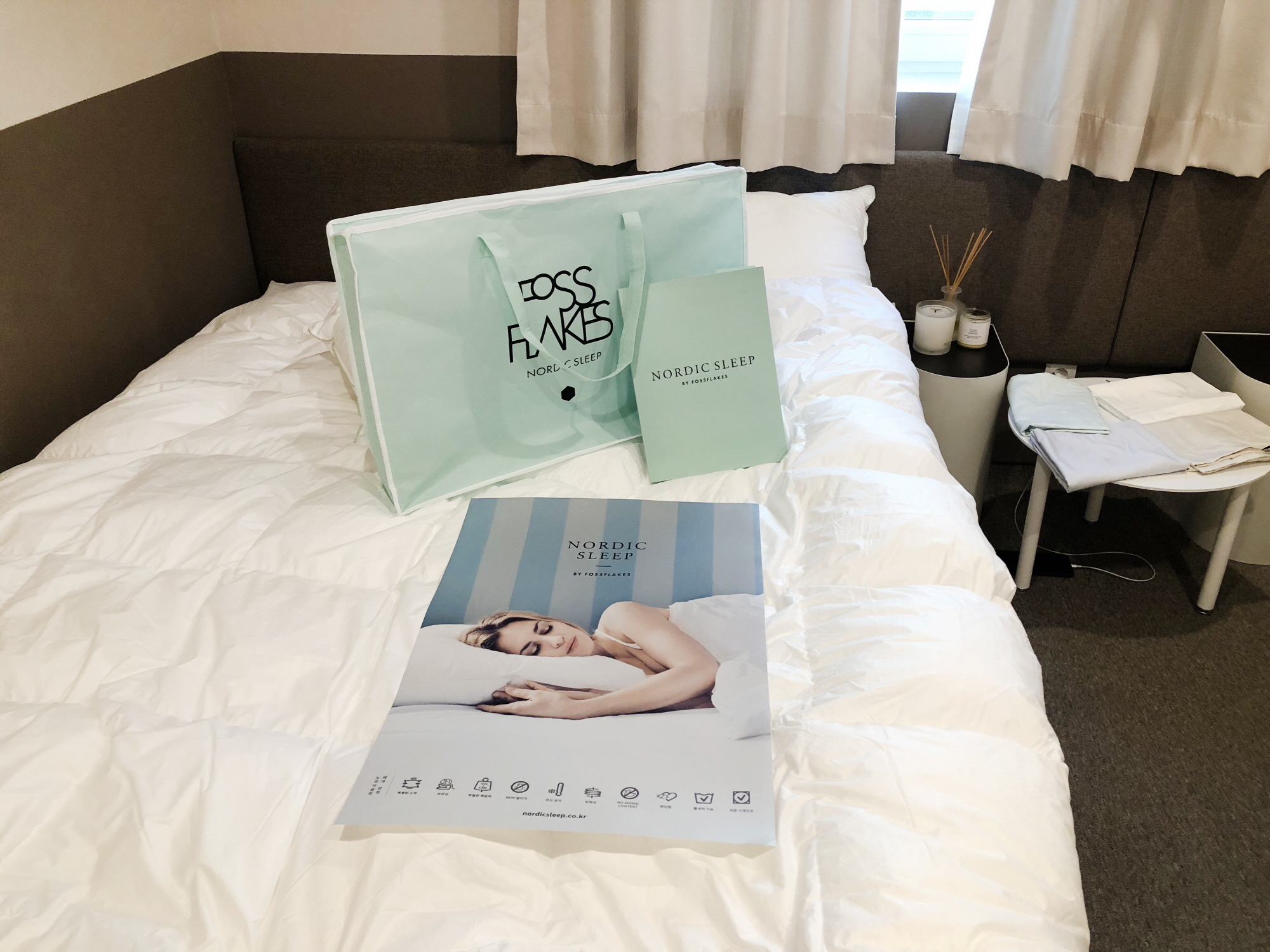
Nordic Sleep Showroom
Wa: Even if you thought it was a minimal risk, you must have been worried.
Bl: I can’t say there was absolutely no worry. But those concerns were put to rest when we opened the showroom. The very first thought that crossed my mind when I visited the headquarters in Denmark was, “The people making these products look so happy.” We had lunch together and talked a lot about why they work here and what their goals are. One employee told me that their current dream is for people who use this pillow to sleep well and be happy.
You naturally trust a product more when the people making it enjoy their work, right? As I toured the factory further, I saw that they conduct product inspections at least three times and incorporate feedback from physical therapists and doctors. That’s why I wanted to introduce our supporters not only to the product itself but also to the process behind it and the people who make it—and that’s why I opened the showroom.
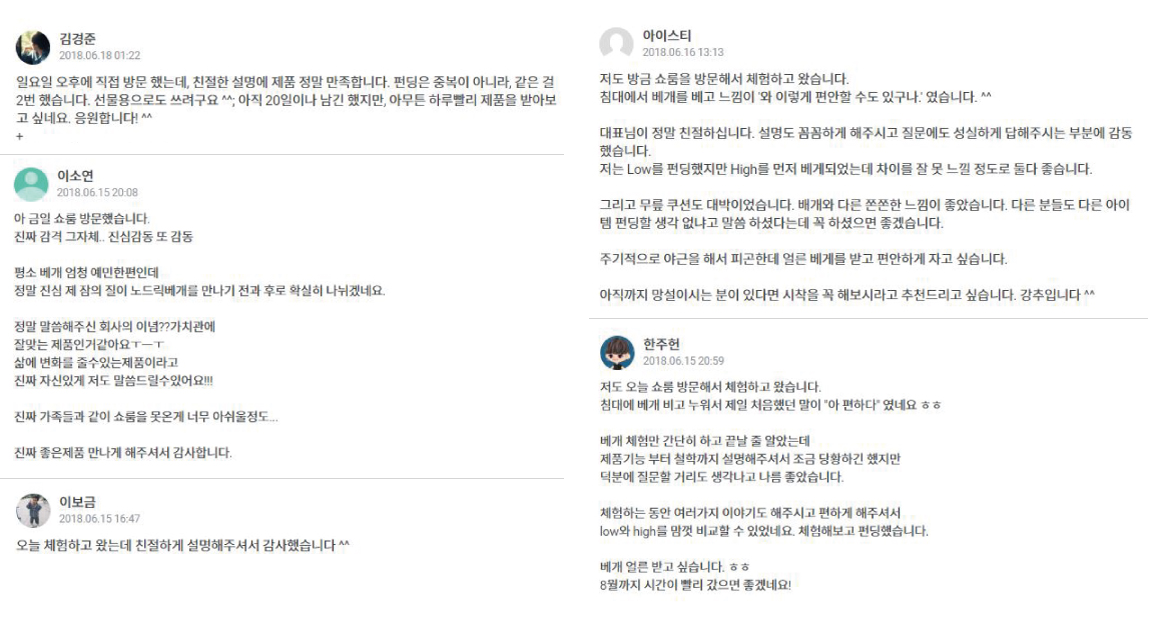
Nordic Sleep Showroom Review
Wa: Doesn’t it cost quite a bit to open a showroom?
Bl: That’s right. From logistics costs to venue rental fees, the expenses are no small matter. If I’d been thinking about profit, it would have been a difficult decision to make. I was reminded of something the CEO of our headquarters once said. He told me that his dream wasn’t to make a huge profit from these pillows, but to make more people’s sleep lives more comfortable. To truly convey the essence of this product, the only way was to open a showroom and share the story behind it more vividly with our supporters.
Over the course of five days, about 50 groups signed up, and for about an hour per group, I showed them the photos and videos I’d taken while sharing the story of the pillow and the people at Nordic Sleep. At first, it was something we started with the mindset of “Let’s just give it a try!” But those who experienced Nordic Sleep’s Story and quality firsthand shared their feelings from the showroom in their comments, and others who saw those comments then supported the funding campaign with confidence. Seeing this virtuous cycle unfold made me realize that this was truly a worthwhile endeavor.
Wa: Listening to your story, maker, it seems you really understand the essence of wadiz funding.
Bl: After running my own funding campaign and looking at various other funding campaigns on wadiz, I realized that miracles don’t just happen out of the blue. Just by listing a project on wadiz, reaching 100 million won? That just didn’t make sense.
Wa: That’s exactly the message I want to convey! “Miracles don’t just happen out of the blue.” As a maker who’s experienced it firsthand, how do you think the “miracle” of wadiz funding happens?
Bl: I think wadiz operates on a system that forces you to focus on the essence of the product. Focusing on the essence—even if it doesn’t seem like much at first—makes a huge difference later on. It gives you the right answer, not just a quick fix. When I look at makers who successfully run funding campaigns on wadiz, many of them focus on the essence of their product and their own story. I think it’s a platform where those who focus solely on selling points—using sensationalist copy or clichéd stories you’d expect to see on an online store—will struggle to achieve real success.
Wa: That’s probably why makers find wadiz funding more challenging. It’s not enough to just introduce the product—they have to reveal more of their personal story. Even so, is there a reason why they should still run a wadiz funding campaign?
Bl: First of all, launching a product for the first time on your own website is vastly different from launching it on wadiz. The biggest advantage of wadiz funding is that you can gather data before diving into full-scale production.
If you launch a product and place an order assuming, “The white color will sell well,” but the black color ends up being more popular, you’ll have to spend a lot of resources dealing with the white inventory.
But on wadiz, since you can gauge customer preferences before orders are placed, you can allocate the resources you’d otherwise spend on inventory management to more productive tasks. I believe this difference can be a key factor that gives small companies, like startups, a head start of at least three months.
The performance-based system of open marketplaces is another reason. Studrace is listed on virtually every major open marketplace in Korea. These platforms don’t tolerate failure—only proven products get featured.
In such an environment, what are the chances that a small, newly launched company’s innovative product will stand out? However, on wadiz, we can highlight what makes our product unique through Story.
Of course, it takes a lot of effort, but wadiz is a platform where we can convey the essence of our product and what sets it apart from others through storytelling—and where there are people who pay close attention to these Stories. Ultimately, it’s the perfect platform for passionate makers.
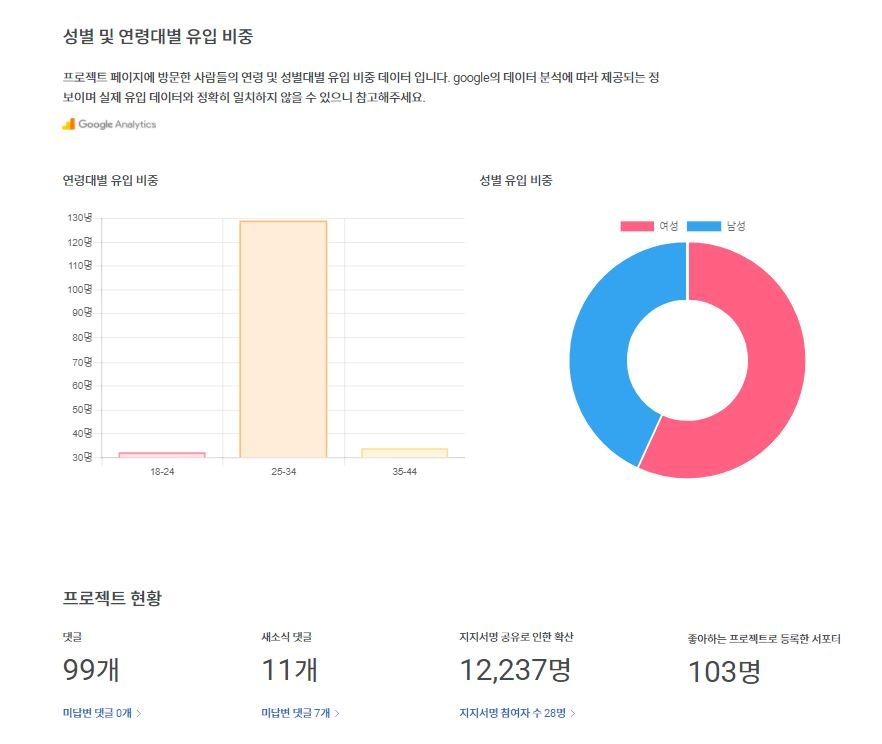 You can also check supporters’ referral sources, gender, and age groups on the dashboard!
Wa: Having data in advance makes a bigger difference than you might think. How did you utilize wadiz’s data?
Bl: Not only can you identify customer preferences based on the funding rates for each Reward, but you can also gain ideas for images and copy to use in your marketing. During the one-month Nordic Sleep campaign, we changed the main title, the copy in the Story, and the main image about six times.
The click-through rate varied each time. While it was challenging to identify key factors by analyzing the changing data, it was also fun and fascinating. If you don’t overlook even the smallest details, you’ll be able to gain even richer insights.
Wa: You really strike me as a dedicated maker. Finally, as a maker who’s successfully run two funding campaigns, could you share a word of advice for other makers?
Bl: I hope you’ll think things through persistently. As a maker, you’ll probably relate to this: when conducting market research, there are times when you feel embarrassed and just want to hide. Since so many brands and companies are already established in the market, what you’re doing can feel small and insignificant.
But if we don’t even try, we won’t have a chance. So I hope you’ll just give it a shot. If you gradually address your shortcomings, objectively identify the areas where you can specialize, and build on those strengths, I believe those efforts will pay off in one way or another down the road. To all you makers out there, hang in there!
-
Check out the services available for makers!
· Learn how to [get started] with a wadiz project
· Sign up for [wadiz funding courses] taught by funding experts