[Monthly Trend Report | Pre-order] wadiz: A Step Closer to Reality Than Overseas Direct Purchases
This article is part of the<Monthly Trend Report> series
Pre-order (Global) edition

Don't forget to grab this!
- The primary consumers of overseas direct purchases and wadiz users overlap.
- As the overseas direct-purchase market continues to grow, it’s worth officially launching products and services on wadiz that were previously only available in overseas markets.
- It’s advantageous to focus on either a “premium” or “value-for-money” concept and run the project with a generous discount rate and a sufficient duration.
Pre-order on wadiz
More than just a pre-order
Pre [prefix] Indicates “before” or “in advance”
Order [verb] to place an order (for a product), to request (a service)
In the market, “pre-order” typically refers to accepting customer orders in advance, before the official launch of a product or service.Inretailterms, it’s like a soft opening period to gauge demand.
At wadiz, the meaning of “pre-order” is slightly different. It’s not limited to advance orders for products or services before sales begin; it extends to include special benefits available exclusively to wadiz supporters. The following examples all fall under wadiz pre-orders.
- Introduce products on wadiz that are distributed in overseas markets but have never been officially released in the domestic market.
- Offer special bundles, price discounts, or limited-edition perks exclusively for wadiz supporters.
- For a limited time, these products and services are available exclusively on wadiz.
Among these, the first type —where products already distributed in overseas markets are officially launched on wadiz— is seeing a growing number of projects that launch on wadiz and achieve great success. This success isn’t solely due to a shift among wadiz supporters; the likelihood of success has increased significantly as domestic consumers’ attitudes toward “direct overseas purchases” have changed dramatically.
So, what kinds of products or services should you launch on wadiz, and how should you set your prices? I’ll break down the answers one by one.
The trend of overseas direct purchases, which had been gaining momentum even before the pandemic,
The 5 Trillion Era of Direct Overseas Purchases
In 2021, online “direct overseas purchases”(where general consumers purchase products and services directly from overseas markets without going through distributors)totaled 5조 1,404억 원. This represents a 26.4% increase from the previous year and marks the first year the direct overseas purchase market entered the 5조 원 era.
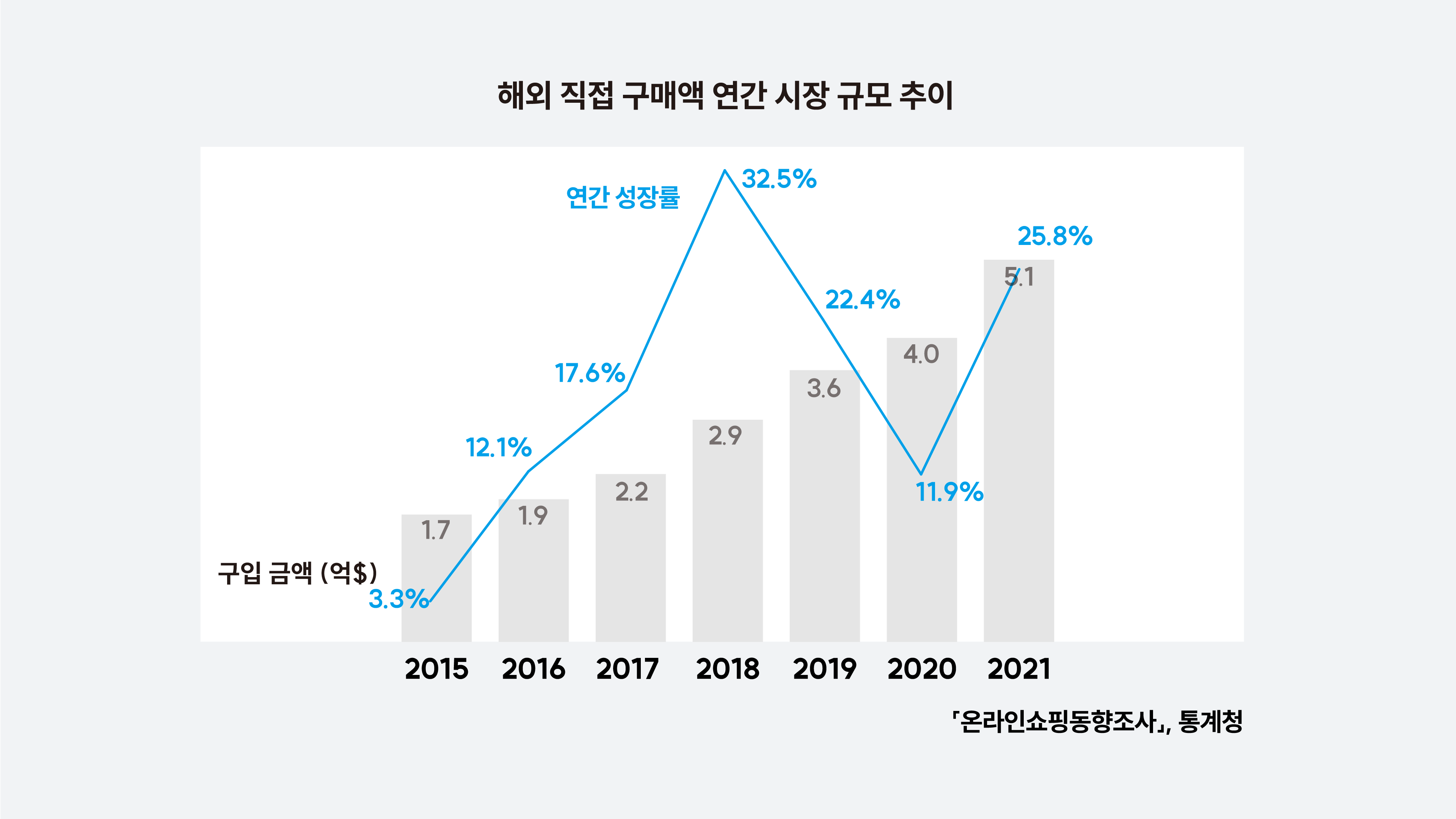
Looking solely at the strong growth in 2021, one might analyze that it was driven by restrictions on international travel due to the pandemic. However, while transaction volume grew by 32.5% in 2019—before the pandemic—it grew by only 11.9% in 2020, when pandemic restrictions were at their peak. This indicates that COVID-19 was not the sole reason for the growth of the cross-border e-commerce market.There are three key changes that drove this growth.
Not only has the way people shop through cross-border e-commerce
the reasons for buying, and the people doing the buying have all changed.
The first change is in the types of products purchased.
When the overseas direct purchase market first opened, purchases were primarily focused on high-end items such as handbags, luggage, and perfume. However, in 2021, overseas direct purchases encompass a wide variety of items, including dietary supplements, home appliances, and computers. In particular, food sales rose by 44.2% year-over-year in 2021, while sales of toys and dolls increased by 25%.
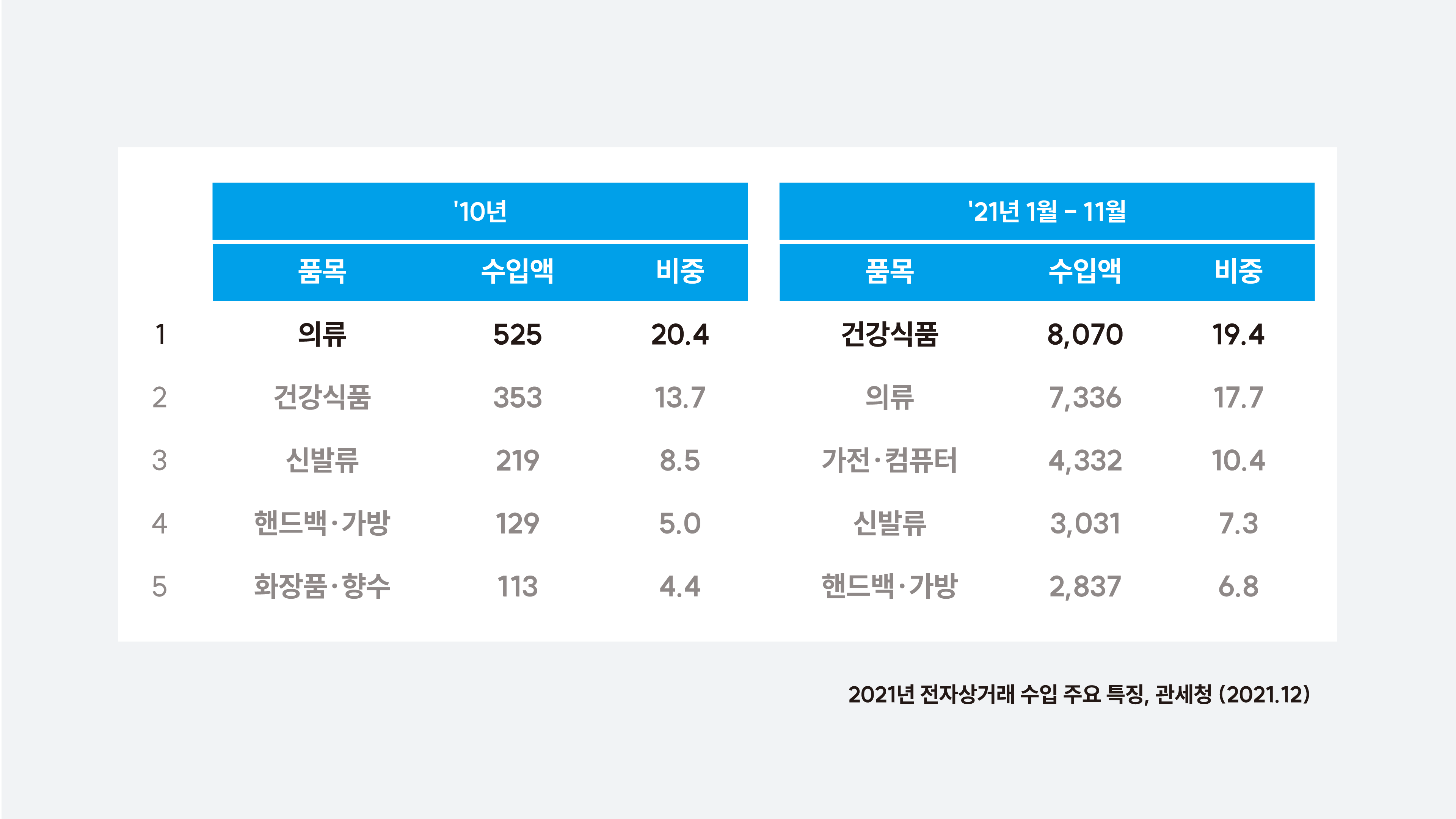
Health supplements are consumed daily, and once you buy toys and dolls, you play with them every day for a while. In other words, unlike the previous trend of overseas direct purchasing—where people would wait for events like Black Friday or Singles’ Day to buy high-priced clothing they’d long wanted— recent trendsshow a shift toward regularly purchasing everyday items. Consumers have become accustomed to overseas direct purchasing.
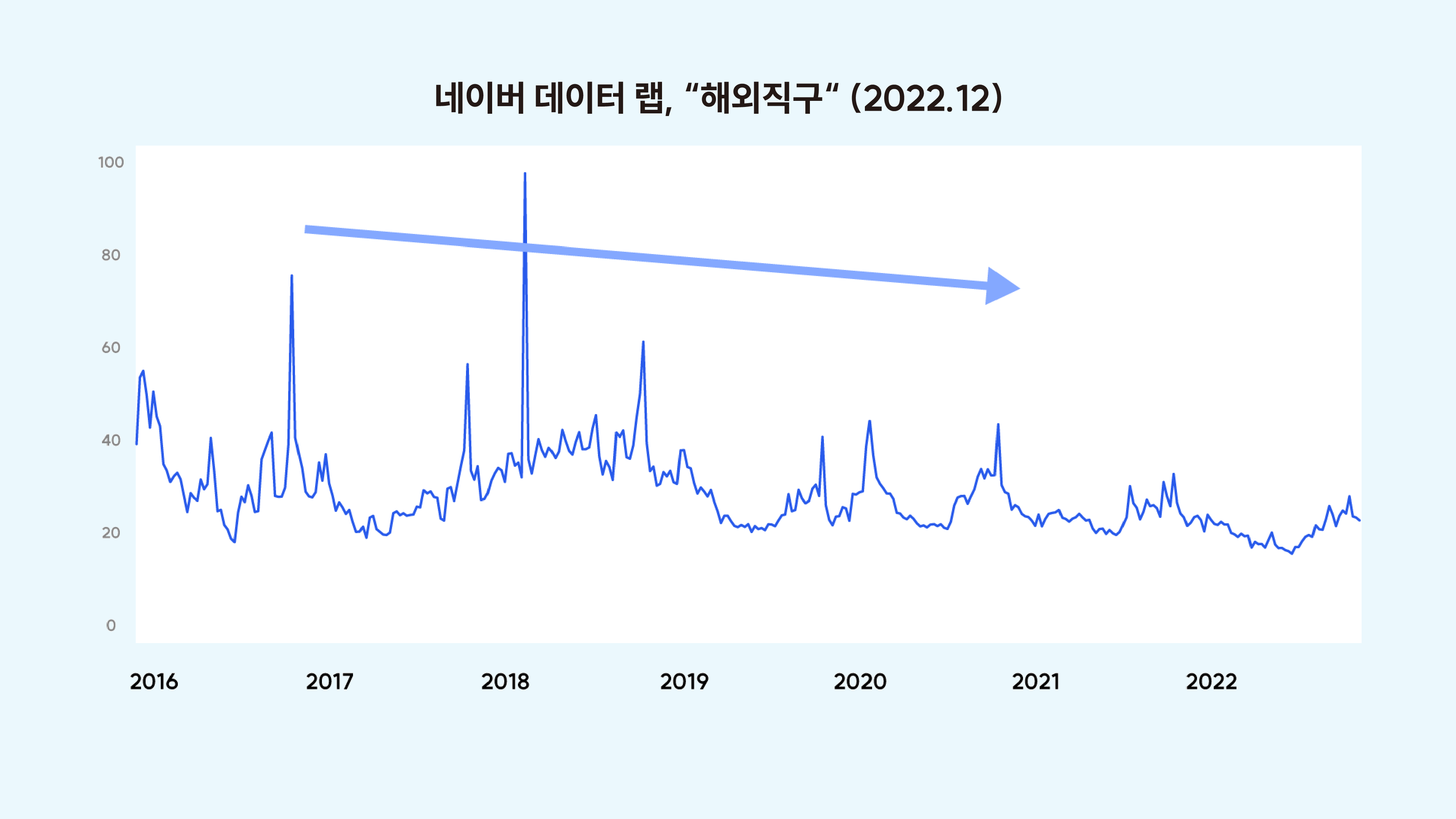
The second change is evident in the reasons people shop overseas.
When asked in 2016 why they shopped overseas, nearly 80% of the 1,000 respondents cited lower prices compared to the domestic market.
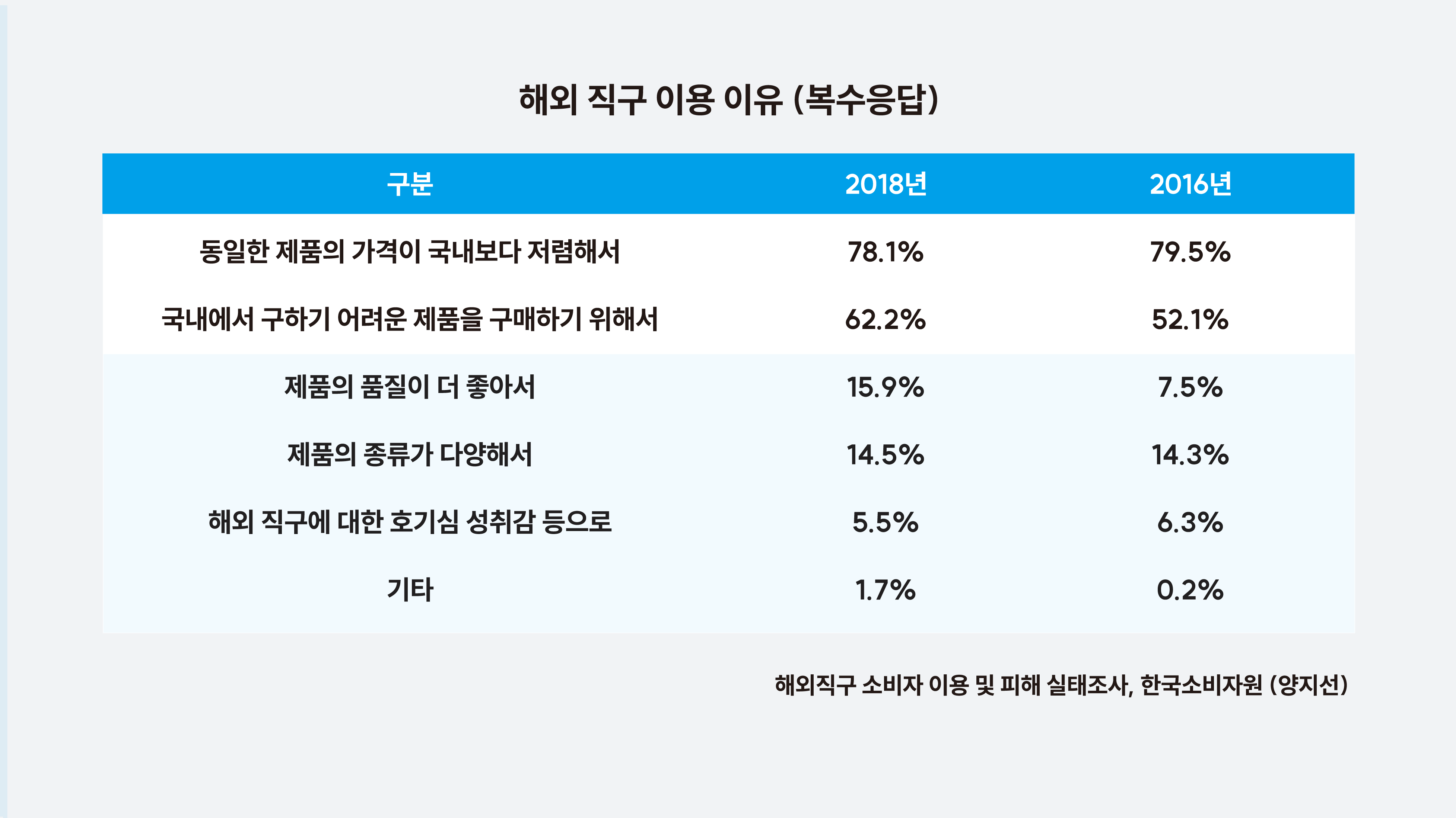
However, two years later in 2018, when the same question was asked, the percentage of respondents citing lower prices dropped slightly, while the percentage of those who wanted to “purchase products that are hard to find domestically ” rose significantly, accounting for 62.2 %. This shift reflects a characteristic of today’s consumers—moving beyond simply shopping overseas for lower prices to actively seeking out something unique that isn’t available elsewhere.
The third change is evident in the number of people who have tried overseas direct purchasing.
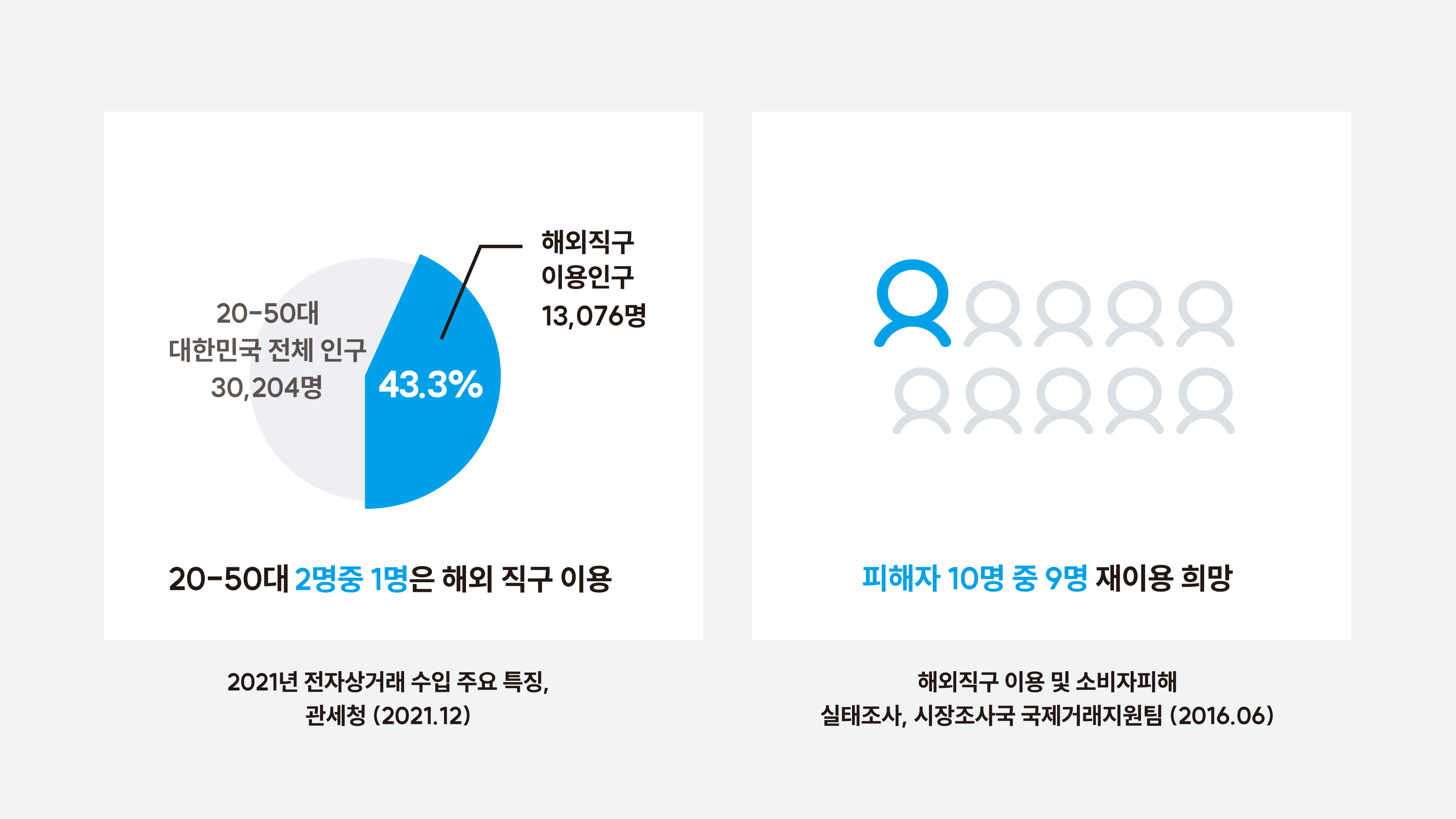
A total of 13.07 million consumers aged 20–50 in South Korea have shopped directly from overseas. To put this in perspective, one out of every two consumers in this age grouphasshopped directly from overseas. Given the sheer number of people who have done so , it’s only natural that the transaction volume of the overseas direct-purchase market is steadily growing.
One interesting point is that despite the limitations of protection under domestic law, the popularity of overseas direct purchases shows no signs of waning. When we asked 110 consumers who had experienced problems with overseas direct purchases whether they would use the service again, 105 said they would.In other words, by establishing effective solutions for issues such as the cumbersome process or after-sales service,you can attract these overseasdirect purchaseshoppers as your customers.
The easiest way to introduce international brands to the domestic market
The easiest way to introduce overseas brands to the domestic market: wadiz
1. The Big Spenders in the Overseas Direct Purchase Market = wadiz Users
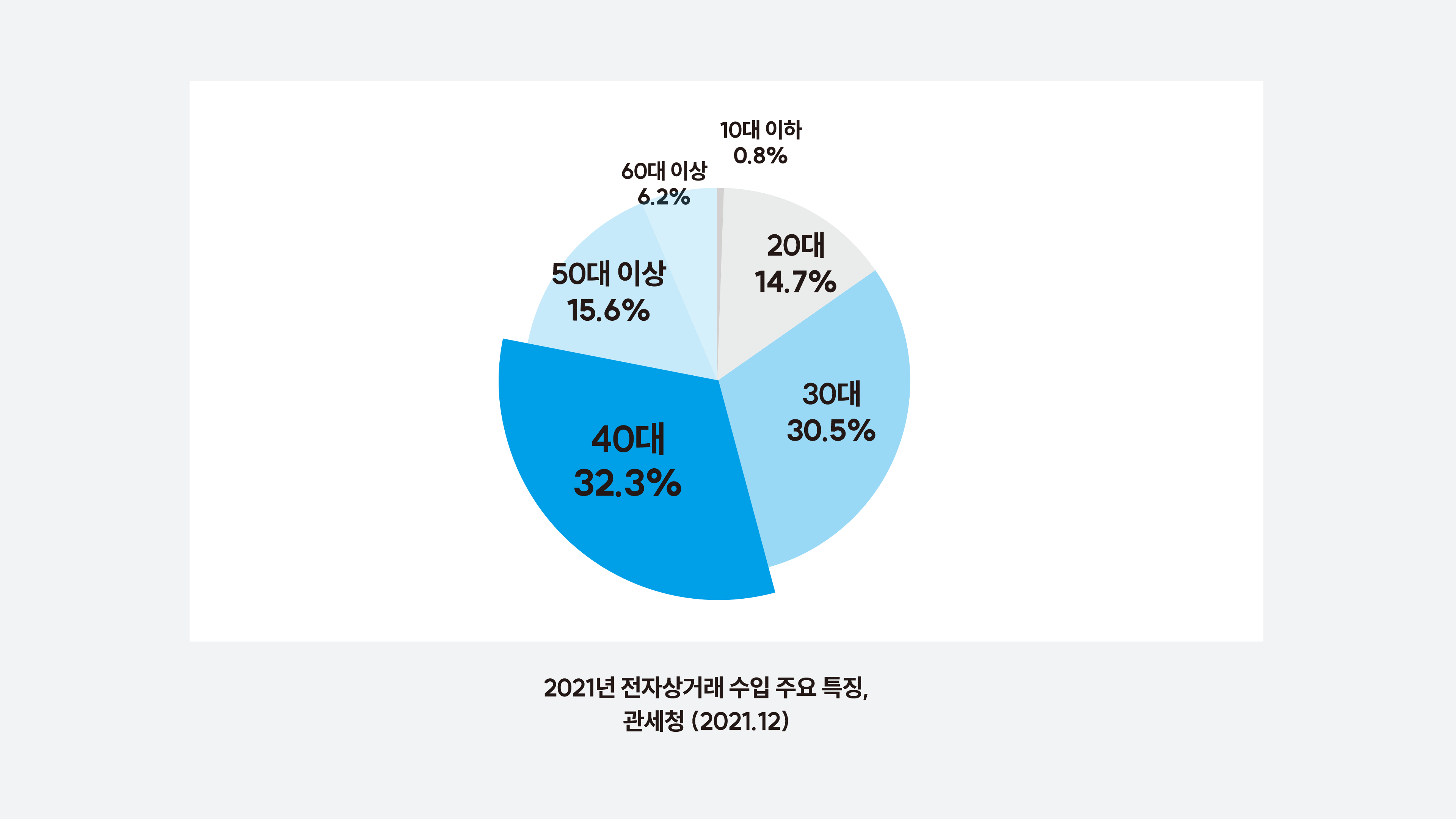
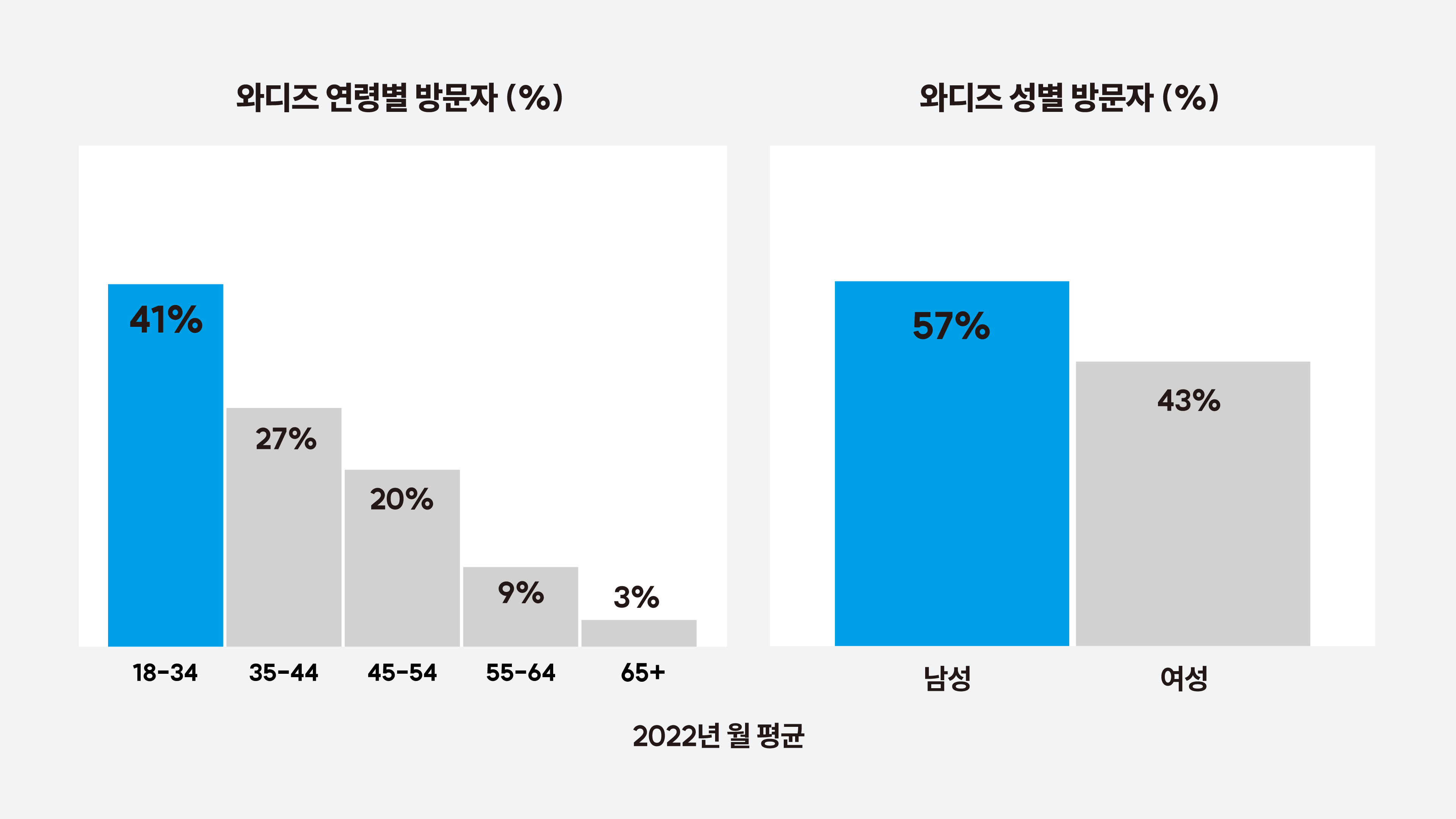
One in two South Koreans aged 20–50 shops directly from overseas. In particular, those in their 30s and 40s account for 62.8% of all overseas direct purchases, with men in their 40s leading the way at 16.5%. And wadiz’s primary user base.
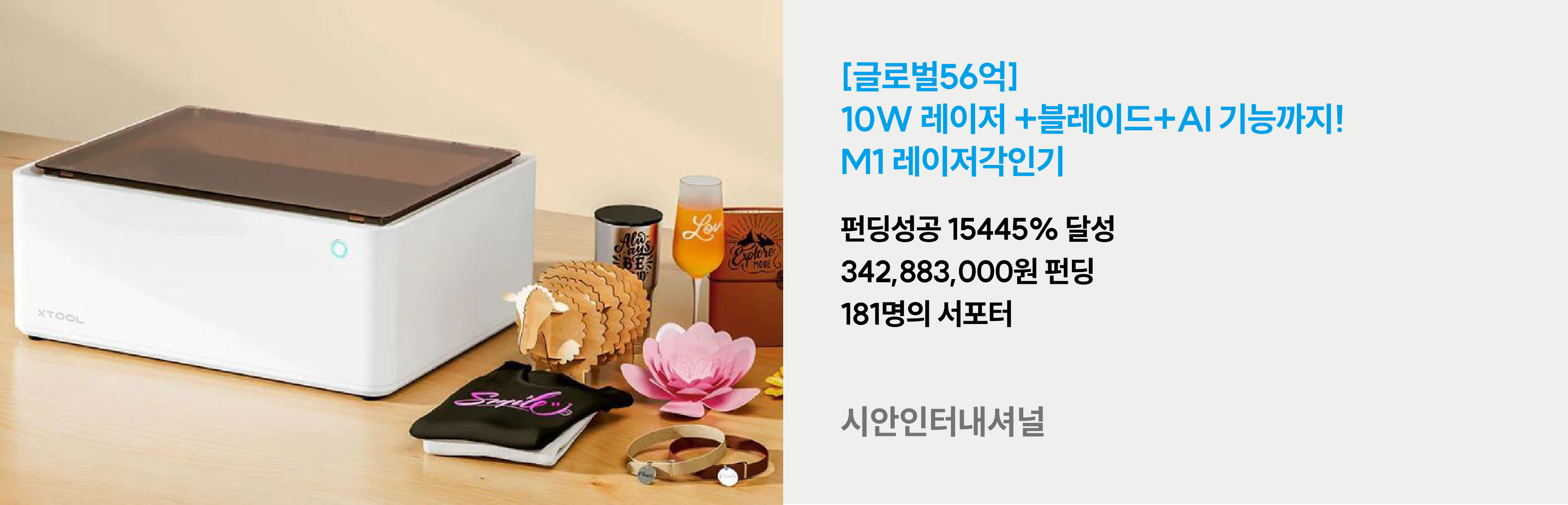
Consequently, among the projects that have achieved great successby introducing products from overseas markets and brands, thereare many cases that caught the attention of men in their 30s and 40s. Tech and home appliance products—such as laser engravers—whose practical uses aren’t immediately apparent at first glance have even raised nearly 350 million won. The less familiar a product is to domestic consumers, the greater its potential for success may actually be.
2. Products That Sell Well Through Overseas Direct Purchases Also Thrive on wadiz
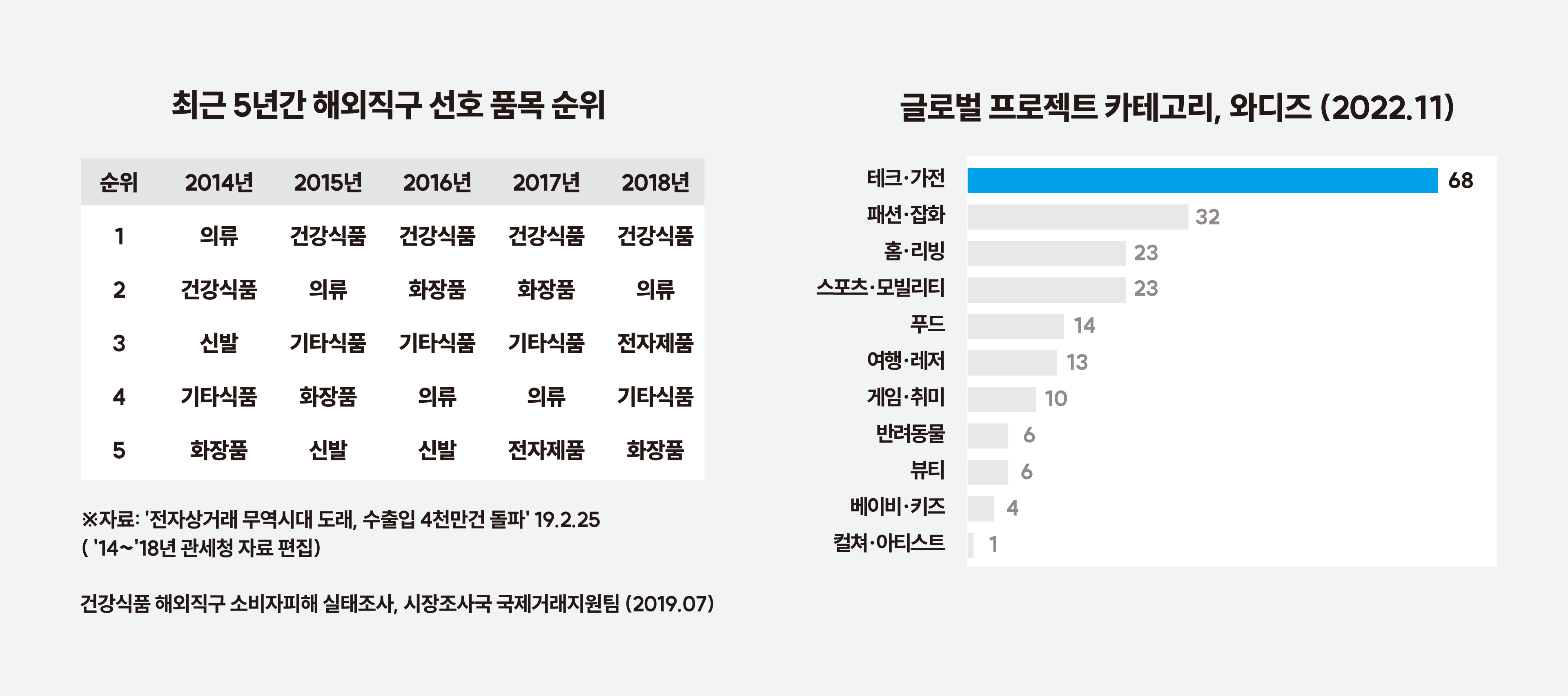
Health supplements and cosmetics are emerging as blue-chip products in the overseas direct-purchase market. These have always been categories of intense interest on wadiz, as evidenced by the launch of a 500 million won cosmetics campaign and a 250 million won energy drink campaign. Ifhealth supplements and cosmetics— which were previously available only through overseas direct purchases—are officially introduced on wadiz, we can expect even greater synergy from the combination of wadiz’s existing supporters and general consumers interested in overseas direct purchases.
It’s also worth noting that “electronics”—which, while not ranking first or second in the overseas direct-purchase market itself, still enjoy steady demand—are particularly popular on wadiz. Among projects that introduced overseas products and brands through pre-orders, the tech and home appliance category had the highest number of projects, at 68. For importers and distributors of electronics, wadiz will serve as an attractive platform.
3. Start with special perks.
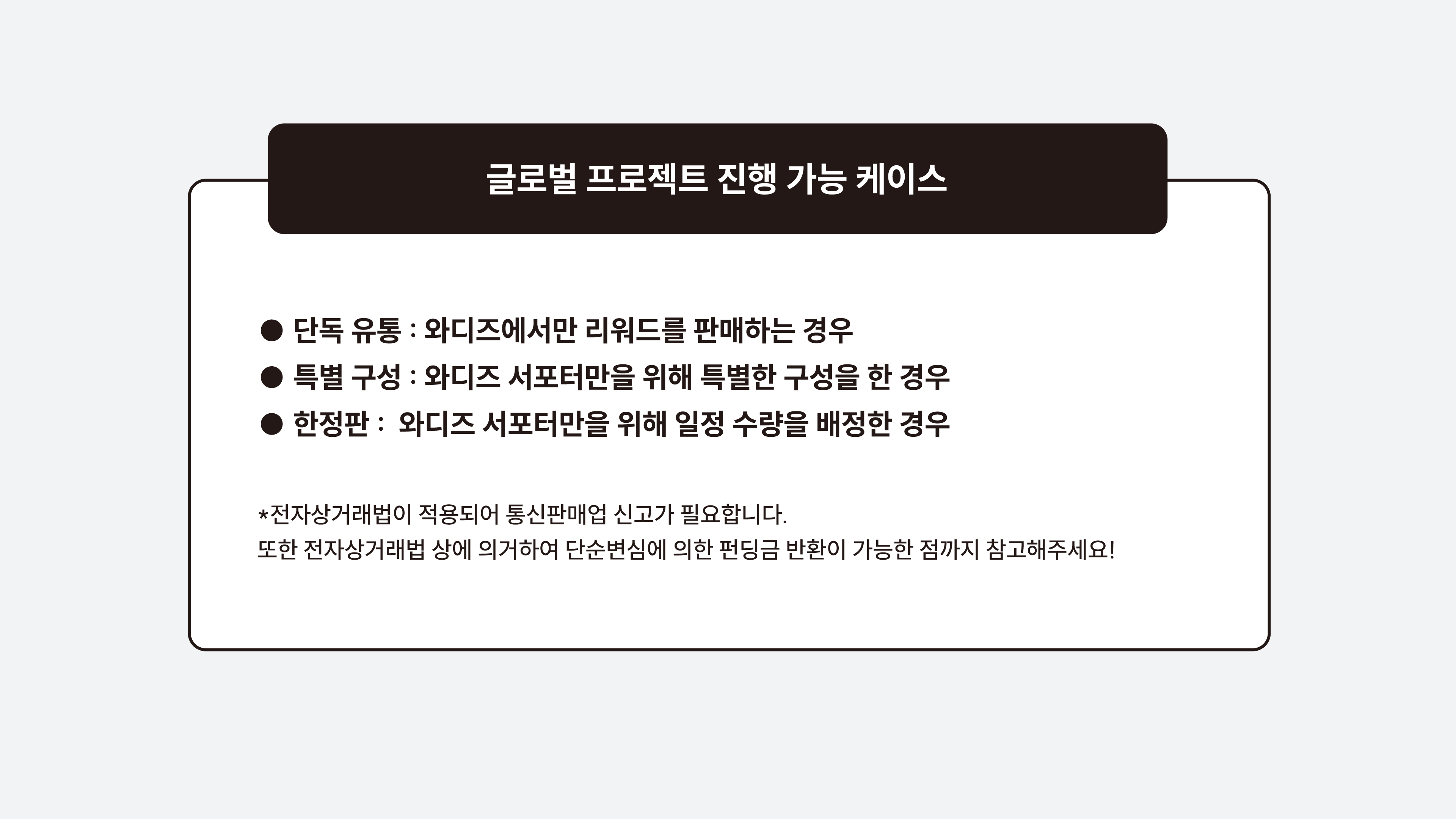
You’ve probably heard at least once that products or services already on the market cannot be featured on wadiz. However, if you add special perks exclusively for supporters, you can launch it as a new project.
The Orca Cooler project, which successfully leveraged special perks for supporters, promised “special benefits” in the form of lifetime after-sales service. As a leading luxury ice cooler brand in the U.S. with annual sales exceeding 300억, it was already well-known in the Korean market. At first glance, launching a wadiz project might seem impossible, but the project succeeded by offering a new appeal—lifetime after-sales service identical to that provided by the overseas headquarters—exclusively for wadiz supporters.

Importing and distributing overseas products
Start on wadiz
Based on a successful project, here are four strategies to share with you.
First, instead of an ambiguous price,
go for either a premium price or great value
The reason people shop directly from overseas is either to buy products at more attractive prices than in the domestic market or to experience the uniqueness of products not yet available here. Rather than trying to kill two birds with one stone, it’s more efficient to choose one approach to focus on. If you’re aiming for “price,” choose either “premium” or “great value.”
Premium
Sometimes, price builds trust—just as the food industry avoids setting product prices below a certain threshold. Especially in categories where price is directly linked to trust,choosing a premium strategy over value for moneycan be advantageous.
- Whether it’s beauty products applied directly to the skin or food products meant to be consumed,
- or baby and kids’ products
Value for Money
It’s now rare to find products on the market that lack basic functionality. Therefore, unless a product offers overwhelming functionality, consumers will weigh the price against the features before opening their wallets. Value for money has become crucial. For tech and home appliance products—or sports and mobility products—where objective comparisons of features and performance are possible, try highlighting your product’s value for money compared to other products on the market.
Second, Whether It’s Premium or Value for Money
You must be able to provide “evidence”
A claim of “premium” that comes solely from you will be rejected by customers. What you need in such cases is evidence that “others have also recognized me as premium.”

Just like the title “Olive oil supplied to the Spanish Royal Family,” it’s a good idea to leverage certifications or awards from the country where the product or service is actually produced. In such cases, I also recommend providing further context for the certification or award—for example, by explaining that “the OO certification is awarded only to brands that have supplied the Royal Family for N years or more.”
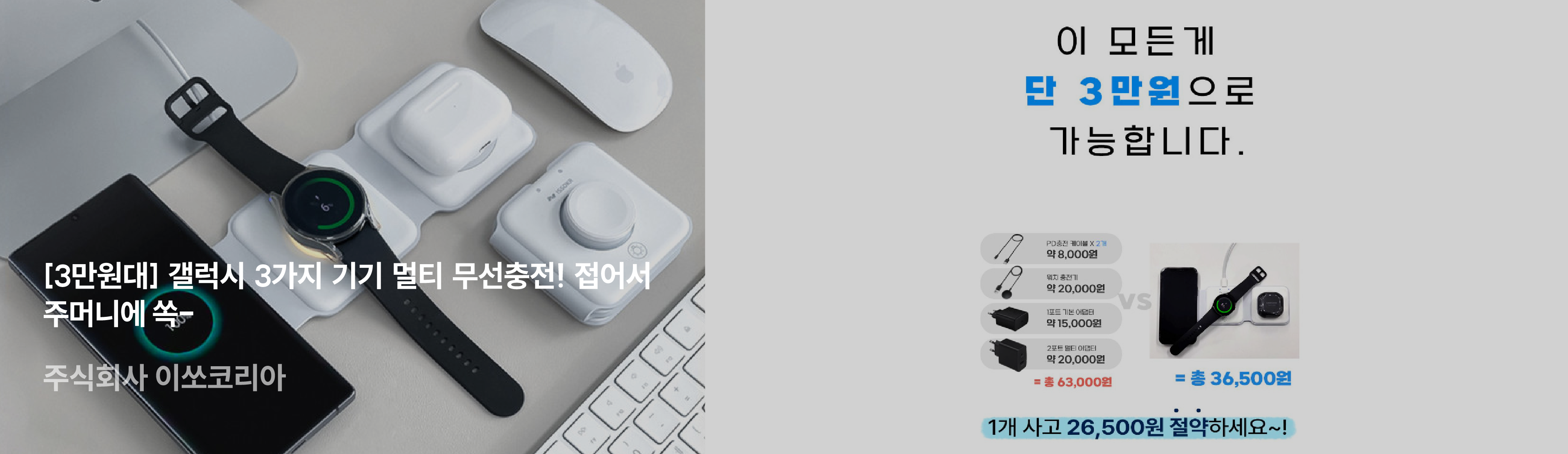
The same applies when highlighting value for money. You must be able to substantiate your claim of value. Content that compares the cost required to obtain the same features and performance with the cost of purchasing your product or service is a staple in many successful projects.
3. Avoid setting exorbitant prices.
According to a 2018 survey, consumers who shop directly from overseas perceive such purchases to be 27% cheaper than buying domestically.This is quite different from the findings of the Korea Consumer Agency, which showed that clothing—a category wherecross-bordershopping is particularly active—is actually only 7–18% cheaper. This highlights how differently consumers perceive cross-border shopping.
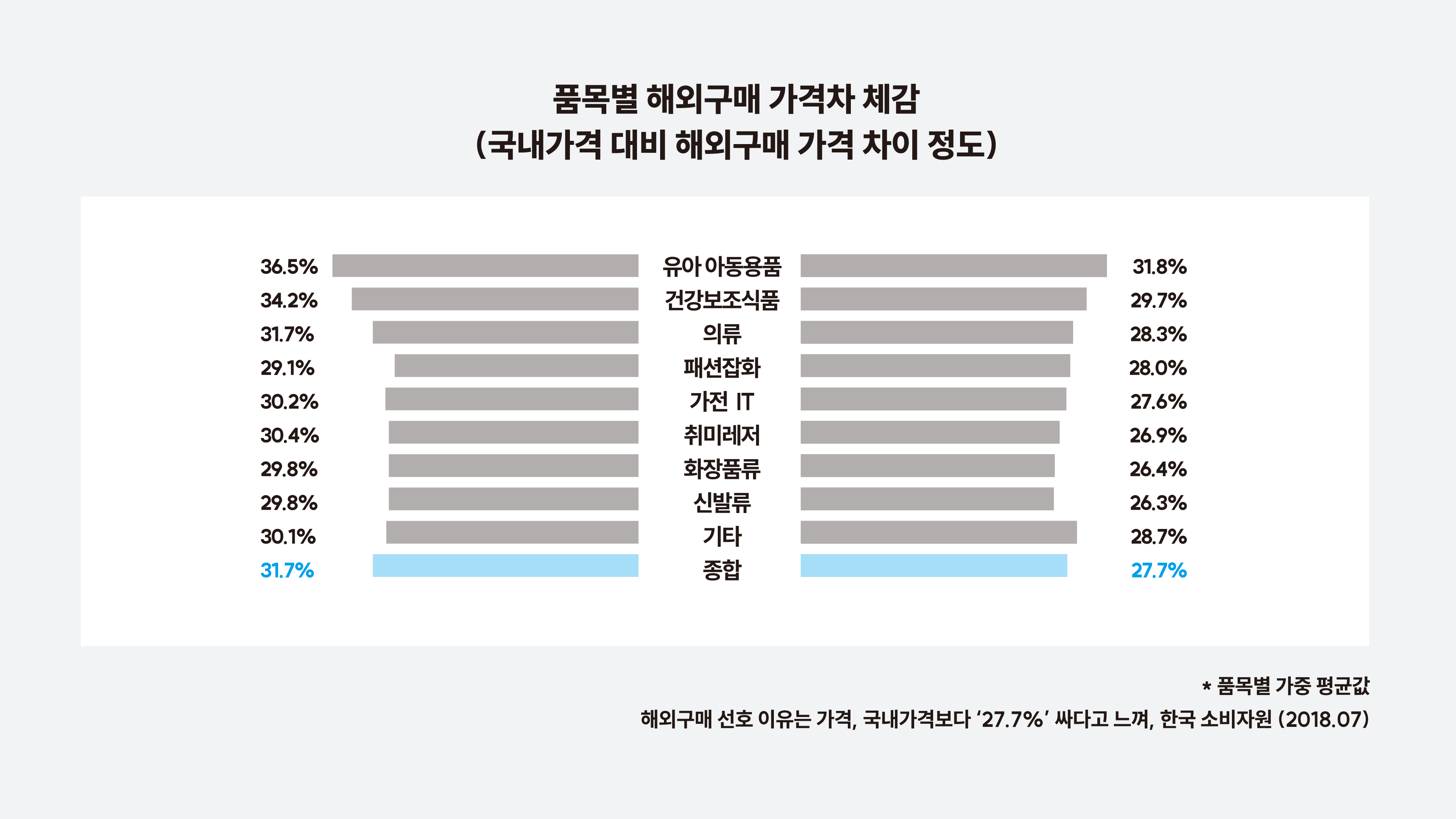
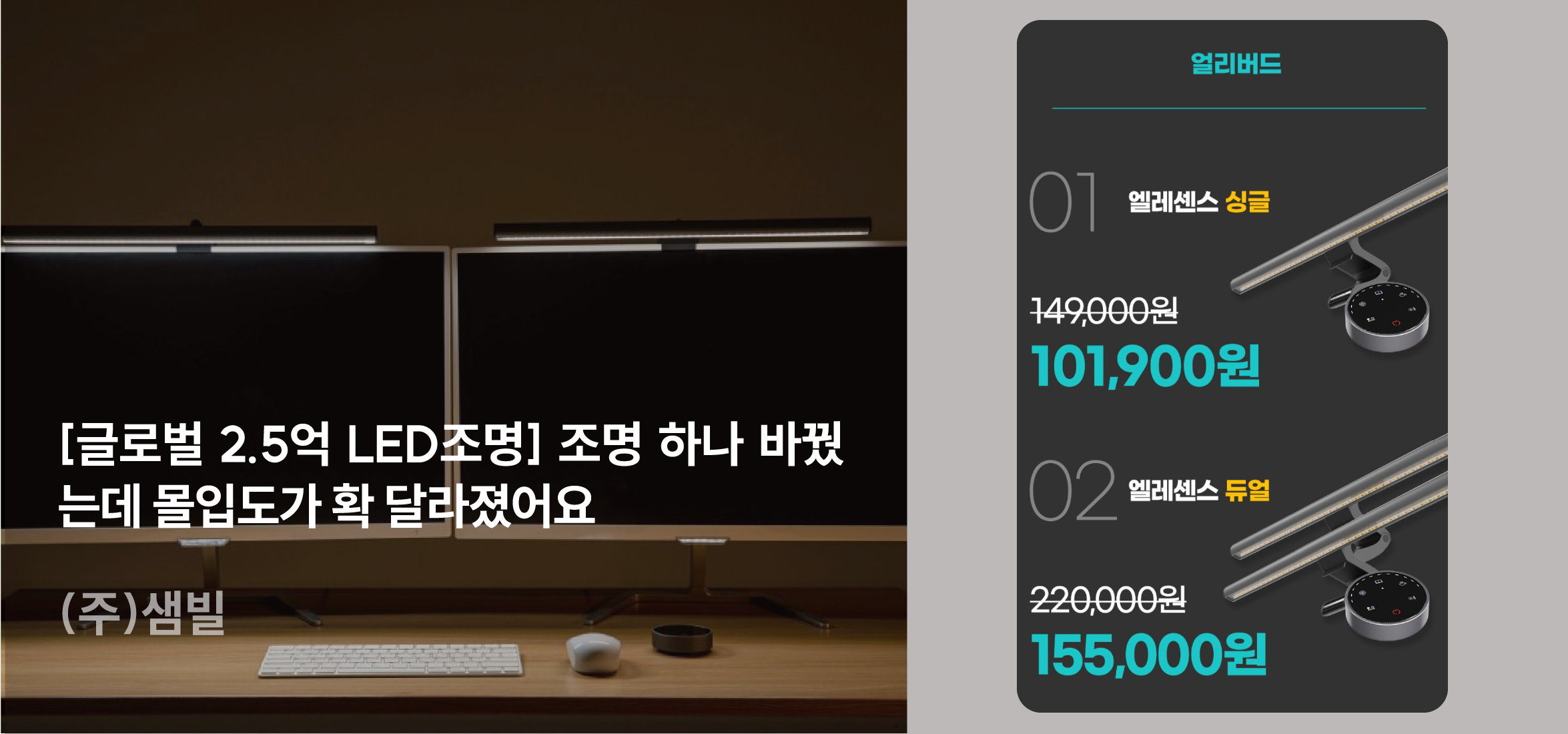
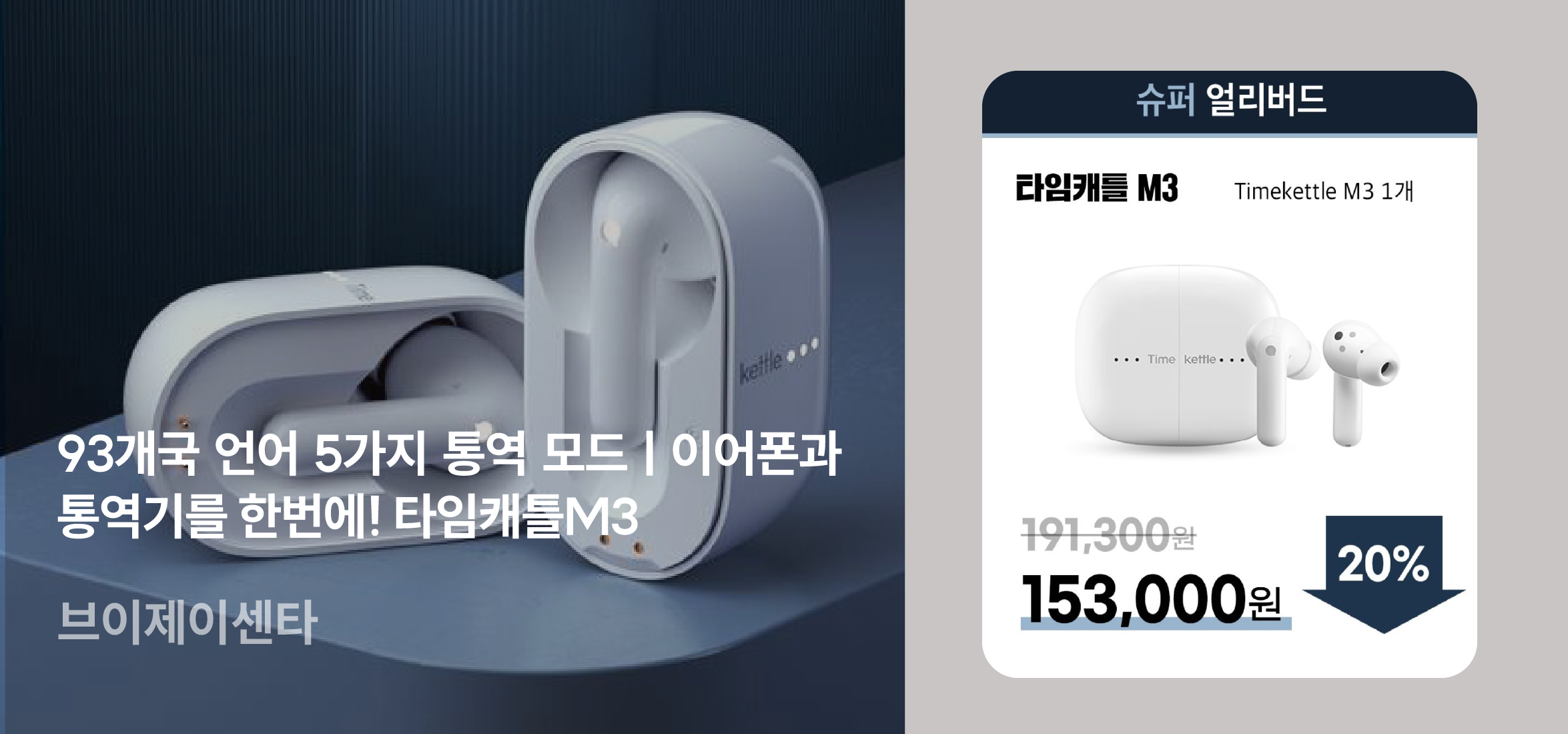
Therefore, to successfully introduce products and services popular in overseas direct purchasing to the domestic market, it’s crucial to set prices that accurately reflect this consumer psychology. It’s also worth noting that many successful pre-order projects on wadiz offered discount rates of around 20–30%. The projects listed below serve as prime examples.
4. A short project duration isn’t necessarily an advantage
Many projects on wadiz welcome supporters with a two-week period before the project launches soon followed by a two-week main campaign period. This is because if the project duration is too long, it can actually lead to supporter attrition.
However, importing or distributing overseas products and services naturally takes a long time.
- If you can run your project for a long enough period to attract as many supporters as possible,
- you can process as many products as possible in a single customs clearance to minimize inventory burdens.
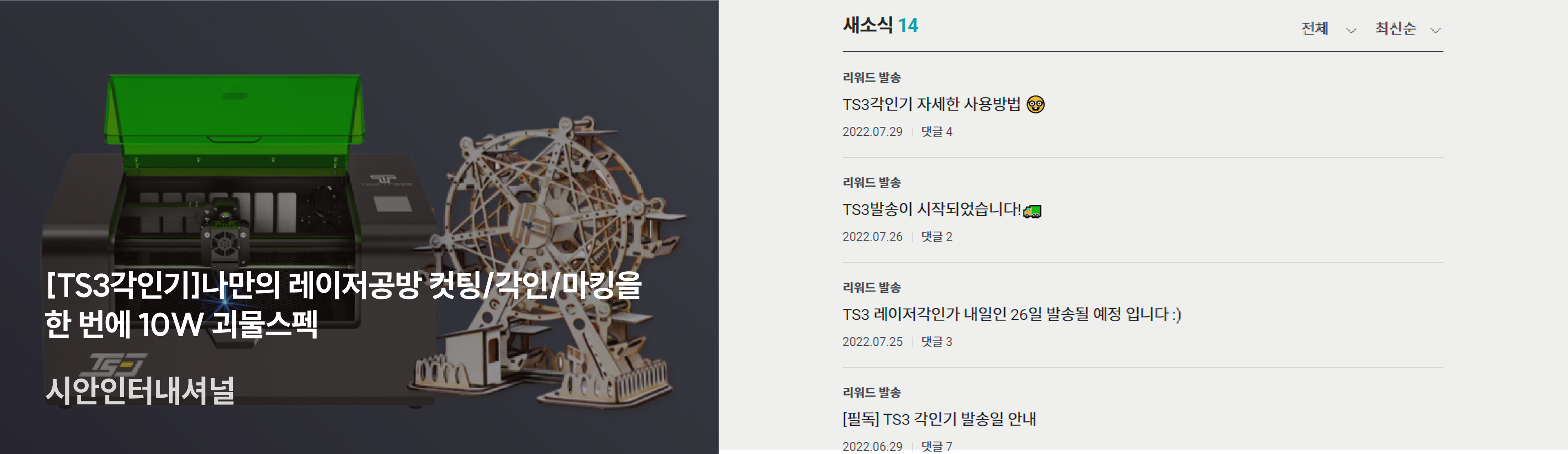
The TS3 Engraver took advantage of this. It began on April 30, 2022, and didn’t conclude the main project until May 31 of the same year. Including the period before launching, it effectively welcomed supporters for a full two months.
To ensure the wait didn’t feel excessive, we focused on keeping supporters engaged by consistently posting News throughout the project’s public phase. As a result, we received over 100 pre-orders for this high-end device—priced in the 80만 원 range—and raised over 9,000만 원.
Text Joo Hee-jae Edited by Choi Hong-hee Design Jeong Yun-bi