[Board Games] How to Launch a New Board Game Competitively
#3
By Jung Seok-hyun, maker at Olins Studio
"Board Game Funding: A Success"
Profile of Maker “Olin Studio”
Brand Name | Brand Launch Date | Featured Projects | Number of Supporters | Funding Goal | Satisfaction Rating | Total Number of Funding Campaigns | Cumulative Funding Amount |
|---|---|---|---|---|---|---|---|
Olins Studio | December 3, 2019 | 1,738 | Approx. 60 million won | 4.5stars | Approx. 100 million won+ |
3-Line Summary
- Olin Studio, which handles the entire process from board game production to distribution in-house, turned to wadiz to unveil a new design for Hwatu cards.
- Leveraging the know-how gained from numerous board game funding campaigns, they clearly explained what sets their Rewards apart.
- With the support of supporters who empathized with the challenges of traditional Hwatu, they achieved cumulative funding of over 100 million won and a satisfaction rating of 4.5. They also used feedback to create an even better product.
People and the Feel of Playing
The epitome of analog charm: board games
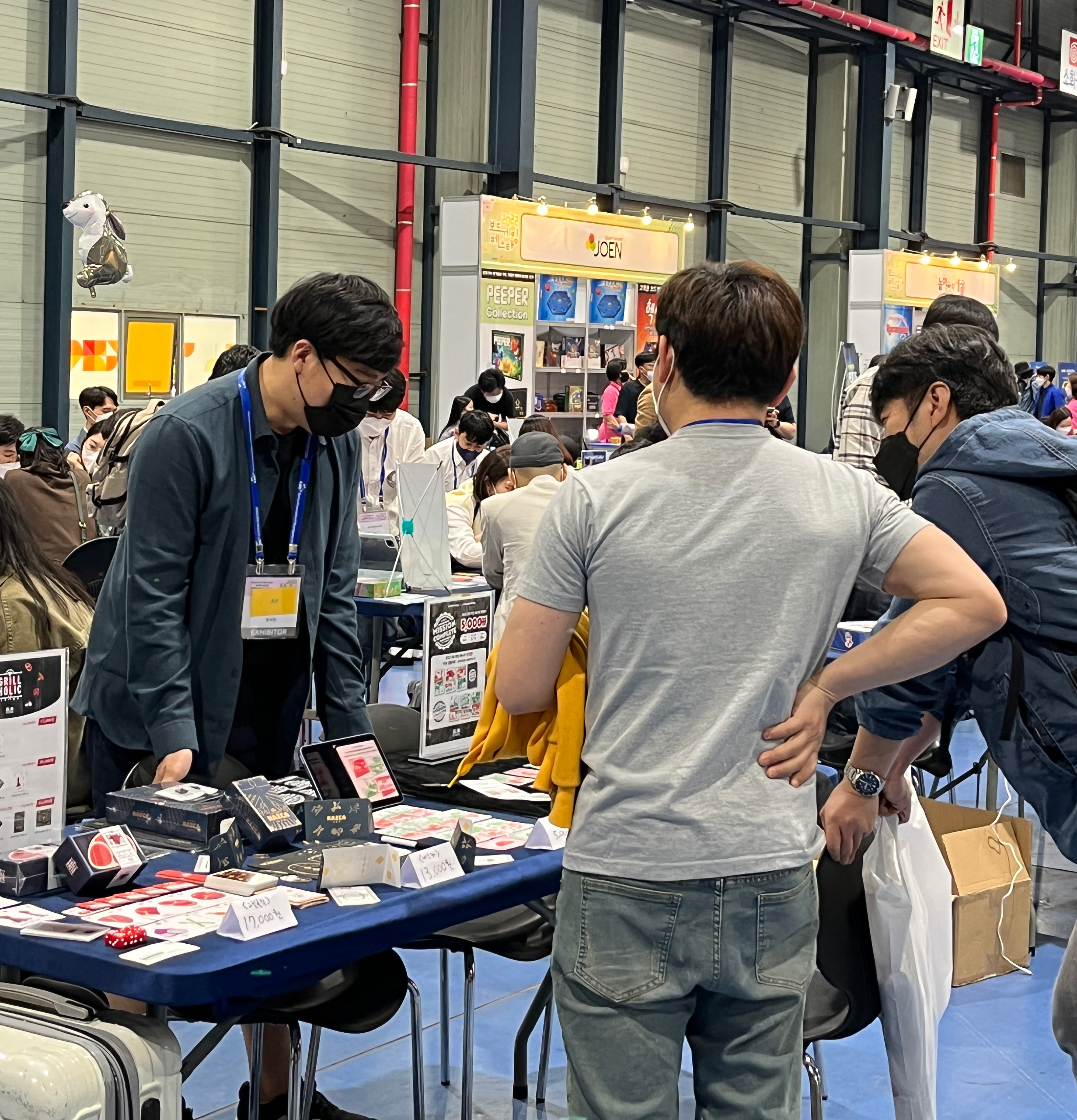
Jeong Seok-hyun, the maker behind Olin Studio, who participates in board game expos both domestically and internationally
Q. Hello. Could you please introduce Olin Studio and your maker identity?
Hello. I’m Jeong Seok-hyun, the CEO of Olin Studio—an indie board game label thatdevelops games across various genres using diverse themes— and the maker of the “Manwol Hwatu” project. Board games have been a consistent hobby of mine since middle school. I decided to go independent and establish my own label after releasing a game called “Tulip Holic” as a side project while working at my previous company.
While I’ve mainly released card games so far, I’ve recently launched a design chess set and am now developing games that use three-dimensional pieces as well. I want to create board games that are loved not only in Korea but also in the global market, so I’m steadily expanding my experience by participating in trade shows in Japan, Germany, and other countries.
Q. What do you think is the appeal of board games as a maker?
I considerthe analog feelto be the greatest appeal. While easily accessible mobile games are fun, I think the enjoyment provided by board games is of a different nature.
Board games offer elements that can only be experienced face-to-face: engaging in conversations laced with bluffing while watching your opponent’s expressions, the element of betrayal when someone you thought was on your side suddenly turns against you, and political maneuvering . As a result, people quickly grow closer to one another. Since they don’t require electricity and involve spending time face-to-face with people you care about, I believe this is why the genre continues to be loved even after so many years.
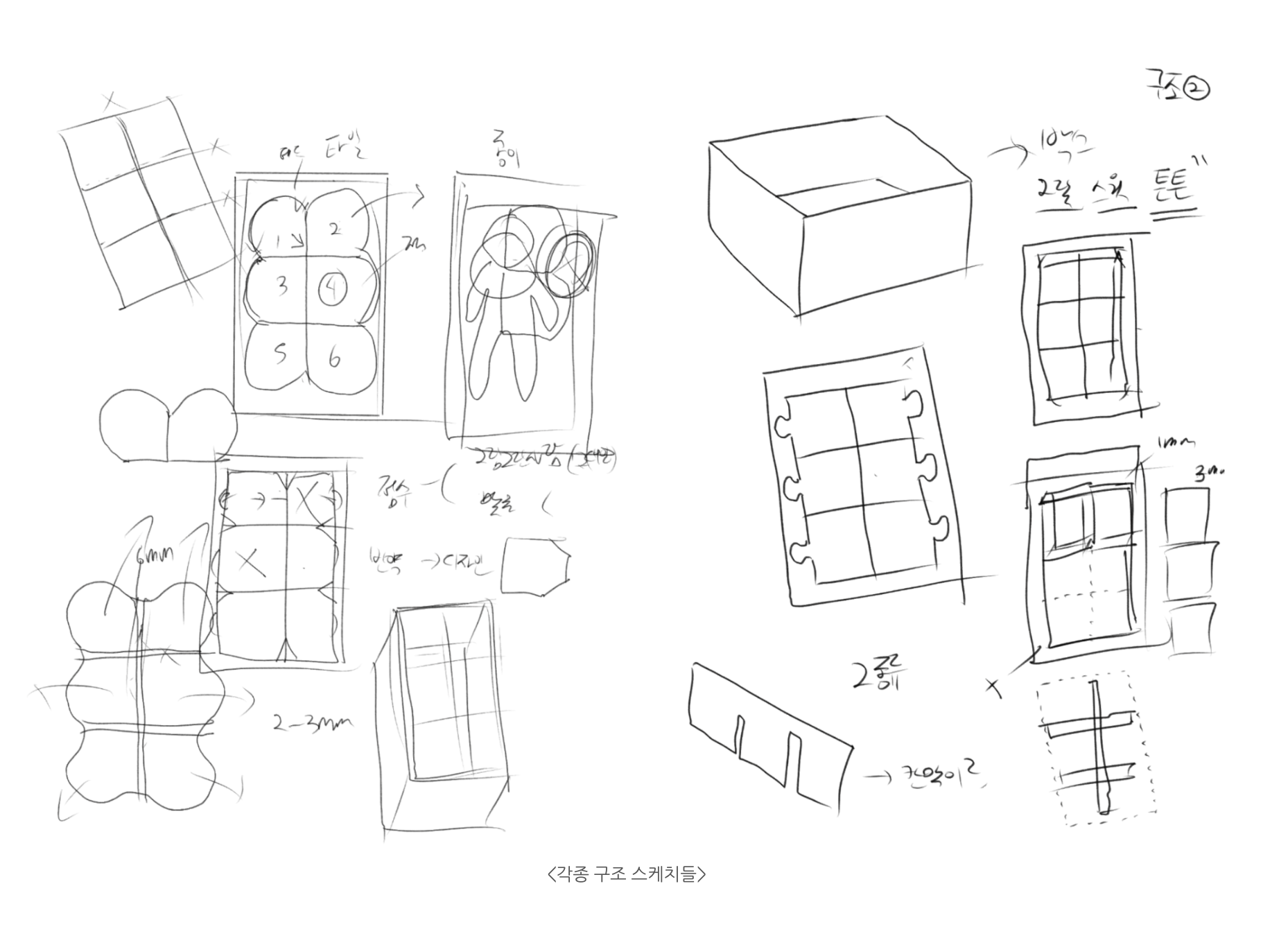
The process of sketching out the game’s structure
Q. You mentioned that you use a variety of themes when developing games. Where do you get your inspiration for these themes?
I tend to start development as soon as an idea pops into my head, so I’m always thinking about specific themes. There are many themes people love, like cats, but there are just as many games based on them. No matter how good a theme is, if it’s too common on the market, it loses its competitive edge, so I rule those out first and focus on finding themes that are both unique and appealing.
To discover new themes, I enjoy daydreaming and try to stay alert in every moment of my daily life. Whether I’m eating, traveling, or encountering something new, I always imagine, “Could this be turned into a board game?”It’s a sort of occupational habit—finding themes is part of my job. I believe that for board games, the theme has to be compelling from the start to drive a high purchase conversion rate, so I invest a lot of time in selecting themes.
A game born from your unique perspective— a one-of-a-kind experience
Q. What do you consider most important when developing a new game?
I prioritizeimmersionabove all else. While PC and mobile games can create immersion through flashy effects and powerful sound, board games require players to rely solely on their imagination—without any special effects or animations. If players can’t concentrate fully, it’s hard for them to have fun, and that leads to them dropping out of the game.
That’s why I immerse playersin new situations by assigning them roles they’ve never experienced before—such as a sushi master or an archaeologist. Then, through various mechanisms, Ifeel like they’re part of the game.
Q. Immersion varies from person to person and is subjective, so it doesn’t seem like an easy task.
That’s certainly true. That’s why I start by setting the theme, then deeply consider what elements can be drawn out only from that specific situation and how to implement them.
If a board game starts with the mechanics, the game itself may be fun, but the level of immersion can be relatively low. That’s because the game is played solely to win or lose. However, if you approach it from the theme first, there are certain mechanics that are only possible within that specific context.
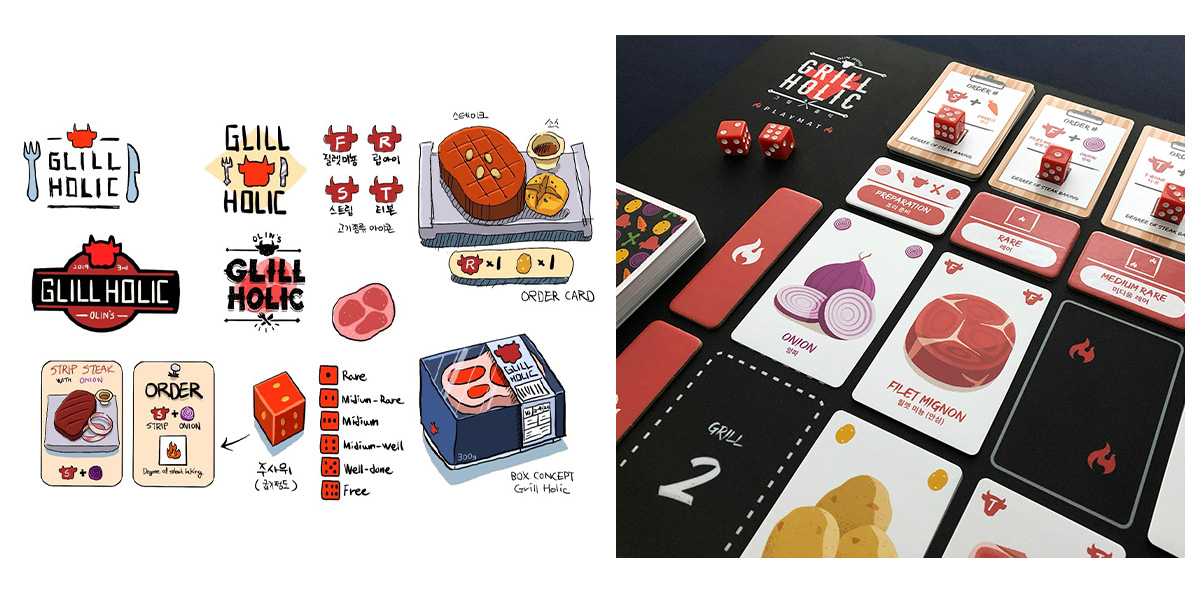 The Grillholic board game, themed around a “steakhouse”
Take “Grillholic,” a game by Olin Studio themed around a steakhouse: since players simply served steaks according to incoming orders, the game tended to feel somewhat flat. So we added a rule where players roll dice to determine the level of doneness. This introduced randomness through dice rolls, whose outcomes are unpredictable. In this way, imposing constraints through specific mechanics draws players deeper into the game, and I believe these small details come together to create a high level of immersion.
Q. Unlike in the past when people mainly played board games at cafes, these days many people are buying them to keep at home. What should you consider when creating a game that players will want to own?
As the market grows day by day, I think irreplaceable originalityis essential. The number of visitors to board game conventions increases every year, and there are more creators as well. Even during the COVID-19 pandemic, when social distancing was the order of the day, sales actually rose.
It seems a culture of collecting games has emerged as people have come to view playing games at home—where they can meet others without masks—as an alternative to public spaces .Consequently, the number of board games being released has also increased, butthe problem is that new products aren’t just competing with each other—they also have to compete with existing games released four or five years ago. That’s whyyou need to be able to appeal to players by saying, “You’ve never seen a game like this before, have you?”And, of course, the game has to be fun. Since a purchase is more likely to happen if there’s nothing similar in a collector’s collection, it’s important to analyze existing games while clearly highlighting how your game differs from them.
Crowdfunding that eased the burden of rewards production costs
And wadiz
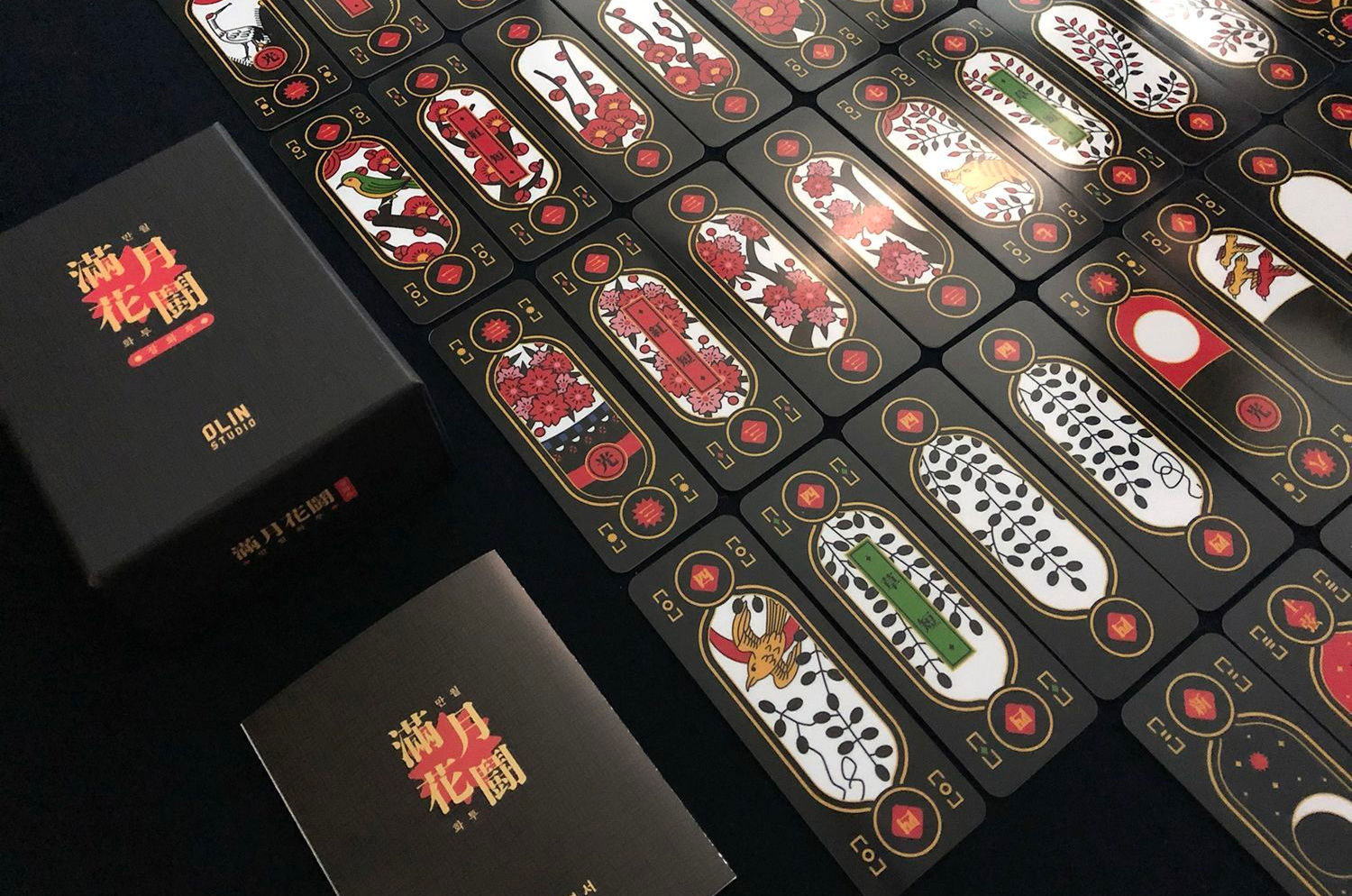
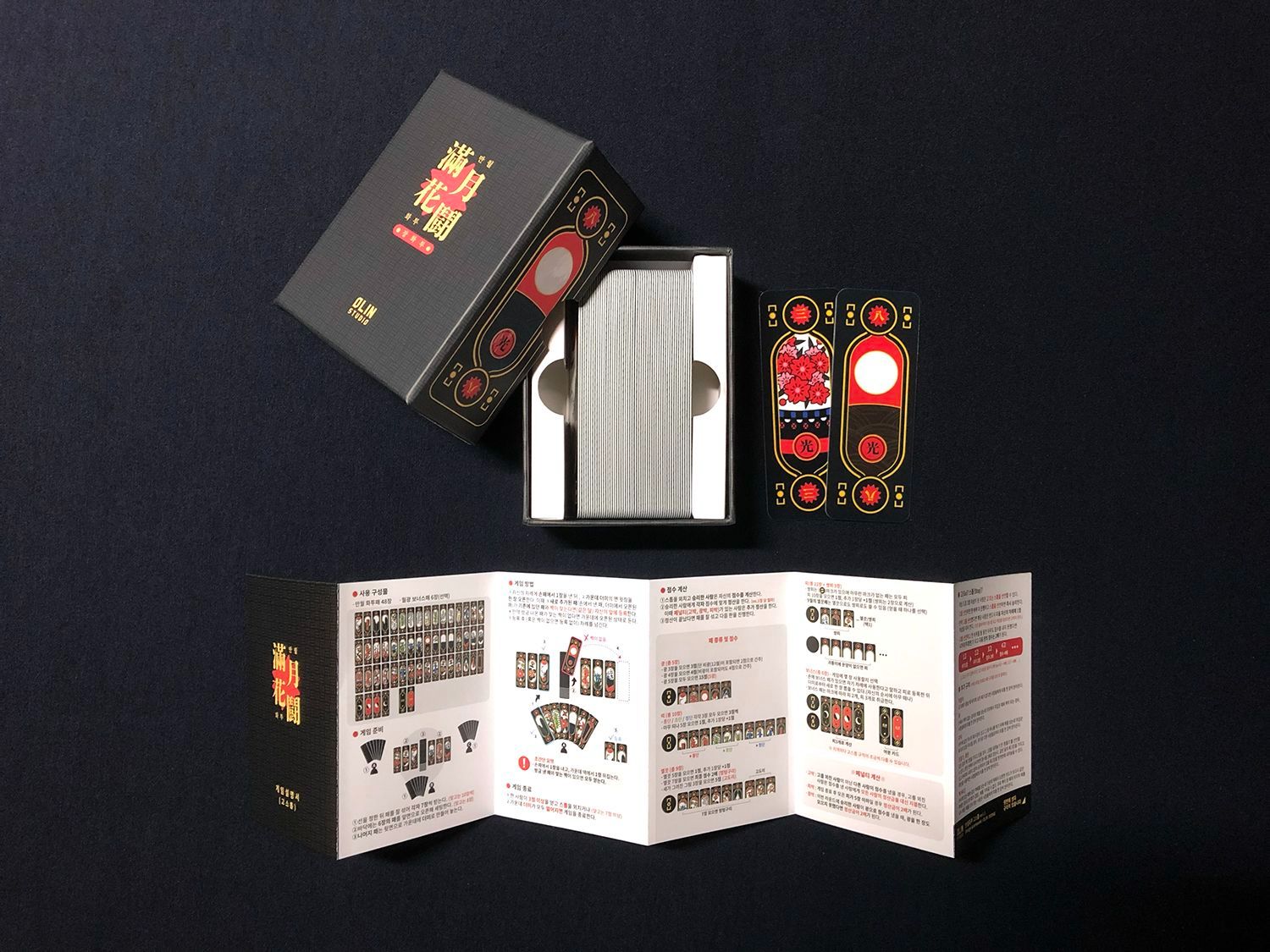
Olin Studio’s First Funding Campaign: “Manwol Hwatu”
Q. You’ve been showcasing your products through funding ever since you first started Olin Studio. Was there a specific reason you decided to run a funding campaign?
As a design school graduate, crowdfunding was a familiar concept to me. Given the nature of my major, it was common for students to publish books or photo collections through funding projects. Then, by chance, I visited the headquarters of Indiegogo, a U.S.-based platform, and learned more about its purpose and how it works. Since I already had that knowledge, it was natural to think of crowdfunding as a channel for launching new products.
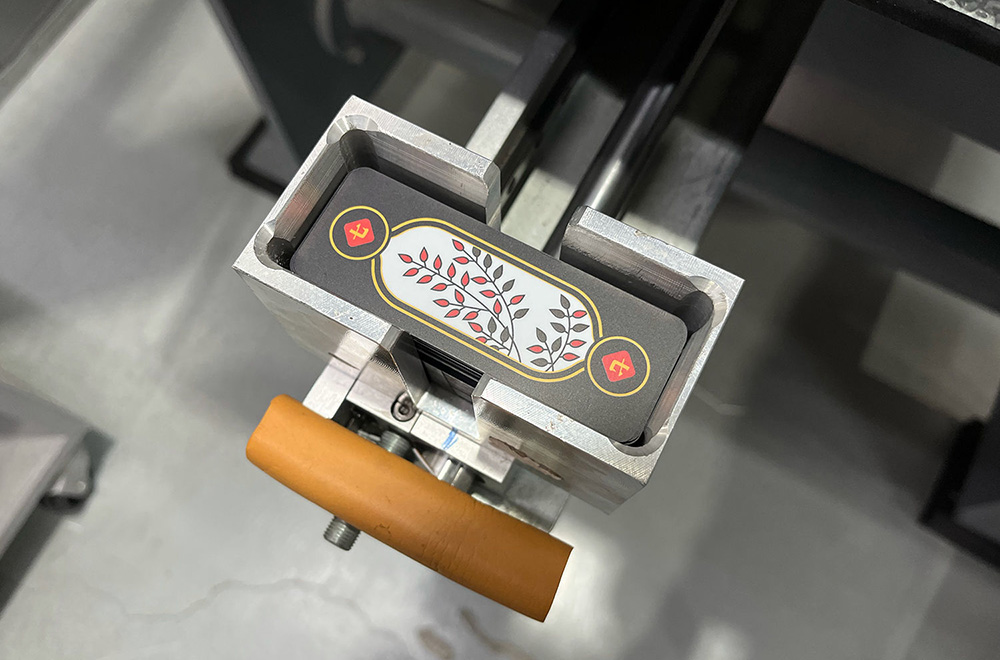
Another advantage was that it helped reduce production burdens. Unlike mobile games, which can be released immediately after development, board games require physical Rewards to be delivered, so upfront production costs are necessary. Producing a large quantity from the start creates a burden in terms of both cost and inventory, but since funding allows us to manufacture products using the funds raised, the risk was significantly reduced.
Q. I’m also curious about how you came to choose wadiz.
We determined that wadiz was competitive in terms of scale and active user base. Thanks to having run numerous projects, we were already quite familiar with the game development and funding processes. The challenge, however, was that “Manwol Hwatu,” which we launched on wadiz, was a reinterpretation of a game already familiar to the public—a situation quite different from our in-house development projects. Since it was an already well-known game, we had to focus on showcasing the appeal of the new UI rather than the rules, and we were very concerned that the redesigned interface might feel awkward to those who enjoy Hwatu.
Still, since Hwatu has been a part of our culture for so long, I thought the general public would respond more positively than board game enthusiasts. That’s why I chose wadiz, which had a track record of success and a large community of supporters. Thankfully, my concerns proved unfounded, as the initial batch sold out within a single day. I still remember the moment I breathed a sigh of relief and immediately began preparing for the second round.
Enhanced product quality through collaboration with our supporters
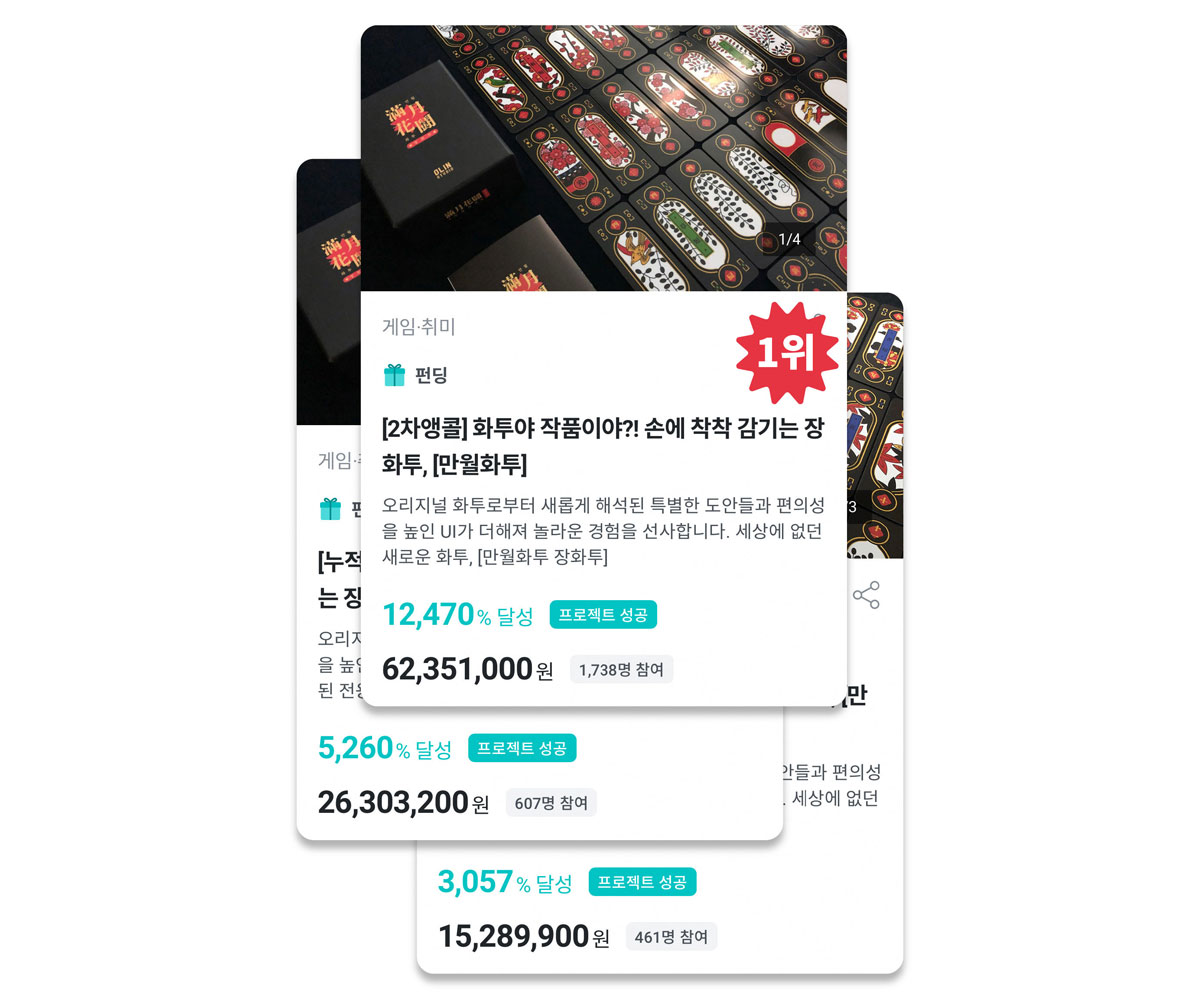
The Manwol Hwatu Project, which has raised a cumulative total of approximately 150 million won
Q. You’ve run a total of eight funding campaigns on wadiz alone. What motivated you to continue running these campaigns?
It’s because the benefits of using wadiz were clear. The first benefit is the ability to improve the product based on supporter feedback. Manwol Hwatu, now in its fourth printing, has been gradually refined with each edition, and this is all thanks to the feedback sent by our supporters.
After funding ends and I’ve completed all after-sales service, I take some time to reflect on the project on my own. Reading reviews where people say they enjoyed playing the game gives me new creative inspiration, and I also use constructive criticism to identify areas for improvement and make adjustments. While there are often moments that are hard to take, I view these comments positively because they allow me to create a better product.
Second is it’s the fact that.
Thanks to various opportunities on wadiz—such as store listings and promotions—I’ve met many supporters. Through these interactions, I learned that Manwol Hwatu is very popular as a gift. I had assumed most people would buy it for their personal collections, so this came as a surprise.
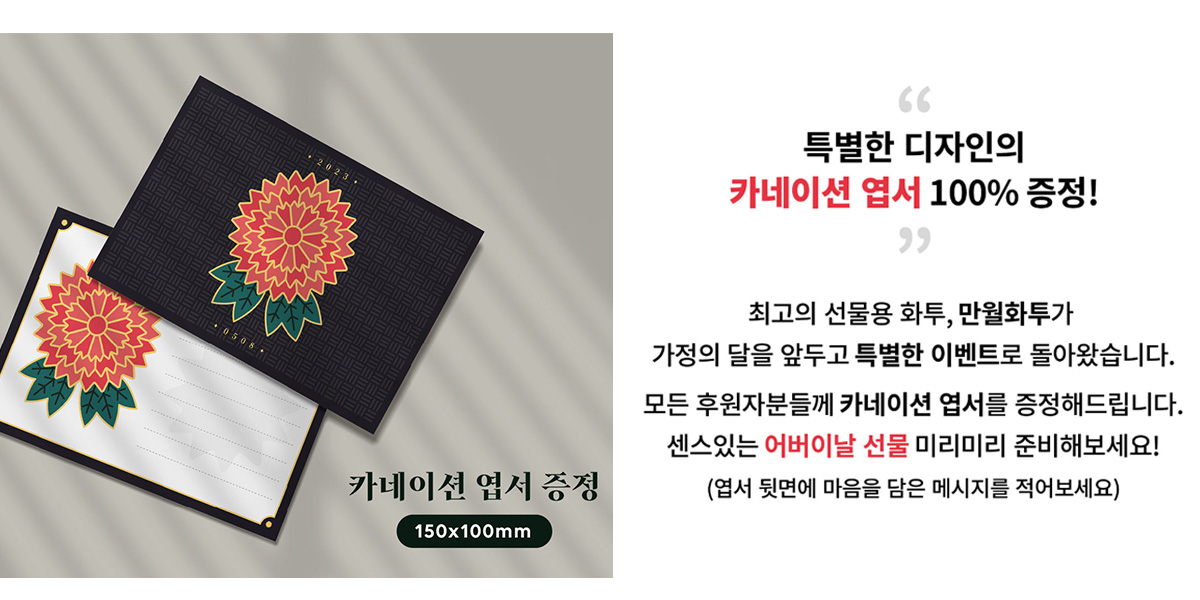
Taking this as a hint, I’ve based my current funding campaign around the concept of Parents’ Day gifts. Since this idea came from supporter feedback, I also added a carnation postcard as a token of my gratitude. I believe the appeal of wadiz lies in this two-way communication—gaining inspiration from supporters’ genuine voices and expressing my gratitude through the project.
Q. I’m curious if you’ve noticed any differences between your existing customers and wadiz supporters.
It seems like many wadiz supporters are early adopters. Customers we meet in person at events like the Board Game Festa tend to purchase after handling and playing the game themselves.
But wadiz supportersare willing to provide funding for a project just by reading the Story. Since they decide to provide funding based solely on what they’ve imagined in their heads, I think they have a more vivid imagination. That’s why, when preparing a project, I focus on how to stimulate their imagination.
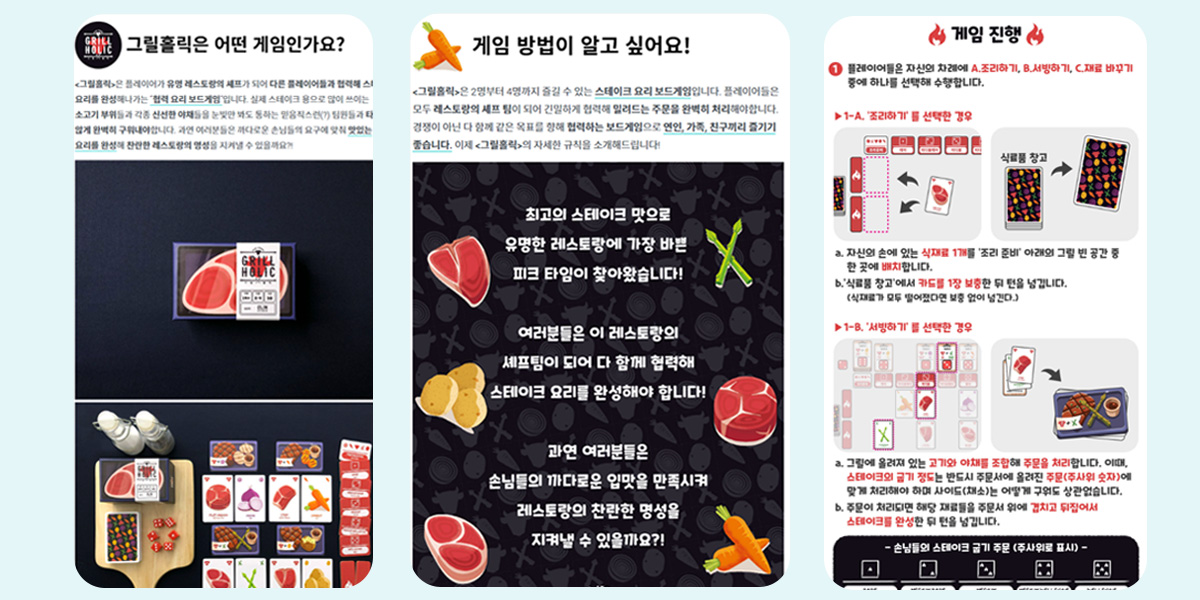
A “Grillholic” game description explained in a way that’s easy for supporters to understand
Q. Based on your experience with various projects, what do you consider to be the “challenges of board game funding”?
It’s challenging in every aspect, but I find explaining the rules to be particularly difficult. People don’t buy board games just because they look pretty. Supporters roll the dice in their minds, think about who they’ll play with, and only decide to participate in funding if they’re satisfied with the outcome.
That’s why it’s essential not only to convey the game rules simply and clearly, but also to paint a detailed picture of exactly what situations will be fun . However, since the maker made the game themselves and knows it inside and out, it’s easy to overlook this step. Unless it’s a familiar game like Hwatu or chess, you need to imagine yourself as a third party encountering the project for the first time and go over the Story two or three times.
Think about the “one and only Story” that will showcase the game’s charm.
Q. Finally, please share a few words for aspiring makers preparing to launch a board game funding campaign on wadiz.
It’s important to understandthat creating a board game and crafting a funding story are two entirely different things. I’ve seen cases where a game was clearly fun to play but failed to resonate with the audience.
Even an outstanding product won’t generate a response if you can’t explain it clearly, so you need to thoroughly analyze the funding process and successful projects. However, since the Story only makes sense in the context of that specific board game, I don’t recommend using it verbatim. Instead, think about how the Story helped supporters understand the project and what factors contributed to its success, then extract the key elements and apply them to your own project. If you’re struggling to do this on your own, you can also seek help from the planning services provided by wadiz.
Even though I’ve run numerous funding campaigns, the mechanics and themes differ for each game, so writing the Story is a new challenge for me every time. However, I’ve learned something from every project, and I believe this has enabled me to create board games with new themes and a wider variety of components. I’ll continue to grow through these challenges, so please keep cheering me on. Thank you.

Written by Jeong Da-hye, Edited by Han Ji-hye