[Food, Beauty, Fashion] Why Are Vegan Products Doing So Well on wadiz?

3-Line Summary of the Story
- #1. Discovery: As demand for vegan products grows across various industries, consumer segments are becoming more specialized. Thesearetypicallycategorized into “Core Vegans,” “Me-First Vegans,” and “Trend-Following Vegans.”
- #2. Succeed:Funding played a major role in the spreadof the vegan movement. Why were the various vegan funding campaigns on wadiz able to achieve success and growth?
- #3. Expand: As we begin to view veganism as a distinct consumer market, non-vegan brands also have the opportunity to expand their business scope through funding.
#1. Discovery
With the growing vegetarian population, the F&B market is being shaken up.
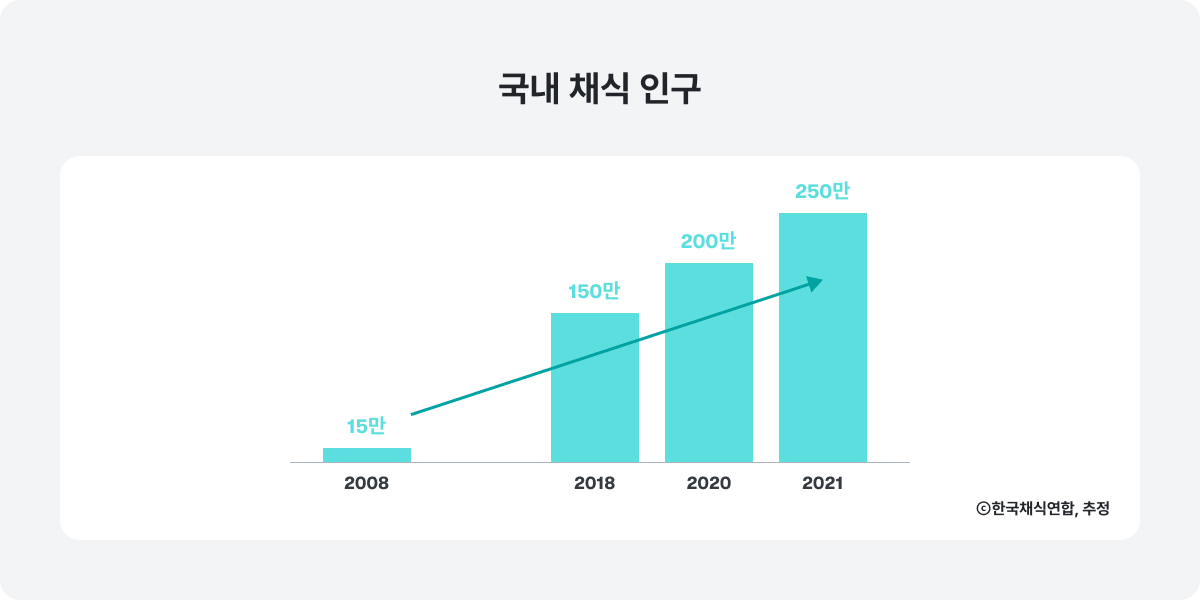
The F&B (Food and Beverage) market is all smiles. That’s because a major wave is approaching a market that has seen neither a major boom nor a major bust. That wave is veganism.Veganismoriginally referred to “strict” vegetarianism—avoiding animal-based foods such as meat, milk, and eggs—but recently, its meaning has expanded, and it is now used as a term representing vegetarianism as a whole. For example, terms like “vegan kimchi” and “vegan curry.” These terms are typically placed before the name of a dish to indicate that no animal-based ingredients were used. The number of vegetarians in Korea has increased more than 16-fold, from 150,000 in 2008 to 2.5 million in 2022. As a result, the food industry is accelerating the launch of new vegan products.
Veganism is not merely a shift in consumption but a cultural movement.

As the vegetarian population grows, demand for vegan products is increasing even outside the food industry.In the fashion and beauty sectors—includingclothing, footwear, and cosmetics—products that are not tested on animals or use plant-based ingredients are becoming increasingly popular. The spread of the vegan market as a cultural phenomenon goes beyond a simple shift in consumer behavior; it is linked to changes in social values and awareness. Greater awareness of animal welfare, environmental protection, and healthare influencing the behavior and consumption patterns of vegans.
Segmented Target Audience,
Who are your consumers?
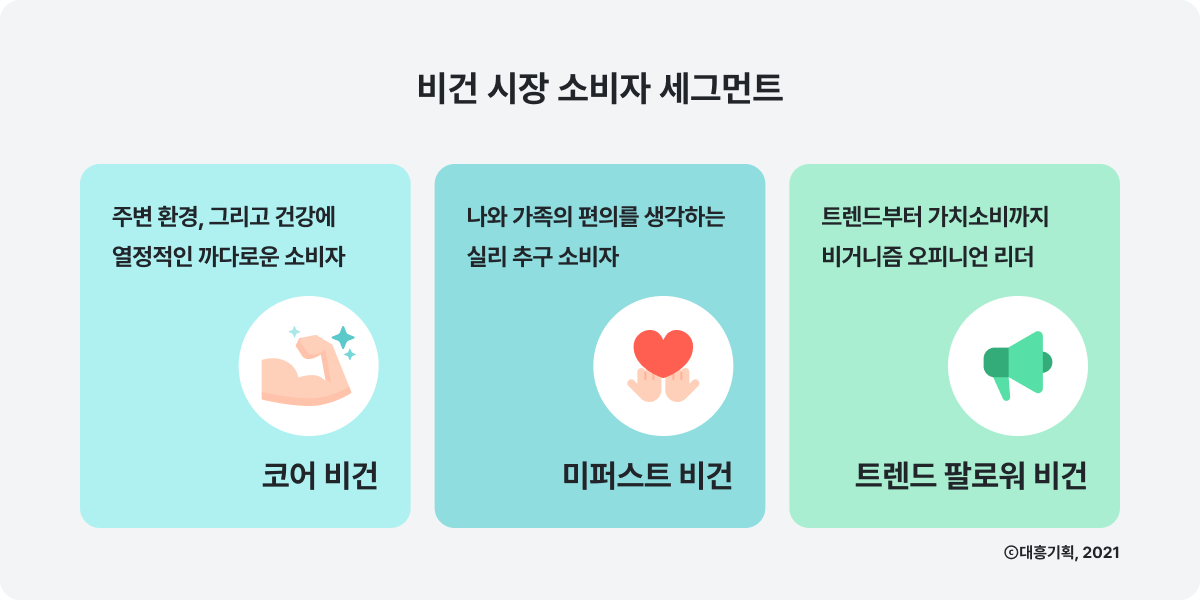 Three representative types of vegan consumer segments identified by Daehong Planning
In the early days of veganism, when asked why they chose a vegan lifestyle, 80% cited environmental reasons. But things have changed. Now, people cite reasons aligned with their personal values—such as their own health, keeping up with the vegan trend, or environmental protection.This is a characteristic of a culture that grows based on values.In 2021, Daehong Planning, in order to understand the context of veganism and approach it systematically, Daehong Planning released a reportto understand the context of veganism and approach it systematically.
#2. Success
Crowdfunding played a major role in the spread of veganism as a culture, to the point where the market’s values have become segmented. This is because individuals and small brands that embraced veganism early on got their start through wadiz funding. “Melixer,” which has grown into a leading vegan beauty brand, and “Jiguin Company,” the food tech brand that pioneered plant-based meat alternatives, also began with funding. As a result, wadiz has expandedinto a platform where users can find vegan brands across a wider range of categories—including food, beauty, fashion, and home & living—than anywhere else.
Why were the vegan brands that joined wadiz in its early days able to move beyond a one-time campaign and achieve success and growth? We’ve highlighted the key factors that made this possible through wadiz funding.
Through the Lens of Successful Projects
“Why Do Vegan Brands Thrive on wadiz?”
① From core vegans to trend-following vegans,
this is where the core needs of the vegan community converge.
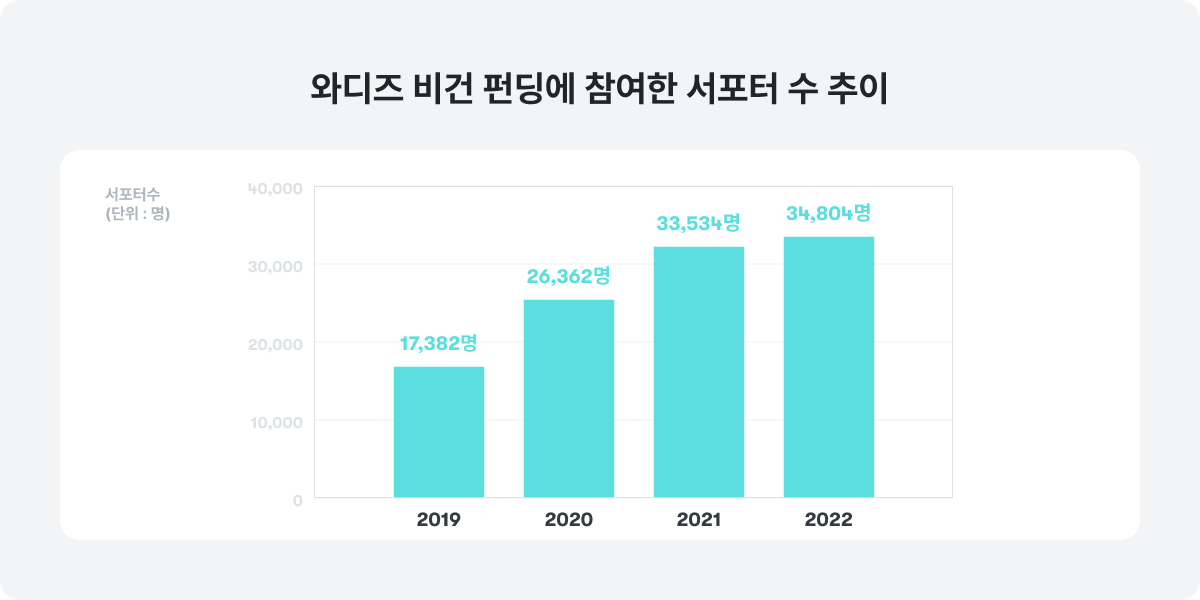
Wadiz is gaining attention as a new vegan platform. Naturally, the number of supporters seeking it out is increasing every year. According to internal data, the number of supporters participating in vegan funding nearly doubled, risingfrom approximately 17,000in 2019to 34,000 last year .This is preciselywhere the virtuous cycle of wadiz’s vegan funding began. As demand grew , the motivations of supporters seeking out vegan funding became more diverse than before, and projects targeting these niche needs emerged, leading to further success.
In a similar vein to the segments of the vegan consumer market previously classified by Daehong Planning, we have categorized the types of supporters seeking vegan funding and the projects that successfully targeted them into three groups.
Supporters who participate in vegan funding to raise awareness about animal rights and welfare, and environmental issues: Core/Trend-Following Vegans
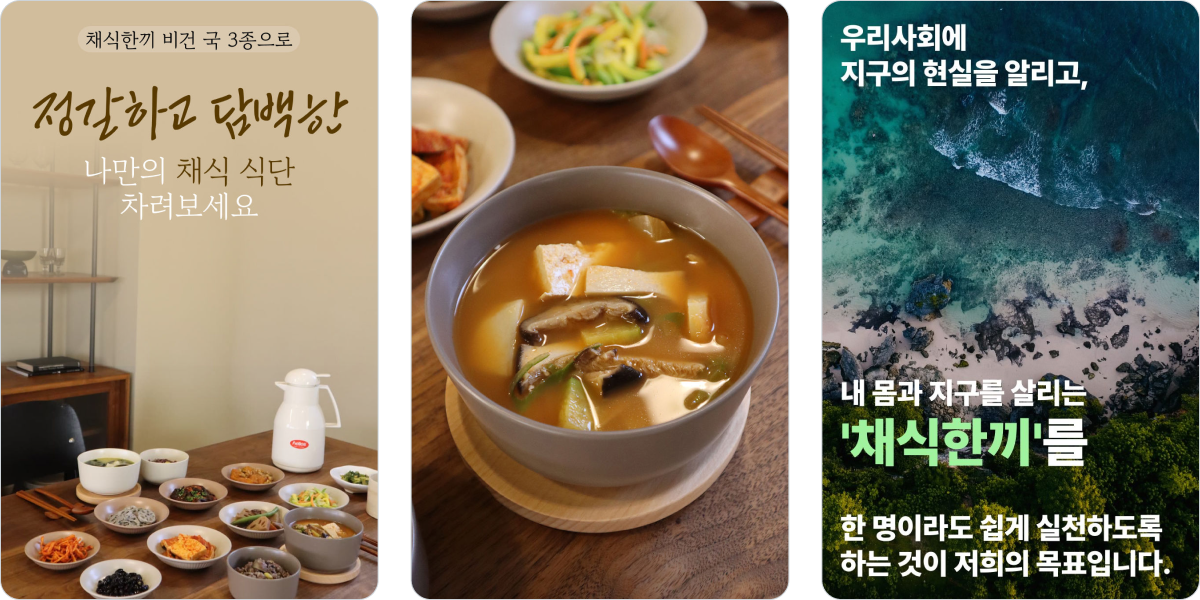
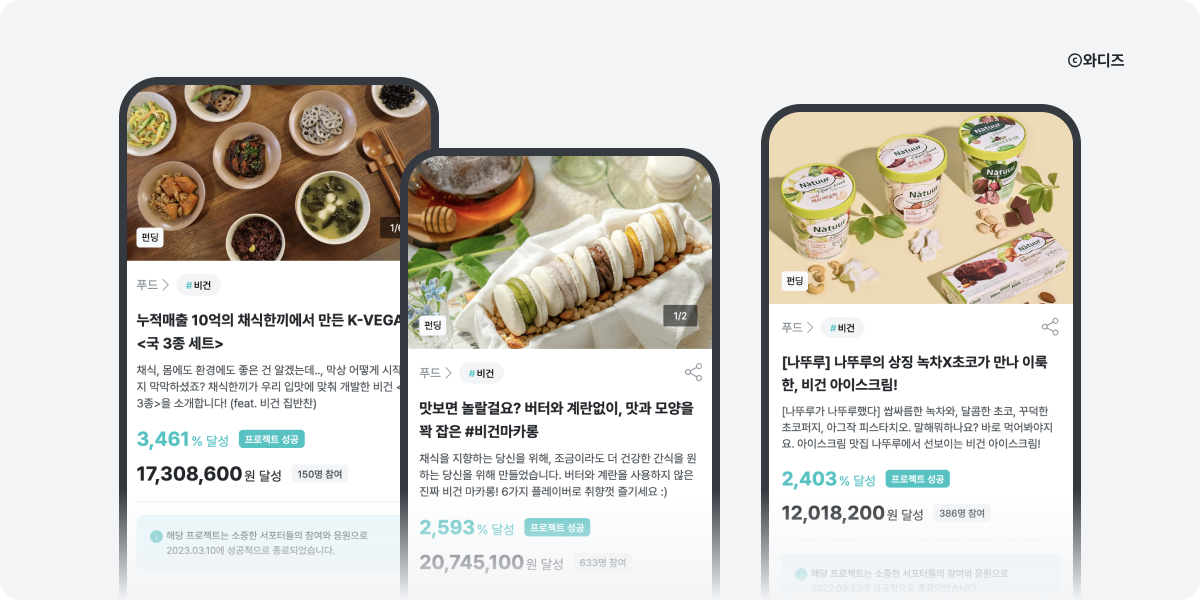
These are supporters who view veganism as a core value in their lives and participate in funding to achieve a better vegan lifestyle. Targeting this group, the maker of “Vegetarian Meal” developed their own product—a subscription service for regular deliveries of vegan soups and side dishes—and launched it on wadiz. This reward addressed the needs of supporters who actively practice a vegan lifestyle in their daily lives. In the funding story (product details page), they emphasized the impact of a plant-based diet to convey the brand’s core values and the essence of their product.
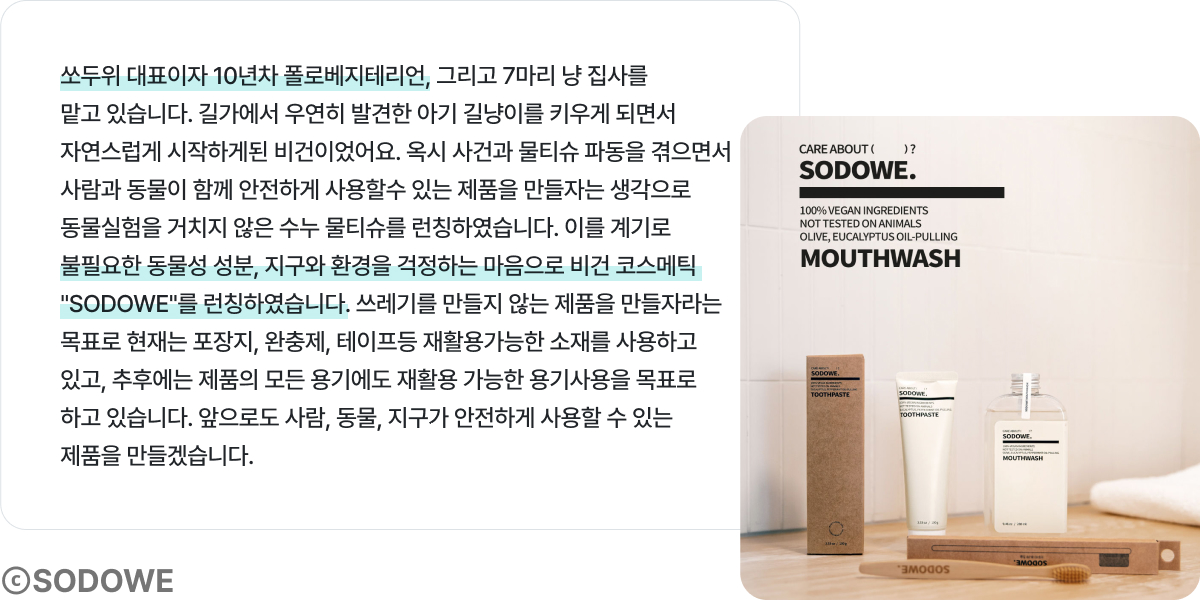
Additionally, the maker of the vegan cosmetics brand “So Do We” proposed a vegan mouthwash product based on “oil pulling”—the practice of swishing plant-based oils, derived from natural ingredients, in the mouth. By sharing their own story as a 10-year-long flexitarian and conveying the message that “this wasn’t created just because veganism is trendy,” they resonated with a wide range of supporters—from those who actively practice a vegan lifestyle to those who prioritize value-driven consumption.
Both the “Vegetarian Meal” maker and the “Sodowi” maker conveyed their authenticity regarding veganism in a way that resonated with their target audienceand achieved a high funding total of approximately 20 million won.
Supporters who participate in vegan funding for the health of themselves and their families: “Me-First” Vegans
These supporters are generally interested in veganism, but their focus is on safety and health.Theyprimarilyparticipate in beauty and food funding campaigns where ingredients are transparently disclosed, carefully scrutinizing whether the products are good for their health.
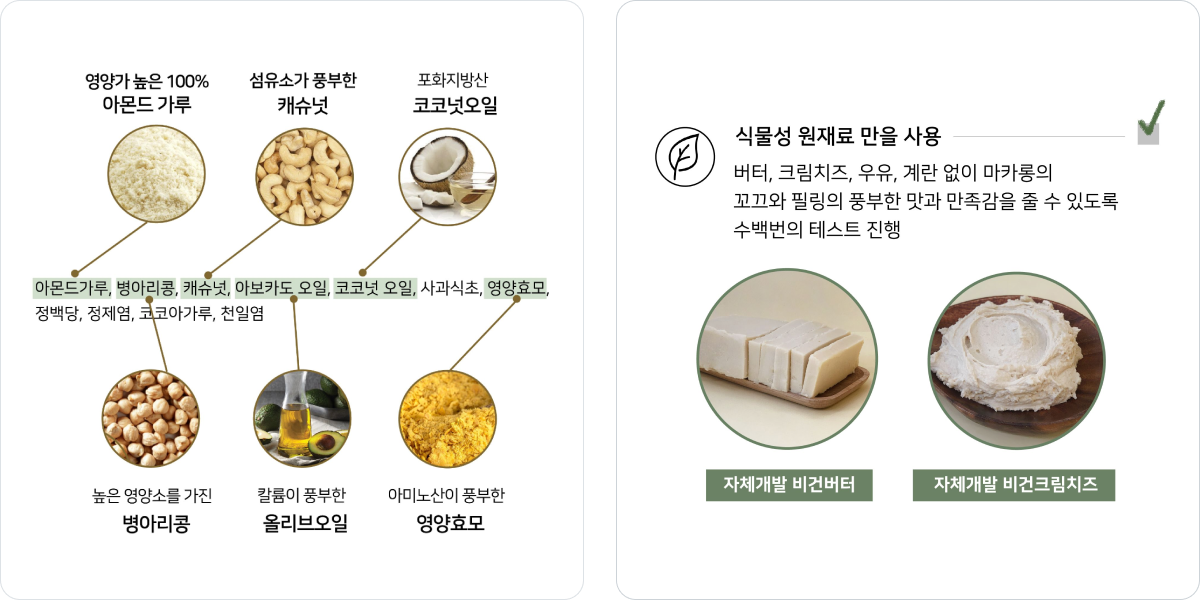
Neldam, the maker, addressed these supporters’ curiosities by detailing the story behind their carefully selected ingredients and the macaron-making process, successfully launching their “vegan macarons.” They also shared the story behind their in-house development of the vegan butter and vegan cream cheese used in the macaron shells and fillings—key components of any macaron. Vegan supporters seeking healthy desserts read the product’s story from start to finish and participated in the funding campaign. As aresult, the maker was able to raise a cumulative total of approximately 30 million won through these macarons.
Supporters who participate in funding in response to the novelty of “vegan”: Trend-following Vegans
These are supporters who view veganism as a trend and back the campaign to try something new through funding. In other words, they can be seen as early adopters of the vegan movement. Since wadiz is a platform that serves as the launchpad for products that didn’t exist before, these are people who are open to trying something different through funding.

You can target this group primarily when making existing products vegan. A maker from the major brand Lotte Confectionery launched a new vegan product under the “Natturu” brand, which is famous for its ice cream. They developed this new product for people with lactose intolerance who were looking for vegan ice cream and chose to launch it first on wadiz to reach a broader audience. This allowed them to effectively introduce the new product to a diverse range ofsupporters , from existing Natturu fans to new customers curious about vegan ice cream.
We’ve examined the three main types of supporters participating in wadiz’s vegan funding campaigns and case studies of projects that succeeded by targeting them. So, what type of vegan is your project’s supporter? If you thoroughly analyze your potential supporters and prepare your project accordingly, you can certainly succeed in wadiz’s vegan funding market, where core vegan needs converge.
② Key Food / Beauty / Fashion & Miscellaneous Categories in the Vegan Segment
are the flagship categories on wadiz where supporters trust and participate in funding projects.
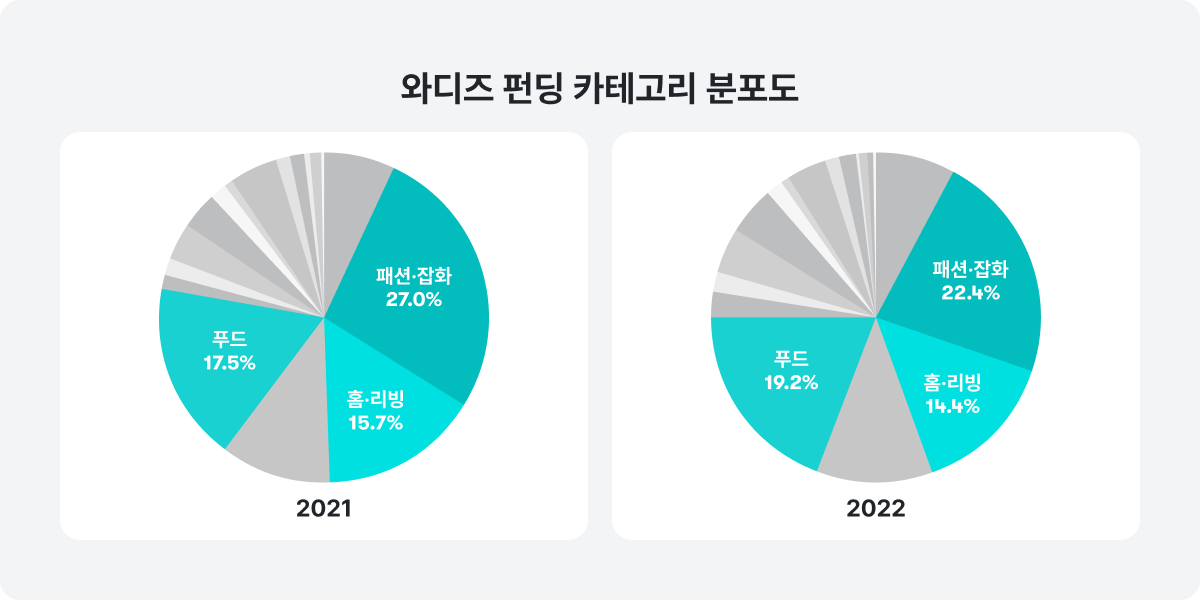
Looking at the share of categories launched on wadiz from 2021 to 2022, Fashion & Accessories, Food, and Beauty have ranked among the top categories for two consecutive years. This means they are the categories that perform best on wadiz and have the most loyal supporter base. The success of these three sectors is particularly encouragingbecause they align with categories central to veganism, such as “Vegan Food,” “Vegan Beauty,” and “Vegan Fashion.”
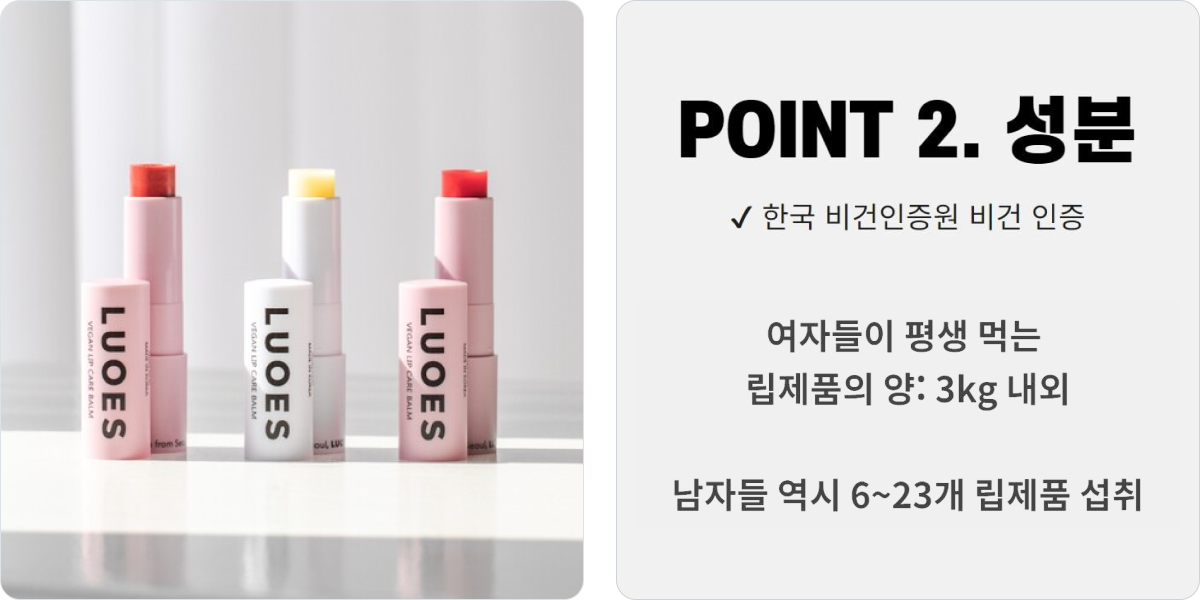
For example, there is a case where a brand launched its vegan products on wadiz for the first time through a beauty funding campaign. One such maker is LeOS, who achieved cumulative sales of approximately 100 million won with just one lip balm.This projectcaught the attention of supporters seeking beauty funding by emphasizing that it was a “vegan lip balm safe even if ingested unintentionally.” The maker furtherenhanced the product’s authenticity by candidly sharing the trials and errors involved in obtaining vegan certification through their Story.
Thanks to their genuine commitment to veganism and the product’s quality, the maker’s vegan lip balm rose to the top spot in wadiz’s lip balm category, helping to popularize the terms “vegan lip balm” and “ethical lip balm.” The first keyword that sticks in a customer’s mind is especially important for emerging brands and debut products. By launching their first product through a wadiz beauty funding campaign,the LeOS maker effectively built both brand awareness and a positive brand image.
With wadiz, which has established robust markets in the food, beauty, and fashion categories,
you can secure higher visibility compared to general e-commerce platforms and continue your growth momentum.
③ There is a potential customer base that is open to new products, even if they aren’t vegan.
From niche supporters to categories aligned with wadiz’s current trends, why is targeting becoming increasingly important for vegan brands? It’s because “getting people to try a vegan product at least once” is the deciding factor in success or failure. However, for brands that still find targeting challenging, introducing their brand to a larger pool of potential customers is also a viable strategy.
On wadiz, there is a pool of potential supporters who, even if they aren’t yet familiar with veganism, embrace it as something new. Brands that use different ingredients and processes than traditional ones—yet still deliver high-quality products and prioritize the environment—can be warmly welcomed by this pool of 5.6 million potential supporters . This is becausewadiz supporters focus on the “product story”rather than brand recognition.

A MomMake maker who planned and developed a vegan shake using tofu protein said, “‘To meet supporters who will judge our product objectively, without prejudice toward veganism, We launched the product through wadiz funding, and we actually received feedback on aspects we hadn’t even considered, which allowed us to improve the product in positive ways,” the maker shared in a successful campaign interview. Additionally, the maker of “Jenny Closet,” who launched a “vegan leather bag,” said,“For brands like ours that have materials, technology, and more,” , wadiz is the platform that best showcases those characteristics,”,” in a post-funding review.
Whether you’re solidifying your brand and product direction in line with the vegan trend or exploring market potential among a broader audience—both are possible on wadiz, where a diverse range of vegan supporters exists and new challenges are a natural part of the platform.
#3. Expanding
It’s time to view veganism as a consumer market in its own right. There are opportunities for non-vegan brands as well. Just like the Lotte Confectionery maker’s “Natturu” project mentioned earlier , brands canidentify opportunities to make existing products vegan and launch themthrough follow-up funding campaigns.
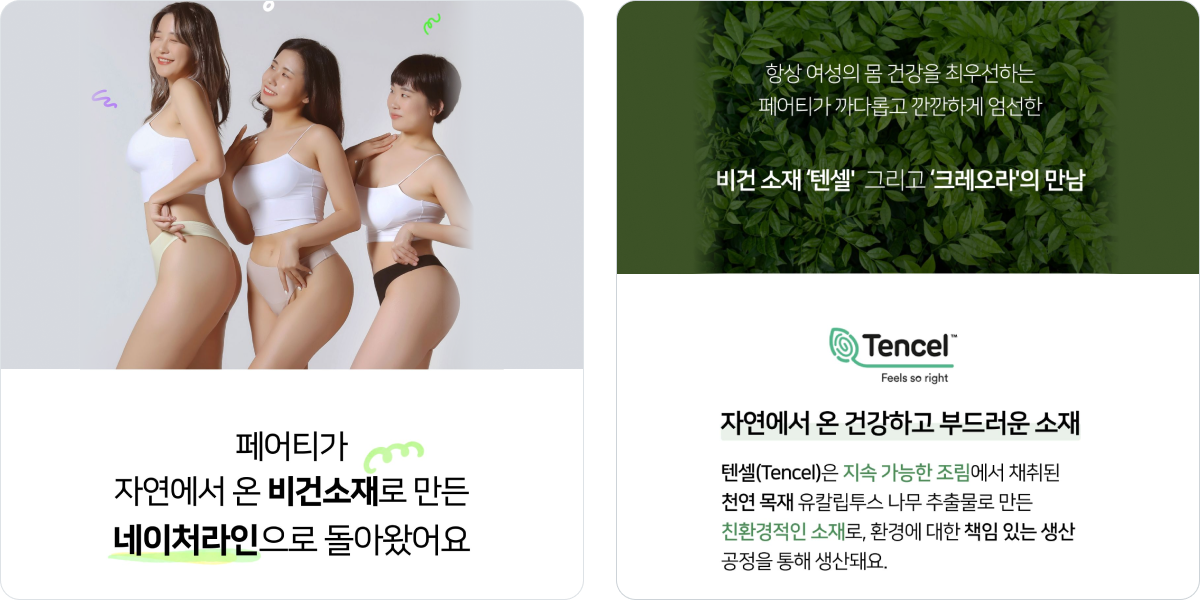
For example, Fairty, a maker who debuted on wadiz with a new concept in T-panties designed for the Korean body type, raised 130 million won in their first funding and received an enthusiastic response from supporters who had previously struggled to find the right fit. Then, in May of this year, they launched a follow-up funding campaign featuring “Vegan T-panties” made with healthier materials.
Since the project targeted women concerned about the environment and their health, they developed vegan underwear—the type of garment that comes into the closest contact with the body. Although it had been less than three months since they concluded their encore campaign with a non-vegan product, they once again achieved a high funding total of over 50 million won. In this way, after confirming market receptiveness with a non-vegan product, making the materials and ingredients vegan to expand the target audiencecan also be a viable approach.
Here are the projects featured in this article. Click the link to learn more.
|
🔗 If you found Episode 3 of the “WHY wadiz” series (<VEGAN Edition>) helpful,
please click the “Share” button at the top to share this article with other makers you know.
<WHY wadiz> SeriesWe take a keen look at changing consumer trends and analyze projects that have succeeded on wadiz based on these trends.
|

Article Joo Hee-jae, Han Ji-hye Edited by Han Ji-hye Design Jeong Yun-bi