[Funding Guidebook for Practitioners #3] How to Craft a Story Introduction That Makes Readers Scroll Down
Planbro, an official partner of wadiz,
presents the<FUNDING Guidebook for Practitioners>
shares strategies for crafting introductions tailored to different customer types
Be sure to check this out!
- The bounce rate on product detail pages is determined within the first 3 seconds of the introduction.
- Depending on the customer type, you need to build different levels of anticipation for the product in the introduction.
- You should design the introduction to evoke a sense of “empathy” for the problem the customer is facing and “curiosity” about the solution.
The goal of the introduction on a product detail page is to “capture the customer’s attention.”
The introduction is the part of your story that requires the most time and thought. Most customers encounter your story on their smartphones. What’s a smartphone like? It’s a place where a single tap can bring the encounter to an abrupt end. It’s a place where they can open a new tab and, within 10 seconds, see hundreds of alternatives—not our product—listed in order of price. Therefore , what we need to secure in the Story’s introduction is the “time” for them to read the Story all the way through. We need to make it possible for them to click this button / Source: wadiz
When will people take the time?
 A customer’s willingness to scroll is directly proportional to the “anticipation” we can build at the top of the page. Typically, the anticipation customers feel on a product sales page arises alongside the following three emotions.
- Curiosity: When customers encounter an image they’ve never seen before or copy that defies conventional wisdom, or
- Empathy: Recognizing “myself” in the copy or image, or
- Joy: Discovering something they’ve been desperately searching for, or
The ideal scenario is for every customer to feel “joy.” However, we cannot create that situation through our efforts alone. That’s because there’s no magic marketing formula that can single out only those people who are eagerly searching for our product and guide them to the Story. In fact, we don’t even know how many such people actually exist.
However, we can improve our “Story” through our own efforts.The more werefine it, the better it becomes. From now on, we’ll plan the opening section so that as many customers as possible experience at least two of the three emotions mentioned above (curiosity, a sense of connection, and joy).
Planning the Introduction Based on Customer Types
Starting with a solid understanding of your audience helps you set the right direction. The types of customers you’ll encounter vary depending on your product. Try putting yourself in the shoes of the customers who will encounter your product. Which of the following types do they belong to?
1) People who aren’t particularly bothered by not having our product
2) People who find the situation without our product inconvenient but haven’t found a satisfactory solution
3) People who find the situation without our product inconvenient but have their own workarounds
Depending on the type, we need to write the introduction differently. We must evoke their emotions to build anticipation for the product and the Story.
| People who aren’t particularly bothered by not having our product
This is the most challenging scenario. Generally, makers who are developing a new type of product not previously available on the market encounter these customers. This category might include luxury items that are nice to have but not essential, design products that offer more than just practicality, or product lines born from new technologies like AI. Fortunately, these makers’ products often contain many elements that can pique the audience’s curiosity.
- A unique product design
- Dramatic results that existing alternatives cannot achieve
- A unique way of using the product (which ultimately leads to a better user experience)
- Emotional satisfaction that cannot be found in practical products, etc.
Try structuring your introduction by skillfully combining these elements with your copy to pique the reader’s curiosity, then framing the narrative as “a situation where the absence of our product becomes a problem.” By weaving in stories that resonate with the interests of potential backers and painting an ideal vision, you can spark a desire to fund the product that didn’t exist before. Just like in the example below.
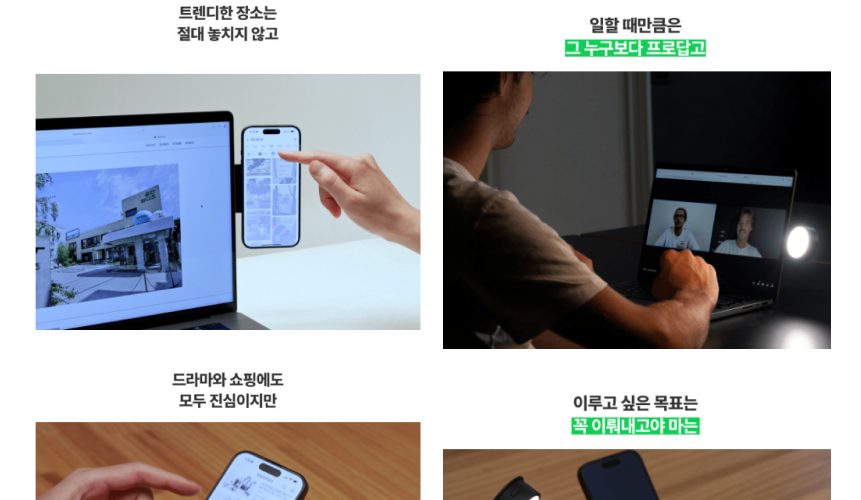 The “EDGE” Project: A Tool to Boost Work Productivity / Source: wadiz
| People who find the situation of not having our product inconvenient but haven’t found a satisfactory solution
Most makers who turn to wadiz to launch new products are targeting this type of customer. This is because new products are typically created to solve customers’ problems. The Most Common Problem – Solution Structure It’s best to gradually introduce key points in the introduction. Plan the content so that customers feel a sense of “relatability” toward the problem and “novelty (=curiosity)” toward the solution. Collecting the language customers use to describe their actual problems and their preconceptions about your product line can help you generate ideas. Let’s look at an example.
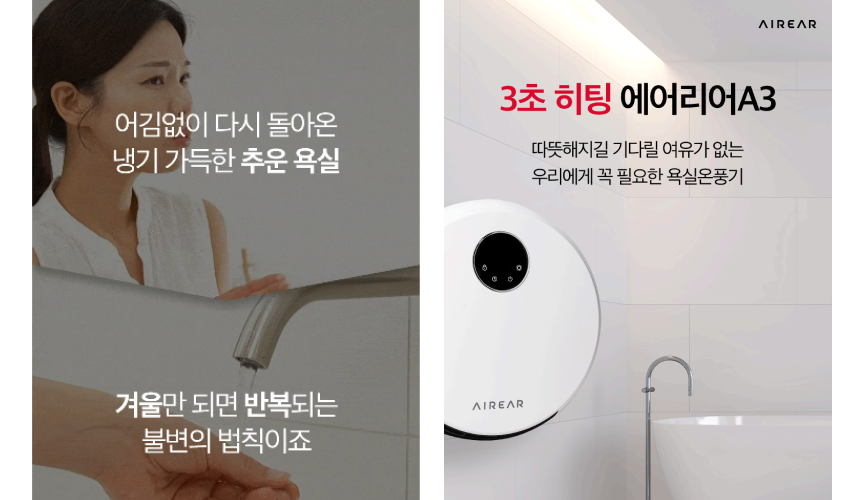 “Airia” Bathroom Heater Project / Source: wadiz
| People who find life inconvenient without our product and have their own workarounds
If you’re dealing with a highly competitive product category, you’ll encounter customers like this. While competition is intense everywhere, this category often includes markets with relatively low barriers to entry, where customers find it difficult to immediately recognize a product’s value, or where products are merely improved versions of existing alternatives with just a few added strengths.
Since you’re dealing with highly discerning customers, it’s equally difficult to build anticipation. A high-quality product is a given. You’ll need to prepare with a more robust strategy and a diverse set of tactics than the other two types. The main tactics used are as follows.
- An overwhelmingly attractive price or bundle
- Eye-catching packaging design
- Visible differentiation in form, size, etc.
- Reliable social proof (cumulative sales figures, efficacy metrics, etc.)
- The maker’s storytelling
- Redefining the problem (defining the problem differently from other brands)
There’s no need to mention obvious “problems” to customers who are already well aware of the alternatives in order to elicit empathy. Instead, focus on the aspects where your product is overwhelmingly better than competitors right now. Acknowledge that your customers are already well-informed, and
and quickly list the strengths of our product—the points they’ll find fresh—at the top. This is the only way to simultaneously evoke a sense of kinship (“This brand really understands us”) and curiosity (“This brand is definitely different in these ways?”). Just like this project.
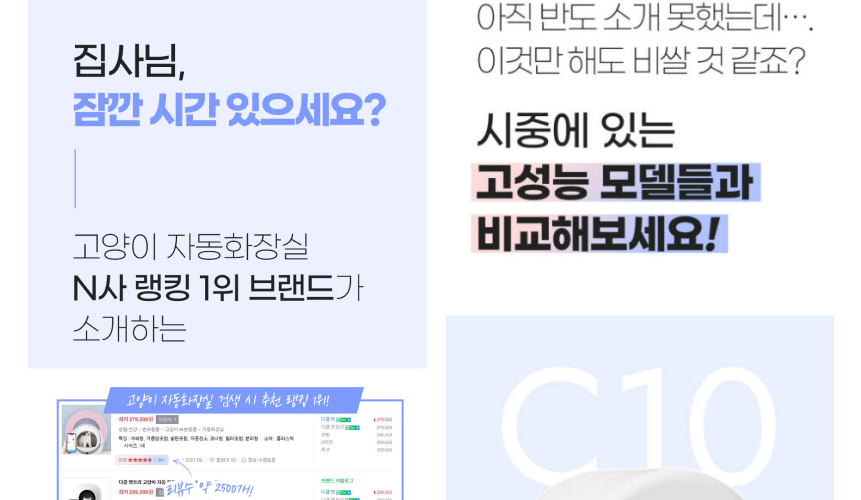 “Aerobo” Automatic Cat Litter Box Project / Source: wadiz
The maker knows their product better than AI does
We are living in the age of AI. It’s great to take an interest in new technologies and explore various ways to use them. I, too, often experiment with applying AI to my work. However, we must be wary of relying too heavily on AI. AI doesn’t examine your product as deeply as you do. Nor is it as sincere about helping you as other official partners—including myself—are. It’s simply a tool with an extraordinary ability to learn from vast amounts of data and quickly provide answers (we don’t know what the future holds, but that’s been the case so far).
Trust in the power of the results that come from your deep deliberation as a maker. The customers we’re dealing with are people. People respond to words that reflect human thought. At least for now, your words are far more likely to move your customers’ emotions.
Makers, check out the services you need!
- Learn How to Start a Wadiz Project
- View [Maker Events] currently open for applications
- Watch [wadiz funding lectures] led by funding experts
- Launch Your Project with a [wadiz Official Expert]
 Written byJeon Su-yeon,PlanbroEditor