[Funding Guidebook for Practitioners #5] How to Create Thumbnails and Ad Creatives That Drive Clicks
Planbro, an official wadiz partner,
<FUNDING Guidebook for Practitioners>to
<Funding Guidebook for Practitioners>to share tips on how to plan your content.
Don't forget to take this with you!
- Since users must first click on your product for persuasion to take place, the main image is extremely important.
- When reviewing references, establish three criteria and analyze them strategically.
- You can find ideas that are currently capturing people’s attention across various platforms.
Capture the Customer’s Attention Right Away
When customers first discover our funding project, the image (+copy) they see is one of the following two.
- Project Main Image (Thumbnail)
- Ad Creative (SNS ads, wadiz banners, etc.)
When creating these two elements, there’s only one goal you should keep in mind: “clicks.” If you don’t get clicks, you won’t be able to show the Story you’ve worked so hard to prepare. Naturally, it’ll be difficult to achieve good results. You have to get them to engage with your Story first before you can lead them to seek funding for your project.
So, how do you create images and copy that make people want to click? Here’s a method anyone can easily follow—even if you’re not a marketing expert.
Create a “Hooking Note” Just for Your Brand

Try creating a “Hooking Notebook” unique to your product. Have you ever looked for references to create a project or develop a strategy? Instead of just browsing during the reference-search phase, try jotting down your thoughts and insights from the process. This will create a resource book that’s uniquely yours—one you can pull out anytime while running your business. There’s a lot of content out there about “hooking” (capturing someone’s attention), but you can’t possibly memorize it all.
| Thumbnail Hooking Notes
Simply “looking at a lot of references” doesn’t do much to help you produce great results. And there’s no need to limit yourself to “the category our product belongs to.” Just look through the entire list, pick out what really catches your eye or what you instinctively want to click on, and then analyze it. From now on, when you look at references, try recording the following three points along with a screenshot.
1) What did this maker want to emphasize? (Briefly summarize the key message) 2) Why would someone want to click on it? (Identify the hook) 3) How can we adapt this for our own project? (Brainstorm) |
Want to give it a try with me? Let’s go to wadiz and analyze a thumbnail.
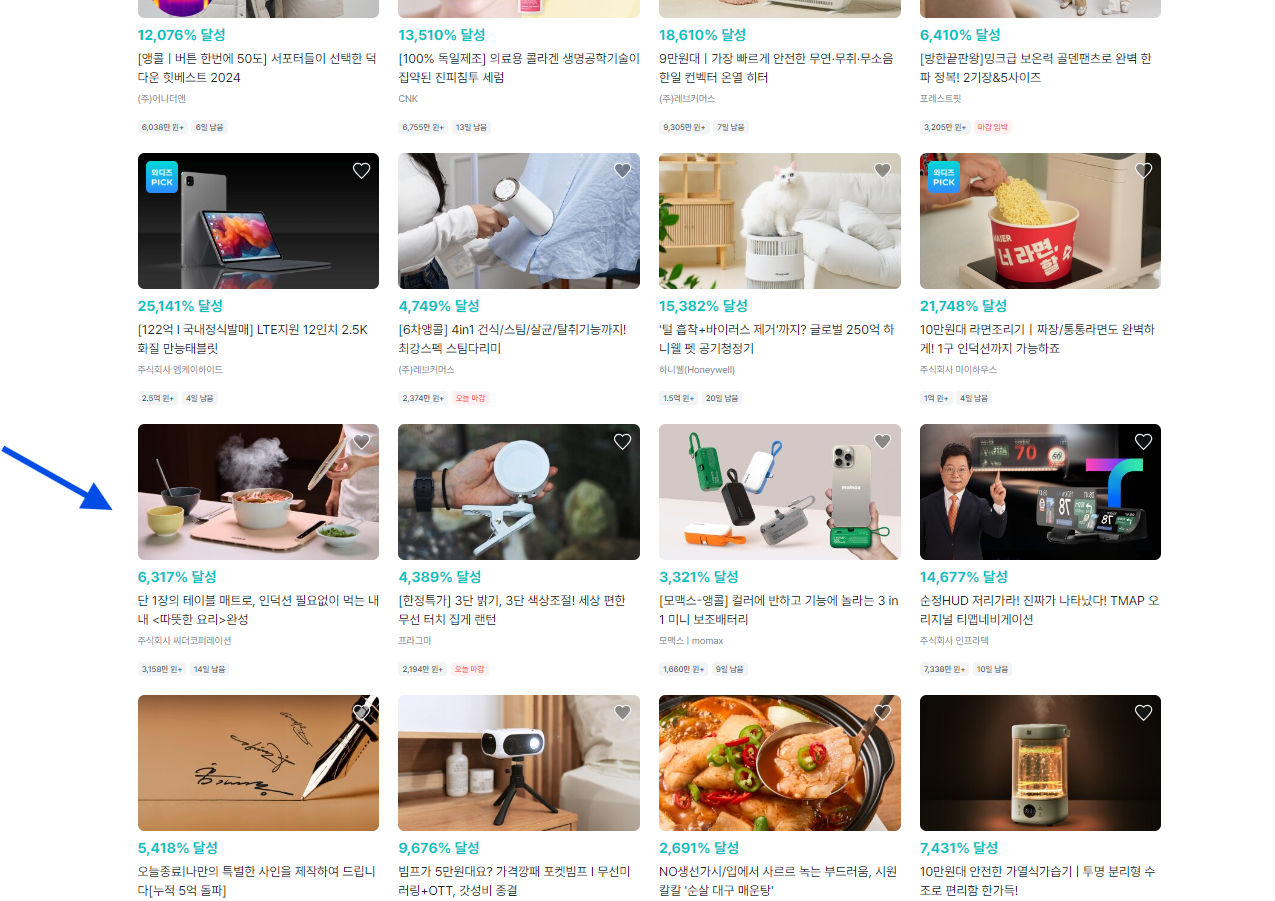 Source: wadiz
Resist the urge to click right away, and ask yourself the following three questions. There are no right or wrong answers. Just think it through carefully and write down your own answers.
1) What did this maker want to emphasize? (Briefly summarize the key message)
- A Lasting “Warmth”
2) Why do I want to click on it? (Identify the elements that hook the viewer)
- Convey the benefits I’ll enjoy in just one second: An image that vividly depicts me using the product + the value I’ll gain from purchasing it, expressed in everyday language like “a warm meal”
- Visualizing “warmth” by highlighting smoke against a black background: Emphasizing the core, invisible message through both copy and imagery
- Points of differentiation from conventional products: A composition that highlights the product’s thinner profile compared to standard portable induction cooktops. Emphasizes key differentiation + expressed through the copy “table mat”
- Placing the product dead center creates a visually stable composition
3) How could we apply this to our own situation? (Brainstorm)
- How could we describe the results users will experience with our product using simple, everyday language? Let’s capture the ideal scenario our customers will experience in a single scene.
- There are ways to visualize even things that aren’t visible! We need to find a way to visually showcase the “texture”—one of our product’s strengths.
- What are people’s general assumptions about our product? Do we have any unique selling points that can challenge those assumptions? What kind of image would best highlight that uniqueness?
- It would be great to create a thumbnail with our product positioned in the center of the composition.
Feel free to add more questions and answers. Analyzing a single thumbnail this way takes less than five minutes. If you can generate at least five ideas from a single analysis, you can come up with 50 thumbnail ideas in under an hour. Try analyzing at least 10—or up to 30 if you have the time. Isn’t it worth investing three hours to come up with 150 thumbnail ideas that will make our product look more appealing?
| Notes on Creating Compelling Ad Creatives
The method for analyzing ad creatives is exactly the same. Start bylooking at “creatives that caught my attention” and analyzing the elements that make you want to click on them, then brainstorm ideas on how to apply those to your product and target audience. If you want to see a variety of social media ad creatives, search for “Facebook Ad Library” on Google and check it out. It’s a free feature open to everyone—just enter keywords related to the brand or product you’re interested in,and you’ll be able to view a wide range of ads.
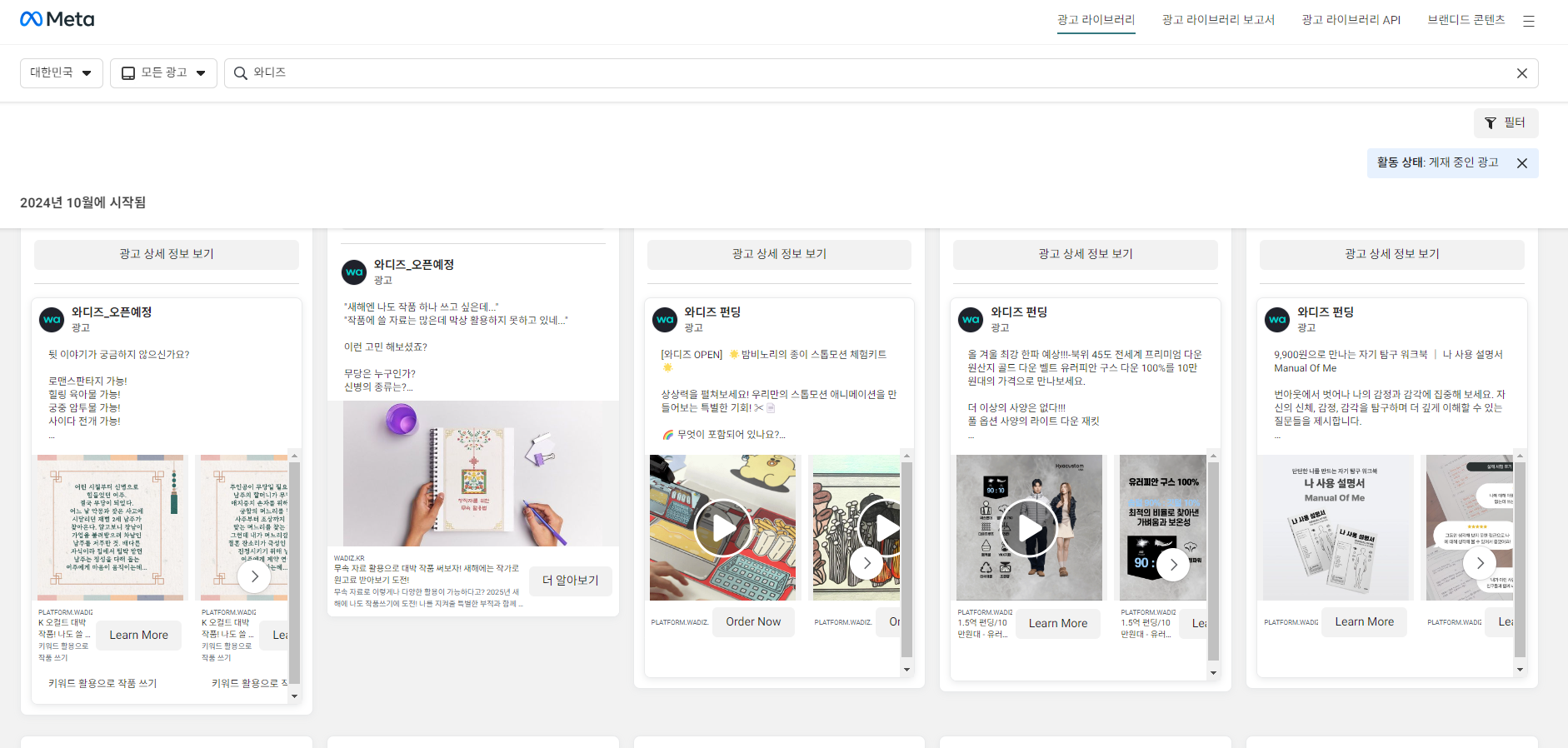 Source: MetaYou don’t necessarily have to limit your analysis to wadiz ad creatives. Try analyzing ads from a variety of brands—such as those you’ve been seeing a lot lately, your favorite brands, or brands known for spending heavily on advertising. Since social media creatives offer more creative freedom than cover photos, it’s also a good idea to consider the following points as well.
1) Design elements (colors used, placement of copy within images, layout, etc.) 2) For videos: the composition of the first 3 seconds and the overall structure of the video 3) Use of CTA buttons (e.g., copy within the button that prompts the next action, such as “Learn More”) |
If you want to further hone your sense of what makes an ad “hook” viewers,
the more diverse your sources for reference material, the more varied your creative sensibilities will become. We live in an era overflowing with platforms competing to capture people’s attention and occupy their time. This means there are just as many examples from which to learn.
| YouTube
YouTube is a platform where users worldwide contribute real-time data. Since it publicly displays the metric “view count” to everyone, it can be considered to have a certain level of objectivity. If the product category you plan to pursue in terms of funding is frequently featured on YouTube , search for it and change the filter to “Sorted by Views.” You’ll be able to gain inspiration not only from eye-catching photo compositions but also from copy ideas that are specific enough to resonate precisely with customers.
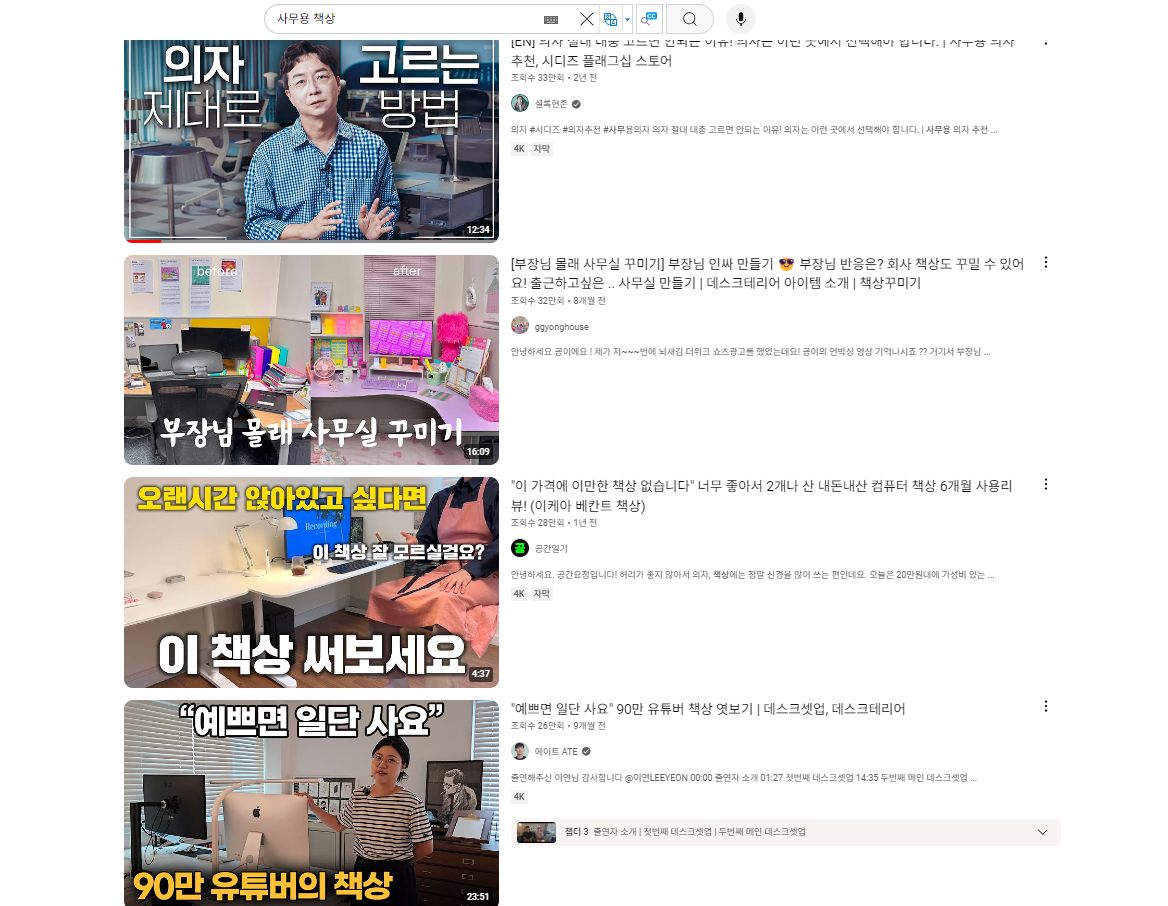 Searching for “office desk” and applying the view count filter / Source: YouTube
| News Articles
On portal sites, you’ll find a variety of articles competing for people’s attention with just a single headline. If you’d like to see more polished headlines, try visiting an online bookstore. The titles and table of contents of bestsellers are also excellent sources of inspiration for good copy.
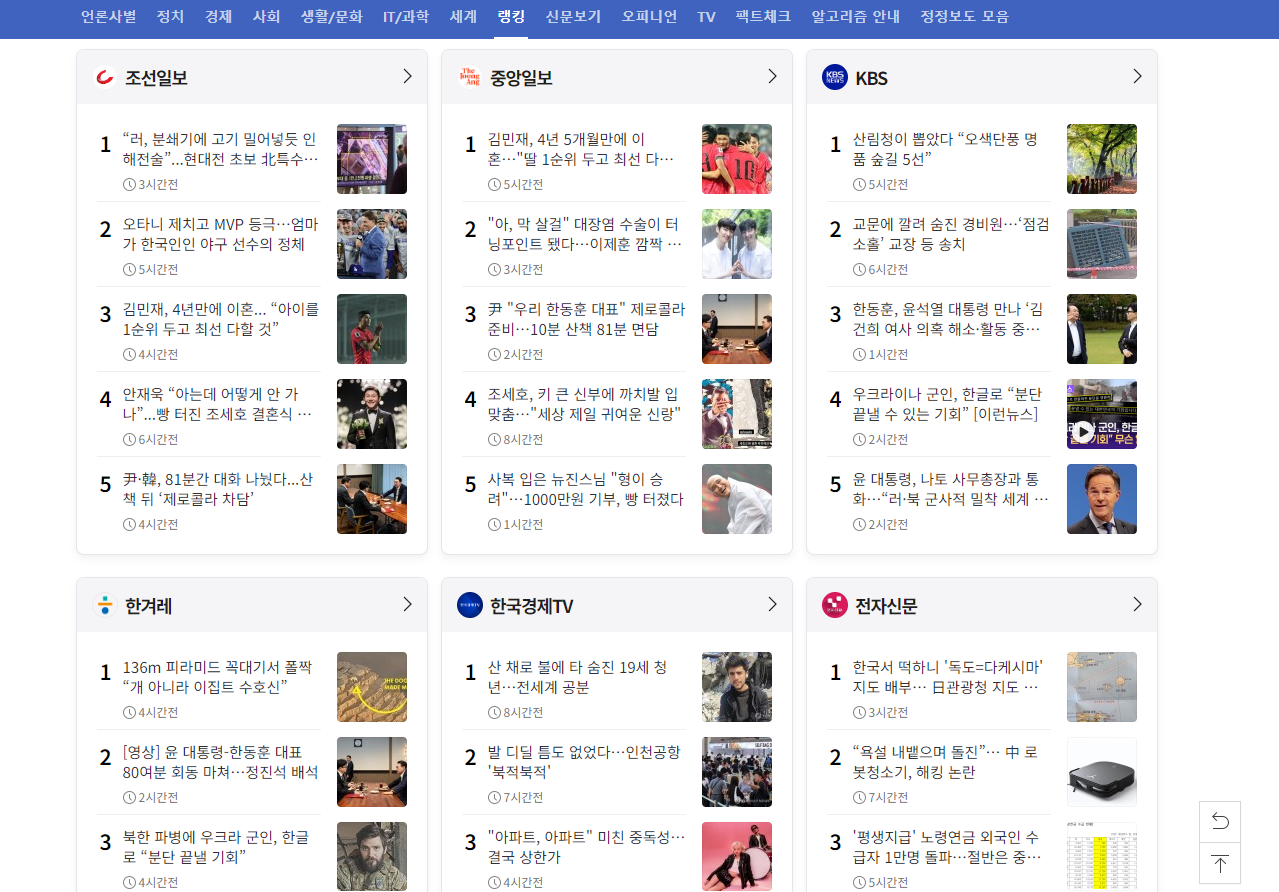 Articles sorted by ranking / Source: Naver
| Ads on Other Channels
Take a close look at the ads that appear in the apps you use frequently.You can view them from the customer’s perspective—noting how marketers have arranged copy and images to persuadeyou,and whether the message on the detailed page that appears after you click actually aligns well with the ad’s content.
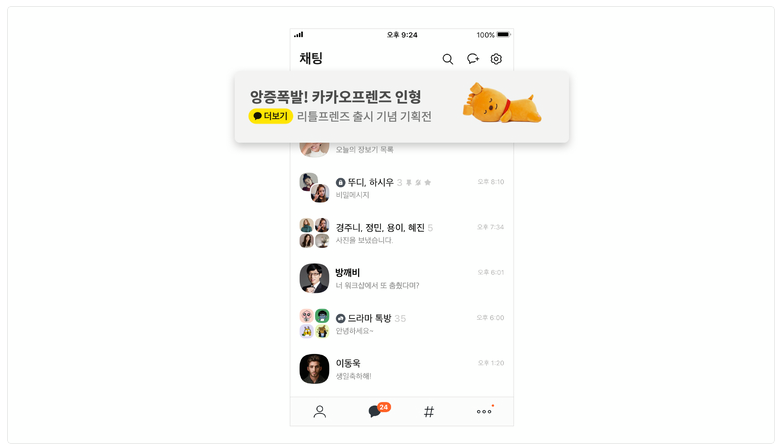 Example of a Kakao BizBoard ad / Source: Kakao Business Guide
Deceiving your audience is not “hooking.”
Hooking isn’t about luring people in by any means necessary just to get them to take a look at our product. It’s more like “research”—taking a dispassionate look atourproduct and finding compelling ways to reach customers to whom we can provide value.
Messages laced with exaggeration and falsehoods ultimately lead to customer disappointment and distrust in the brand. While the immediate goal is a click, a “click” is not our ultimate goal.Fill your “hooking notebook” not with sensational ideas that might be overused for short-termresults, but with ideas that most effectively highlight the intrinsic value of your product. Only by making such choices can the subsequent process of guiding customers toward funding proceed smoothly.
Makers, check out the services you need!
- Learn how to start a wadiz project
- Check out the [Maker Events] currently open for registration
- Watch [Wadiz Funding Lectures] led by funding experts
- Start a project with a [wadiz Expert Partner]

Written by Jeon Su-yeon,Planbro Editor