[Wadify #3] “I met fans who recognized the value of our brand.” Shuroop
What is Wadipay?
"Miracles don’t just happen."
We’re carefully compiling the success stories of makers who have successfully completed funding efforts and sharing them widely, like Wi-Fi, to bring new miracles to aspiring makers.
"We wanted to share the vision behind our brand, Shuroop, and meet people who would resonate with it.
We believed that the Shroop fans we met on wadiz
would naturally help spread our ideas and values even further.”
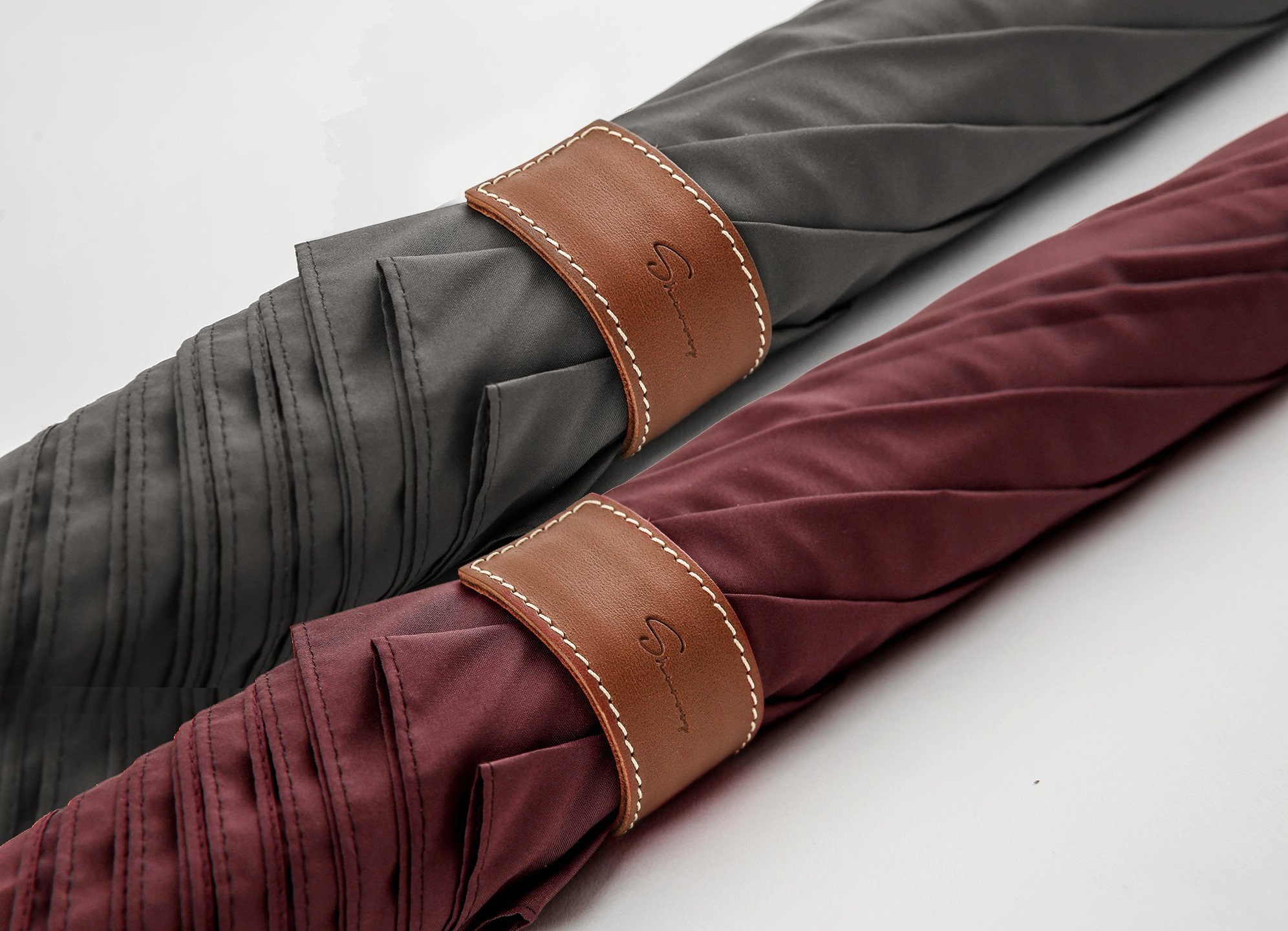
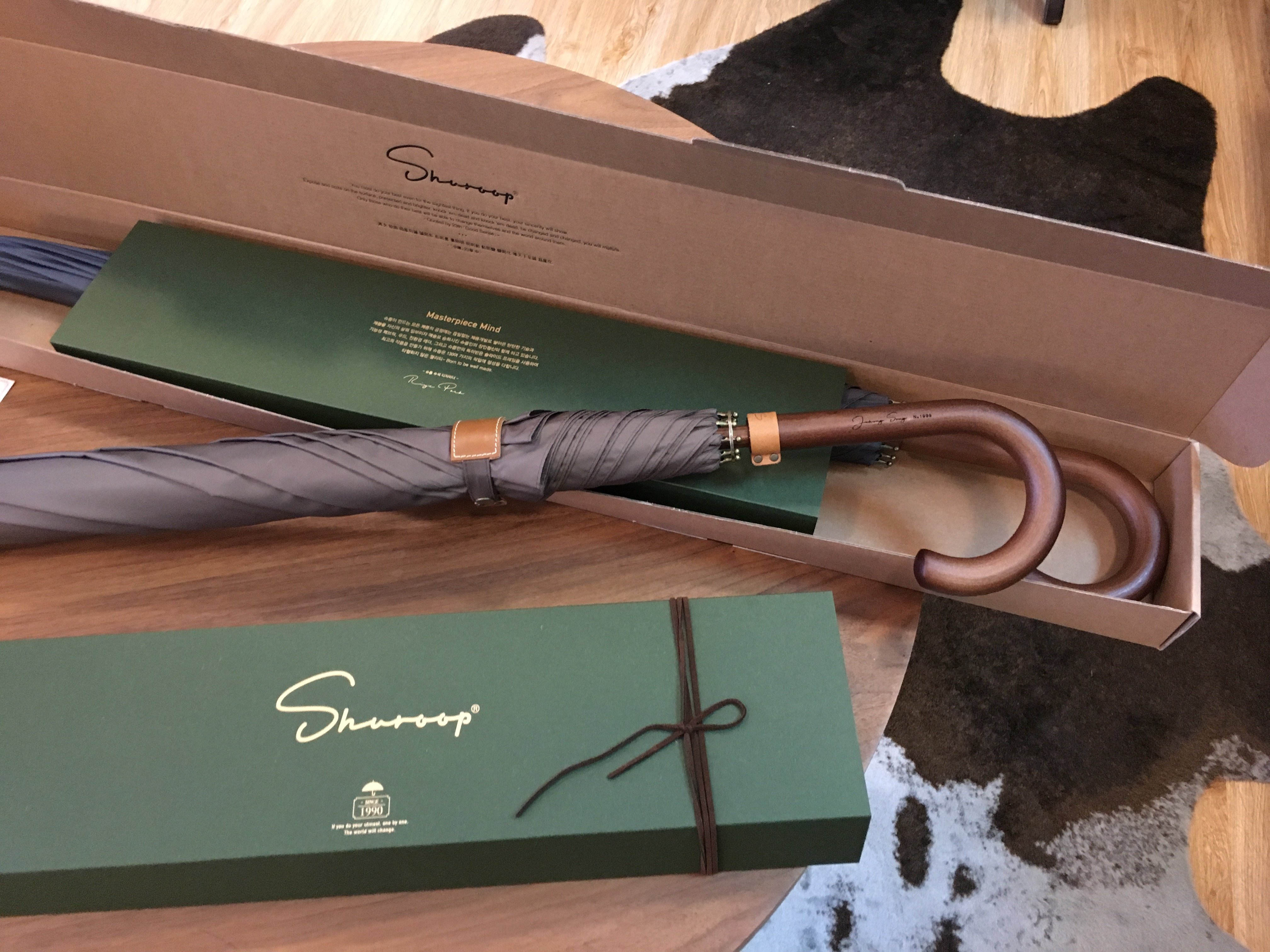
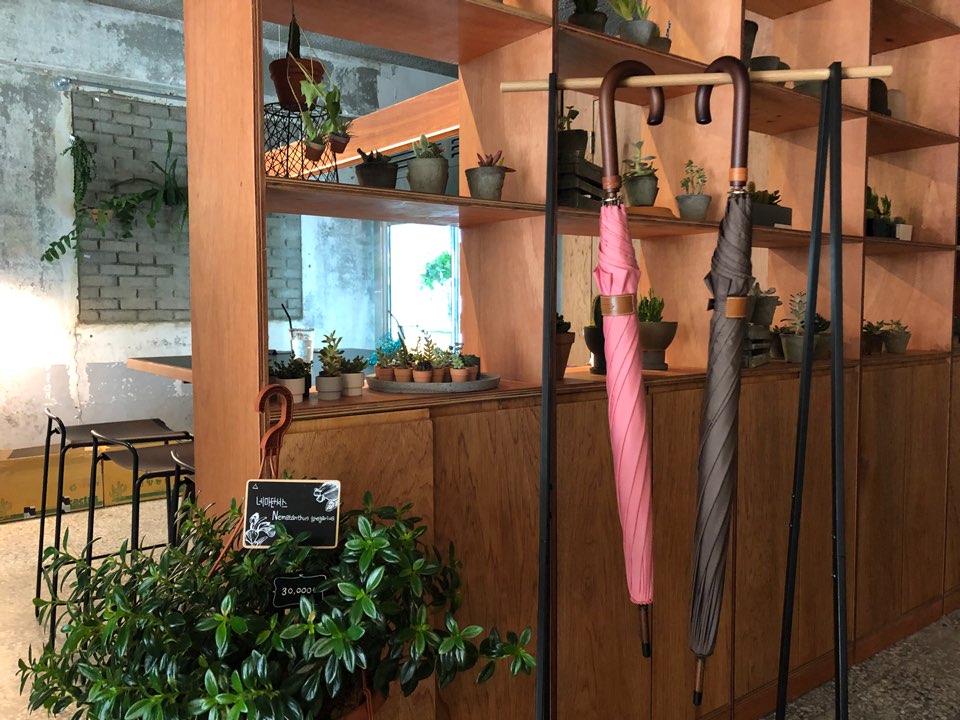
Here is an umbrella that, just by writing about it, seems like it would make your stride on a rainy day more elegant. It features a crisp fabric that seems to playfully bounce off even raindrops, a vegetable-tanned leather strap that feels pleasant every time you wrap it around the umbrella, and a slide mechanism that eliminates the worry of your fingers getting pinched. This is Shuroop.
Wadiz met with Code Public’s co-CEOs, Jo Jang-hyun and Park Ri-ye, the makers of Shuroop, who resolved to make durable umbrellas to reduce the number of discarded ones—and even jumped under a pouring waterfall to demonstrate their durability.
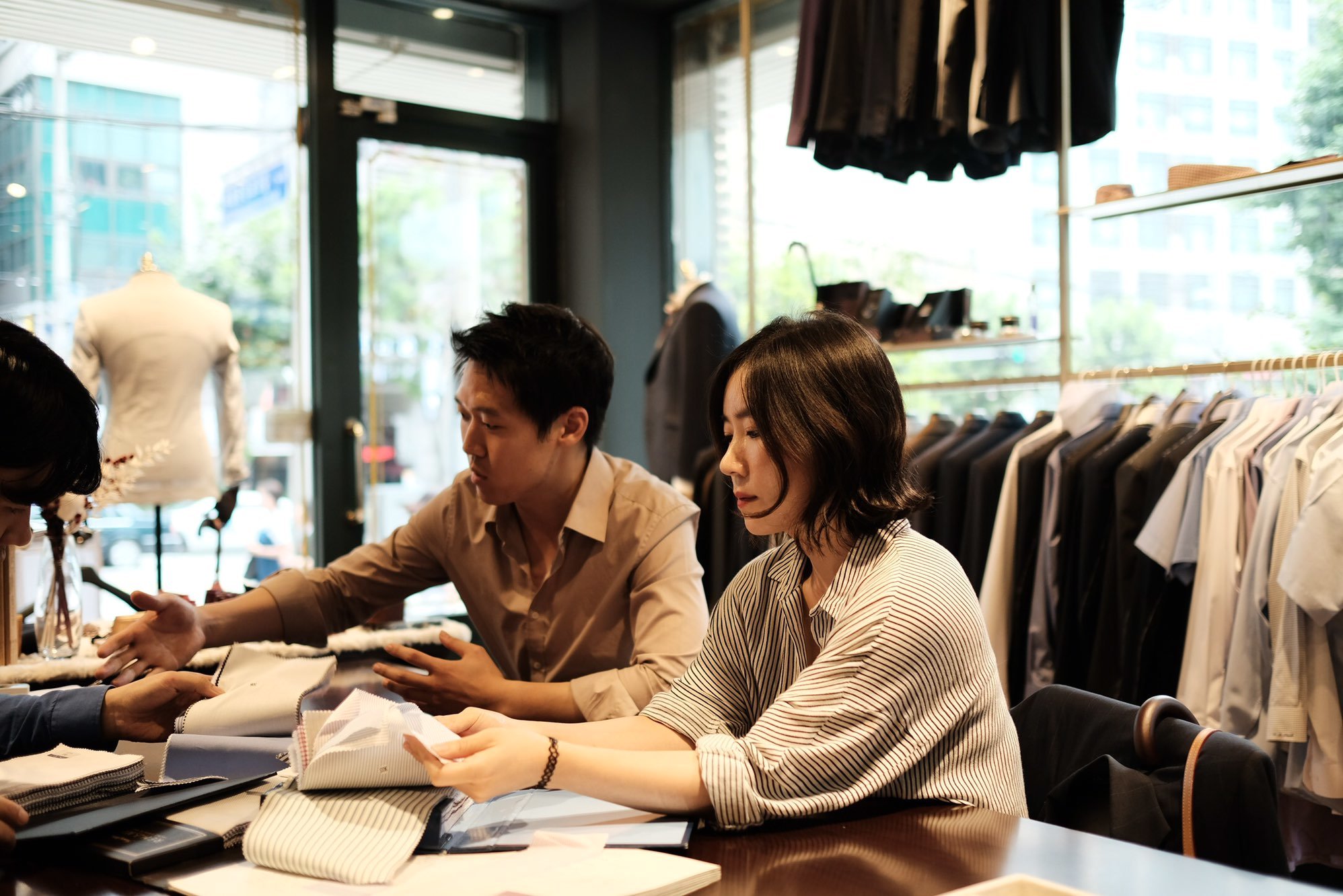 wadiz: Hello! It’s a pleasure to meet you. First, could you please introduce yourselves?
CodePublic: Hello, we’re Jo Jang-hyun, CEO and marketer at CodePublic, and Park Ri-ye, branding designer. It’s a pleasure to meet you.
Wadiz: Looking at Shuroop’s funding story, you introduced CodePublic as a “Sequential Branding Lab.” What does that mean?
CodePublic: CodePublic is a company that continuously creates brands. Shuroop, which we just launched, is our first brand. There are many manufacturers in Korea that make great products, but many of them aren’t well known.
We want to help these companies with their branding and create brands that will be loved by people for a long time, just like luxury brands from abroad.
Wadiz: Does the name “Shuroop” have any special meaning?
CodePublic: “Shuroop” is the native Korean word for “umbrella.” Many people seem to think it’s a foreign word. But it’s actually a beautiful part of our language. Wa: Is it because of the “shuroop” sound you hear when opening an umbrella? It’s a really pretty name. Since it’s your first brand item, it must hold special meaning. Was there a specific reason you chose an umbrella as your first product?
Code Public: We really had way too many broken umbrellas at home. In a household of just two people, we had over 12 umbrellas. In fact, they say the number of umbrellas discarded each year is enough to build 25 Eiffel Towers. SoI started wondering if there was an umbrella that was sturdy and built to last.
I’ve wanted to be an entrepreneur since I was a child. In particular, I wanted to build a company that could contribute, even in a small way, to solving social problems. I thought that with umbrellas, we could generate a profit for the company while also having a positive impact on society.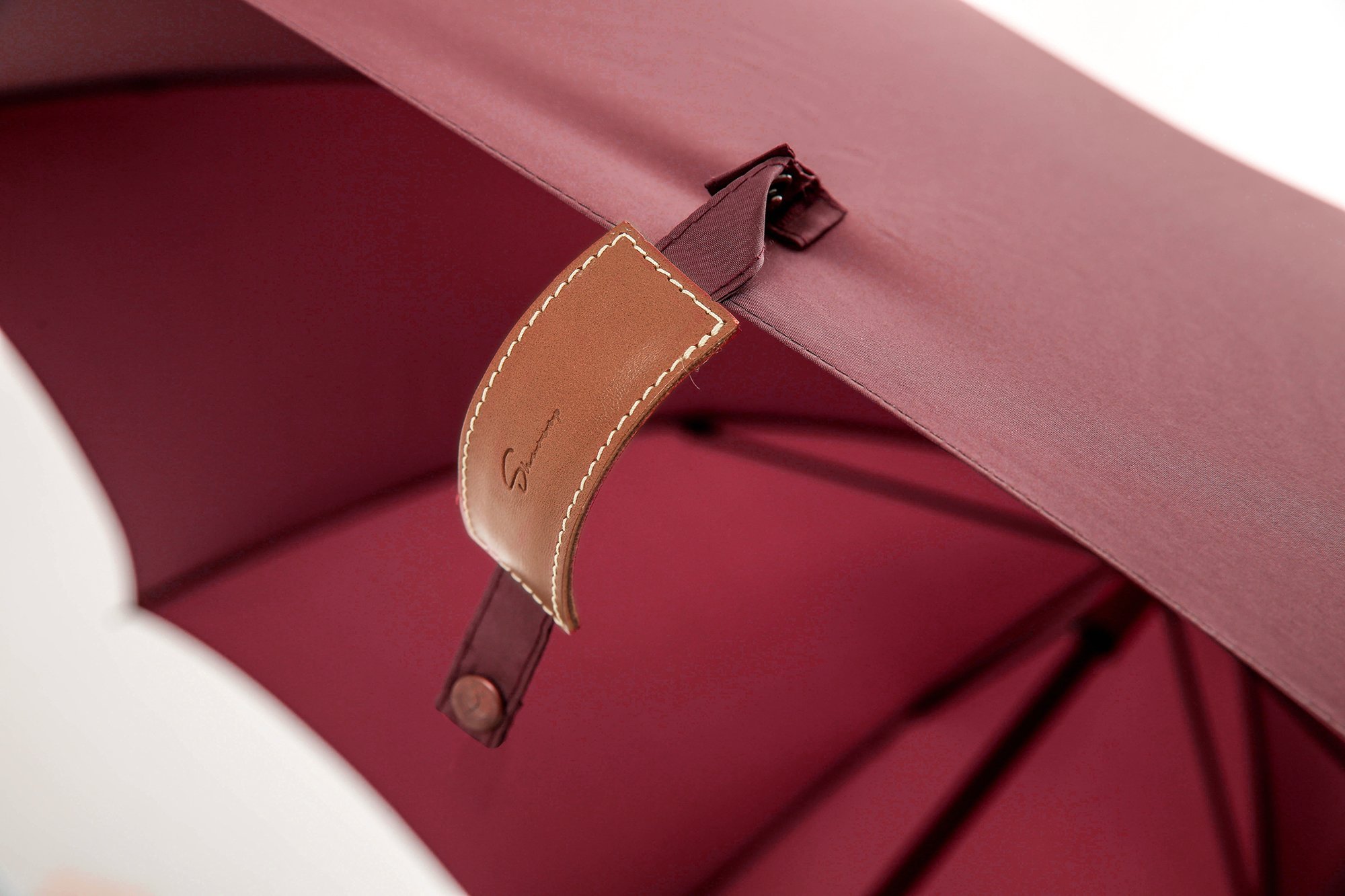 Wa: Making a profit from umbrellas isn’t exactly an idea that comes to mind easily. Weren’t you anxious while preparing for this?
Ko: Every business venture comes with anxiety (laughs). But I believed I could do it. Right now, the umbrella market in Korea is in complete disarray. Just 15 years ago, umbrellas were highly valued. They were luxury items given as gifts or tokens of appreciation, and people would even have them repaired if they broke.
But as Chinese umbrellas started flooding in, prices dropped and quality declined. There used to be over 600 umbrella factories in the Daegu area alone, but as they lost ground in price competition, they closed one by one, and now they’re all gone. Only one factory remains to this day, and we’re producing Shuroop umbrellas in partnership with them.
I believe businesspeople fall into two categories: entrepreneurs who build businesses around the latest trends, and those who target niche markets. I belong to the latter group. It’s about creating a unique brand in a mature “red ocean” market. The umbrella market has a certain size but also high barriers to entry, making it a field that not just anyone can easily break into.
I thought that if I sharpened our branding, we could definitely stand out. That said, I don’t want to dominate the entire umbrella market. I hope Shuroop becomes a brand that sets the standard for what a well-made umbrella represents. As that happens, I believe others will enter the market, leading to a healthier market ecosystem.
Wa: It’s clear you put a lot of thought and research into this before starting the business. Once you decided on the product, what was the first thing you did?
Ko: At first, I wondered if it was possible to make eco-friendly umbrellas. I thought we could just make them out of biodegradable materials, but it turned out to be nearly impossible. Just setting up the necessary equipment would have cost hundreds of millions of won.
SoI shifted my focus to extending the lifespan of umbrellas. I figured that would help reduce the number of umbrellas discarded in less than a year. First, I looked for a manufacturer that shared our vision and could produce durable umbrellas, and then I began the design process. Wa: As I was reading your Story, I thought, “Wow, this maker really cares about environmental issues.”
Ko: It’s not like I had a specific turning point or a mission; I just grew up that way. I was raised by parents who were very particular about recycling and sorting trash, and watching them pick up litter left on the side of the road or in the mountains naturally made me sensitive to environmental issues.
(Here’s a little TMI! CodePublic’s Wi-Fi password is 0422—that’s Earth Day.)
Wa: You’ve certainly inherited a positive influence! But making a sturdy umbrella can’t be easy. I often see broken umbrellas on the side of the road on days when the wind and rain are even a little strong.
Ko: Unless you make them out of steel, there are definitely limits to the durability of fabric or wood. But since we had to make umbrellas that would last a long time, we put in a lot of effort. Thanks to that, we created the “Shuroop,” which can withstand even a waterfall (laughs).
The manufacturer we’re working with also put a lot of care into it. As I mentioned earlier, this is the only umbrella factory left in Korea.The umbrella-making process isn’t automated—it involves people sewing, hand-stitching, and assembling each part by hand. A singleumbrella goes through over 100 steps before it’s finished. That’s why we can offer after-sales service for Shuroop.
 Wa: I never would have dreamed that making a single umbrella involved so much work. Personally, I think the difference between a genuine product and a luxury item lies in the details, and I believe Shuroop truly embodies the essence of those details. Since paying such close attention to detail inevitably drives up costs, isn’t that a burden?
Ko: We’re the kind of people who stake our lives on detail, so we had no choice. Even if it takes a lot of resources, we don’t want to compromise on quality. Since Shuroop is often sought after as a gift, we’ve put a lot of thought into the packaging as well, but it takes quite a long time to wrap each package. We know we need to improve this, but since we can’t compromise on quality, we’re giving it a lot of thought.
Wa: I imagine you also had a lot of concerns when setting the price. In a way, that could be the biggest risk—how did you go about setting the price?
Ko: We had already anticipated the risk that pricing could cause some people to back out. However, we also expected that there would be more people than we thought who would appreciate Shuroop’s value. After all, there are many supporters on wadiz who are willing to listen to our story.
One of the goals in creating Shuroop was to set a new standard for umbrella brands. To establish that standard, our priority was to bring together people who resonate with our vision and truly understand our product, rather than just lowering the price indiscriminately. Fortunately, the response to the funding campaign has been even better than we expected, which makes us very happy!
(The maker who didn’t even shy away from a waterfall to demonstrate the umbrella’s durability)
Wa: From the Story, I got the sense that you don’t view your supporters as mere consumers. I was particularly moved by the line, “Just as you support us because we can build a meaningful connection, we also support you.” What do supporters mean to Shuroop?
Ko: Just as time was the essence of life in the movie *In Time*, supporters are the lifeblood of our brand. There are many brands overseas that have been loved for over 100 years, but we don’t have any like that in Korea. The reason a brand can endure for so long is because it has fans.
Take Harley-Davidson, for example. They’ve been loved for over 100 years not just as a company that sells products, but as a brand that creates a culture—hosting annual festivals for children with burns and establishing groups to protect children who are being bullied. But in Korea, companies are too focused on making sales and wash their hands of customers once the sale is made, so they can’t be loved for the long term.
I want to build a brand that stands the test of time. To do that, we need to cultivate fans who love our products as much as we do and who will spread the word about them. That’s why, to me, a supporter isn’t just someone who gives us money. In a way, they’re people who’ve formed a small connection with us. Right now, since we’re a small brand, it might just mean doing our best for each and every supporter, but as we grow, I want us to evolve into a brand that creates a powerful culture capable of positively influencing more people.
Wa: It seems like our supporters resonate with and are moved by Shuroop’s philosophy, and they voluntarily spread the word to those around them. I’ve noticed that branding and promotion happen naturally through our supporters. Could you share a few tips on branding and marketing for other makers?
Ko: The most important thing about a product is its story. Today’s consumers know how to distinguish between real and fake stories. I think the reason so many people relate to Shuroop is because it’s filled with authentic stories. If you fabricate a story, it takes enormous resources to maintain both the story and the brand.
I believe this is what distinguishes an entrepreneur from a mere merchant. People who focus solely on selling as much as possible to maximize profits—regardless of the story—are closer to being merchants. An entrepreneur is someone who has a brand and a story rooted in sincerity.
Going a bit deeper, since I’m a growth hacker, I use growth hacking in my branding. It involves extracting meaningful data through numerous experiments and finding the language and communication methods that best suit our brand. Of course, this is difficult for a brand in its early stages.
If this process feels daunting, I recommend being completely honest. Nothing moves people’s hearts quite like sincerity. It’s never too late to tackle the technical aspects once you’ve built a solid Story that conveys that sincerity.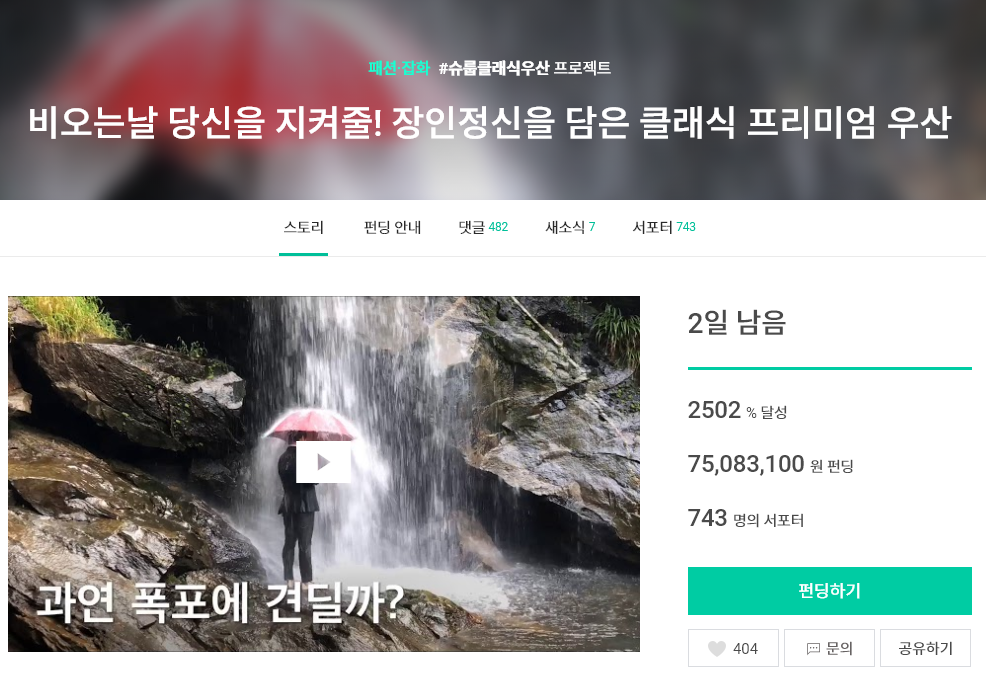 Wa: Thank you for the great advice. I think it will be helpful to many makers. A company with data analysis and branding capabilities as strong as Shuroop’s could have sold directly on general social commerce platforms—is there a specific reason you chose to launch a funding campaign on wadiz?
Ko: Wadiz’s platform nature was a better fit for us. On general marketplaces like Store*, Ku*, and Ok*, no matter how much we introduced our product, it would just be perceived as an umbrella. But on wadiz, there are many supporters who take as much interest in our Story as they do in the product itself. I’ve always believed that early adopters are the ones who change the market, and wadiz is the platform where the most of those people gather.
I don’t think a site with high traffic is necessarily the best choice. We wanted to share the philosophy behind our brand, Shuroop, and meet people who would resonate with it. We thought that by meeting Shuroop’s fans on wadiz and gradually amplifying their voices, our ideas and values would naturally become better known to a wider audience.
Wa: I heard you’ve been familiar with wadiz for a long time. Now that you’ve created your own brand and run a funding campaign, what has the experience been like?
Ko: As you mentioned, I’ve wanted to start a business since I was young, so I’ve been keeping an eye on wadiz since it first launched. I also took the wadiz School courses very seriously. Maybe that’s why the funding process wasn’t too difficult.
I’d already placed pre-orders for the initial stock, which eased my shipping worries a bit. Other than that, I’ve been working hard to respond to supporters’ inquiries, and when the response starts to slow down a bit, I update the main image or post News. It hasn’t been as difficult as I’d imagined. The more I do this, the stronger my desire to run another round of funding becomes (laughs).
 Wa: Are you already thinking about follow-up funding?
Ko: I want to keep connecting with our supporters. While raising funds is a valuable opportunity for a small brand like ours, I think the biggest advantage is being able to receive direct feedback from our supporters. There are so many things I’d like to try in the future, so I want to listen to our supporters’ comments and continue communicating with them.
Wa: I hope we can meet again through an encore funding campaign. Finally, could you share a few words for makers preparing for their own funding campaigns?
Ko: There are many supporters on wadiz who truly listen to makers’ stories. If you convey your product and story with genuine passion, you’ll be able to build a fan base.
-
Check out the services available for makers!
· Learn how to [Start a wadiz project]
· Sign up for [wadiz funding workshops] led by funding experts
· Launch a project with a [wadiz Expert Partner]