[Content Director’s Column #3] Step-by-Step Guide to Launching a Product Detail Page
This content is
<The Content Director’s Column>
series.
Be sure to keep this in mind!
- We’ve broken down the product page launch process—which can often be confusing—into clear, step-by-step instructions.
- Taking product photos and videos isn’t the first step.
- This will serve as your guide when you’re unsure where to start.
When you’re setting up a product page on your own
When collaborating with a wadiz partner
You’ve probably had moments when you weren’t sure if you were doing things right. Even when you’ve outsourced product page creation to others, you might have struggled to judge whether things were progressing smoothly because you lacked a clear benchmark.
The eight steps for launching a product pageI’m about to explain—whatever product you’re working on or whatever season it’s in—you’ll have a clear picture of where to start and when to finish your product page. Even if you simply bring a product sample to meet with wadiz partners, you’ll be able to figure out what requests to make and at which stage. I’ll help you spend your budget more efficiently.
The first step in launching a product detail page:
You need to analyze the product.
Product analysis isn’t just for large corporations.
- I’ll highlightthreeuniqueselling pointsthat set our product apart from similar ones,
- as well as three common details that similar products typically focus on—showing that we’ve got them covered too. three common elements
It’s enough to just outline the basics.
There’s
at all.
Even just looking at the fashion industry, it’s common for the “true final sample” to remain undecided on the day of the photo shoot—or even after the draft of the product detail page has been released. For example, the sleeve cuff might have been designed as a thumbhole cuff for the shoot, only to be changed to a standard cuff right before production begins.
Let’s take a fleece zip-up as an example. It’s perfectly fine to summarize the three unique selling points that set our product apart to this extent.
- The cropped design allows it to be layered over trendy puffer jackets.
- It uses double-layer fabric, making it lightweight and warm.
- Thanks to the double-layer fabric, it offers excellent wind resistance.
Here are three common featuresthat all fleece zip-up products typically focus on—and that our product also incorporates—as examples.
- Due to the nature of fleece fabric, it traps a lot of air, keeping you warm.
- Available in neutral colors like ivory and black, making it easy to wear every day.
- A chest pocket has been added to enhance practicality.
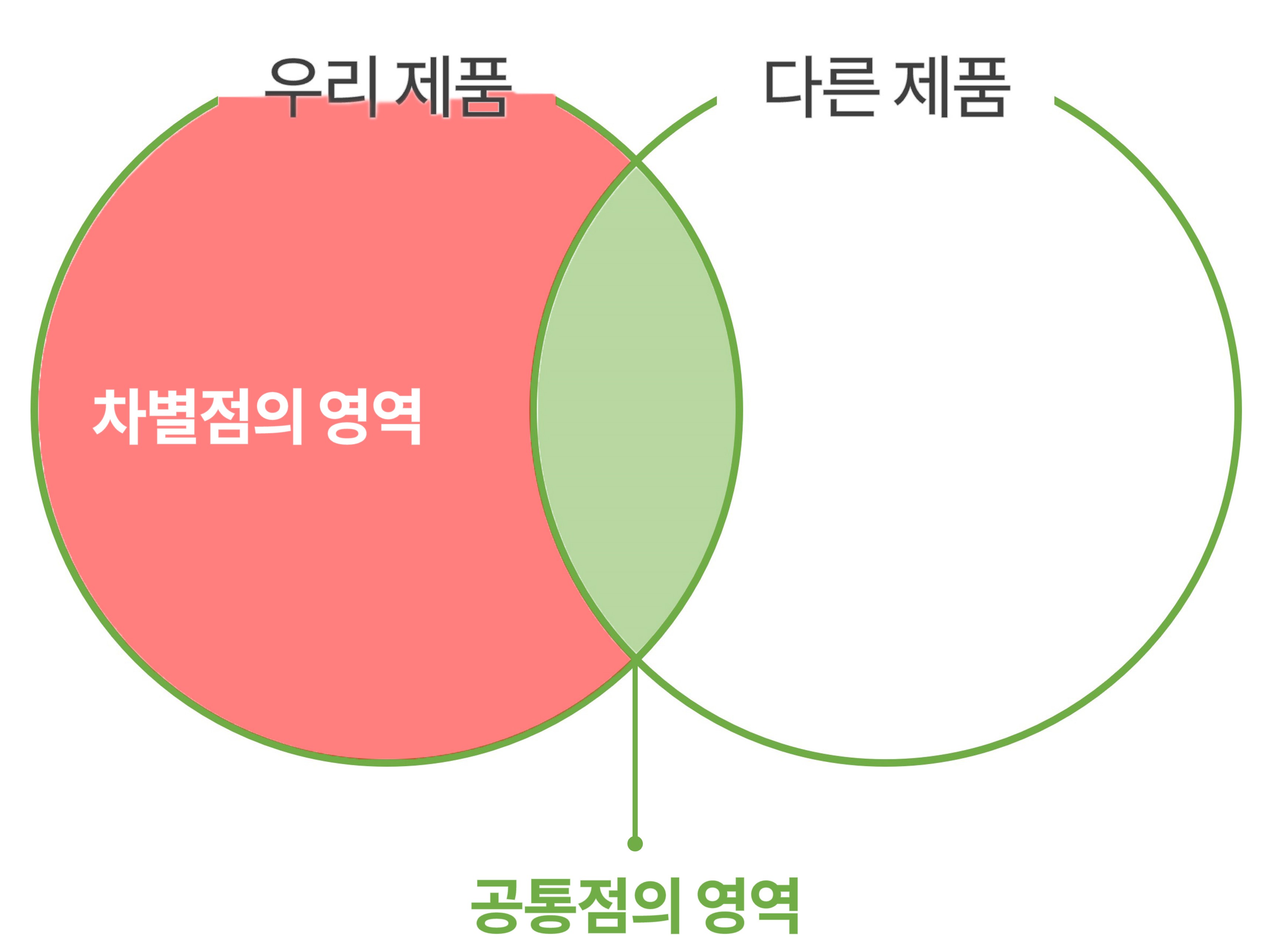
The first step in writing a product detail page should be identifying the features you want to highlight.Before worrying about things like “What color should I use?” or “What font should I use?”, you need to start with product analysis . What good is a pretty font if it fails to properly convey the product’s features?
Since getting off to the right start is crucial, please invest sufficient time in identifying the product’s unique selling points and common features.
The second step in launching a product detail page:
You need to identify your target audience.
Now, you need to identify
to our product’s detail page.
No matter how good the product is, if you target the wrong audience, purchases won’t happen—regardless of your ad’s reach or click-through rate. (In fact, you might not even achieve good reach or click-through rates to begin with.)
Let’s look at an example. Taking the cropped fleece zip-up we looked at earlier, if you create a product detail page targeting women in their 40s, you probably won’t get much of a response. Since the short length sits above the hips, many people will likely feel uncomfortable with it.
Who typically wears it, and what those people are curious about
is essential
Check social media and online communities—especially Naver Cafés— to see what products your target audience uses, what they find lacking, and what they’re curious about.Inthe food category, this step involves analyzing who eats, when, and with whom; in the beauty category, the key is to carefully understand who uses the product and what changes they hope to achieve.
This stage also involves identifying the specific needs customers have in their daily lives—not just “reducing wrinkles,” but details like “lifting the corners of the mouth” or “targeting fine lines around the eyes.” Although this is a very basic step, it’s often overlooked due to the busyness of product development. However, if you look at it from the opposite perspective, you can see that the more effort you put into this target analysis, the stronger your competitive edge becomes.
Once you’ve identified who primarily wears, eats, and applies the product,
it’s time to segment your target audience.
Try to visualize your target audience based on lifestylerather than demographic analysis .This allows you to use thesameadvertising budget more efficiently.To revisit the fleece zip-up example mentioned earlier, even among women in their 20s, “women in their 20s who frequently meet clients while wearing a suit”
- Rather than a cropped fleece zip-up that’s meant to be worn under a puffer jacket,
- you’re more likely to prefer a lightweight goose-down vest to wear under a coat.
even if you listed a hundred benefits of a cropped fleece, it wouldn’t yield significant results. Since they aren’t our target audience to begin with, there’s no need to design a product page or take photos with them in mind.
Therefore, only by clearly defining our target audience as “women in their 20s looking for a fleece that can be layered under short outerwear” can we fill the product page with content and photos that will appeal to them . After all, we wrote it while imagining the people who would actually buy our product. Naturally, once the product page is complete, the reach, click-through rate, and purchase conversion rate of the ads we run will be excellent.
Step 3 of Launching a Product Detail Page:
Identify the core message and key selling points.
The “core message” is a single sentence that condenses
into a single sentence—that is the core message.
If you can leave the same impression in the minds of your target audience after they’ve read the entire product detail page, you’ve successfully craftedyour coremessage. Naturally, the more your target audience is interested and the more the message addresses their needs, the more powerful the core message will be. That’s why we identified our target audience after analyzing the product.
Taking the cropped fleece zip-up we’ve been using as an example, we can craft the core message by combining the unique selling point—“Its cropped design allows it to be layered over trendy puffer jackets”—with the common feature—“It uses basic colors like black and ivory, making it easy to wear every day.” If we also consider our target audience’s strong interest in layering, the core message would be finalized as follows: Whether it’s a short puffer or a long coat, no matter how trends change, the fleece you wear underneath is always OO Fleece.
Once the core message is set, you can effectively imprinted
.
The narrative we’re referring to here serves to make the target audience relate to the core message.For example, we could use the narrative that every winter, aswinterouterwear trends change, people end up buying a new fleece to go with them, only to find their bank accounts empty by the end of the season—a cycle that repeats itself year after year.
Since our target audience consists of people looking for fleece that goes well with puffer jackets—and we can infer that they care deeply about fashion—we use the relatable experience of “spending all their money on clothes” as our narrative. This allows us to convey the core message: “That won’t happen if you wear our fleece! You won’t need to buy a new one even when trends change!”
Step 4 in launching a product detail page:
We need to outline the structure of the product detail page.
To effectively convey the core message,
you need to decide what content to include and in what order to present it.
Usually, we experiment with different orders for the topic, the product’s unique selling points, and common features. Even by slightly changing the order—topic, common features, unique selling points—you can quickly come up with five different product detail page frameworks. Like this.
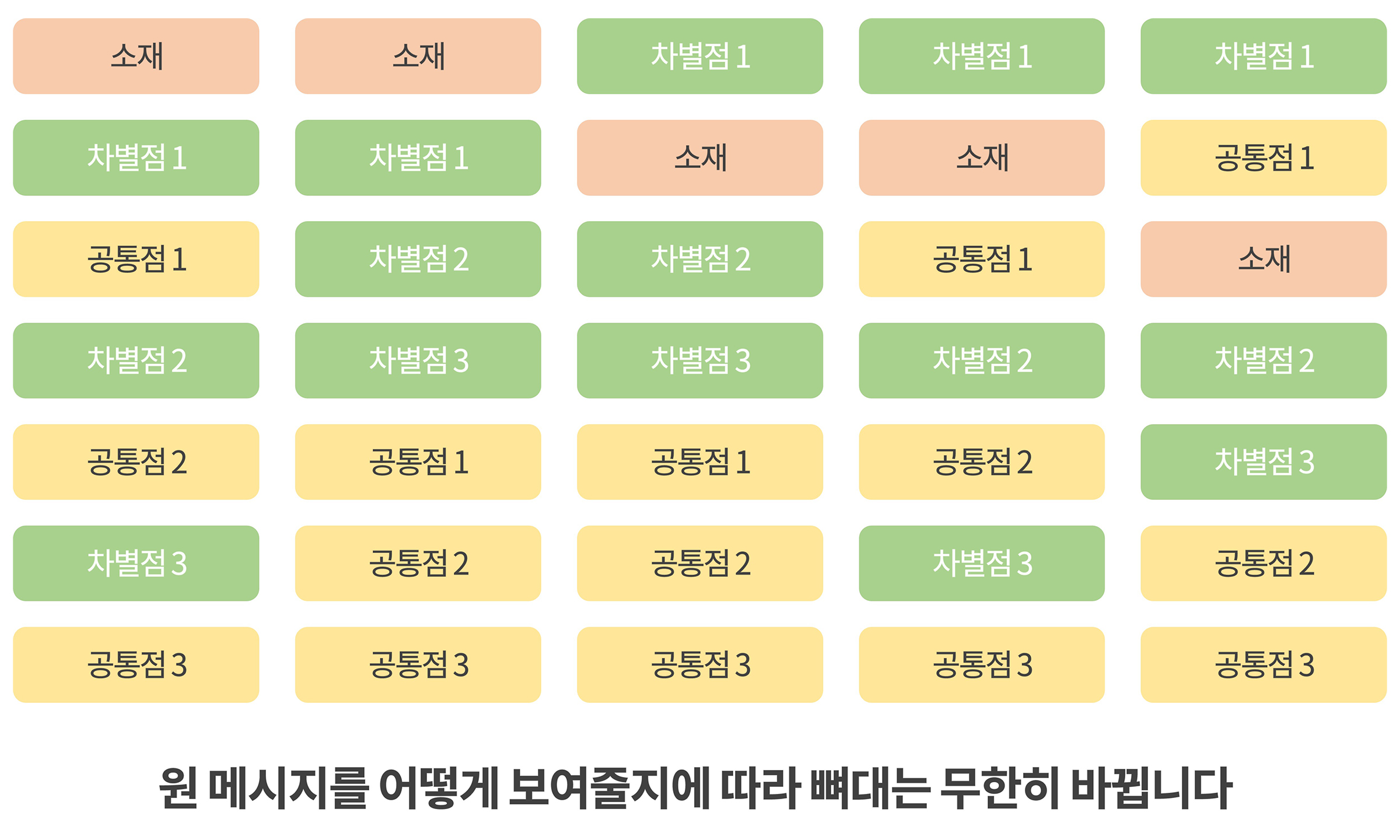
Personally, I tend to arrange the content in the following order:
in that order.
This means presenting the context first—something that resonates with the target audience—to give them a reason to read our product page all the way through. If the product’s unique selling points are particularly strong, it’s also effectiveto arrange them in the order of 1 unique selling point – context – 2 unique selling points – 3 common features. This sequence hooks the reader with an eye-catching unique selling point and then uses the context to explain why these features are necessary.
However, if too many differentiators are explained right from the start of the product detail page, your target audience will end up reading a list of product features without understanding why they’re necessary. They’ll read the content, but since they won’t relate to it, it’s unlikely to lead to a purchase. Therefore, it’s not too late to first showcase one truly compelling differentiator, then use the supporting story to fully engage the audience before revealing the remaining two differentiators.
Step 5 of Launching a Product Detail Page:
Prepare photos and GIFs.
Now, in accordance with the sequence of our product detail page,
you can start preparing the necessary photos and GIFs.
If you shoot the photos first and then prepare to write the product page, you won’t be able to visually convey your message—no matter how well you’ve analyzed your target audience or defined your core message and content.Since this often results in allyour efforts going to waste,I strongly recommend planning the product page first and then proceeding with the photoshoot.
This also has the advantage of allowing you to use your shooting time efficiently, since you can focus on capturing only what’s necessary. For example, if you’re selling a cropped fleece zip-up, you can simply focus on showing plenty of outfit shots layered with winter outerwear—there’s no need to waste energy preparing comparison photos of the item before and after washing.
Step 6 of the Product Detail Page Launch:
You need to flesh out the content.
Now, simply upload the prepared photos and GIFs
according to the product detail page framework we’ve established.
If you simply display a series of photos and GIFs at this stage, target customers encountering the product for the first time won’t understand why these images and videos are appearing at this point, so you’ll need to provide the necessary explanations in text. When there’s enough context, your target audience will be able to read through the page smoothly.
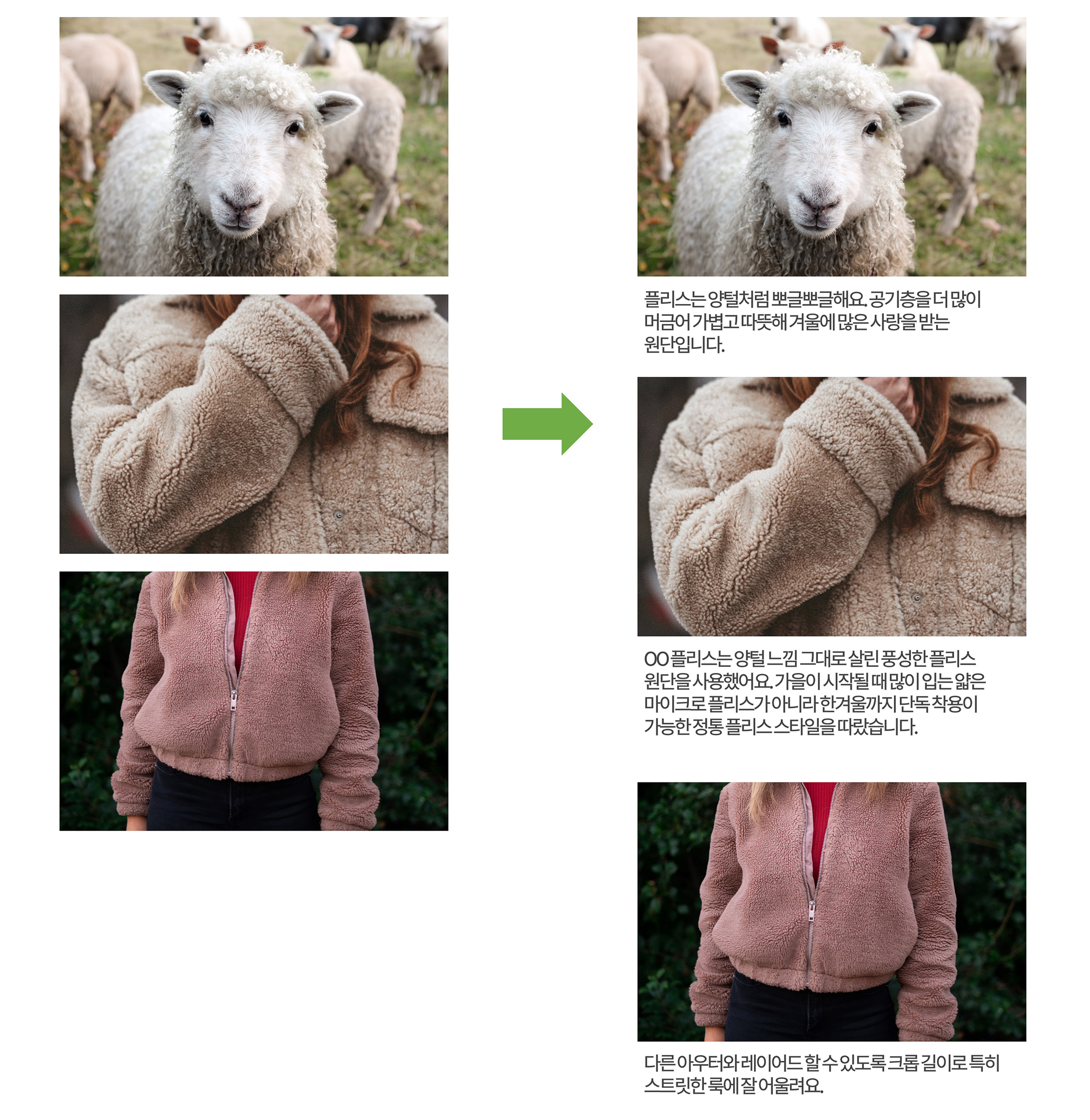
Please check to make sure
is appropriate for your target audience.
It’s best to mimic the tone of voice your target audience uses. Try browsing the social media platforms and fashion communities you referenced when defining your target audience to capture a similar vibe. Simply breaking away from the generic tone commonly found on any brand’s product detail page can significantly boost engagement with your target audience.
Step 7 of Product Detail Page Launch:
Check the readability.
Please check to see if the product detail page you’ve created
is easy to read on mobile devices.
Since many purchases are made on mobile devices, a product detail page that reads well on a PC but not on a mobile deviceis only worth a 50 out of 100. Check whether the font size is large enough, whether the text you’ve carefully crafted is sufficiently emphasized with bold or underline effects where needed, and whether the photos are too small or too large to intuitively convey the features you want to highlight.
Brands that create and upload product detail pages as JPG or PNG files, in particular, must not skip this step. Since those working on the front lines use PCs daily, it takes them a long time to realize when a product detail page is causing issues on mobile. You’ll avoid future headaches by creating and uploading it correctly from the start.

Step 8 of Product Detail Page Launch:
You must update them constantly.
It’s no different from stagnant water turning to rot.
You must pay close attention to which content drives more sales and which unique selling points resonate most with your target audience when presented in a specific order. For example, if a review of a cropped fleece zip-up says, “It’s unique because it’s short, but I don’t know what to wear underneath the fleece,” you can update the page with styling photos showing the cropped fleece worn on its own to preemptively address this concern—which your target audience might perceive as a barrier to purchase. Naturally, this will improve your conversion rate, right?
The more a product is a basic item or a steady seller, the more frequently you should update its product detail page. Since there’s a high likelihood that your target audience will keep coming back over a long period, failing to update the page could make your brand’s image seem outdated as well.
<Content Director’s Column> Series
- [Content Director’s Column #1] Why Product Descriptions Need to Be ‘Detailed’
- [Content Director's Column #2] Product Detail Page Order: I'll Just Set It for You.
- [Content Director’s Column #3] Step-by-Step Guide to Launching a Product Detail Page
- [Content Director Column #4] There’s No Such Thing as a “Women in Their 20s” Target Audience.
- [Content Director Column #5] Why You Should Write the Product Detail Page Even Before You’ve Taken Product Photos
- [Content Director Column #6] How to Write a Product Page Summary in 3 Minutes
- [Content Director Column #7] 3 Ways to Boost Sales by Adding Just One More Line
- [Content Director Column #8] How to Instantly Improve Your Product Description by Changing Just a Few Words
- [Content Director Column #9] How to Write Product Descriptions That Let You Charge Fair Prices Amid Price Wars
- [Content Director Column #10] How to Write Ad Copy in 10 Minutes Using ChatGPT
Makers, check out the services you need!
- Learn How to Start a Wadiz Project
- Check Out [Maker Events] Open for Registration Now
- Sign Up for [wadiz Funding Courses] Taught by Funding Experts
-
Text/Photos/Editing: Choi Hong-hee
This article is an excerpt from “Just Read This! The Step-by-Step Guide to Creating Product Detail Pages in 3 Minutes,”originally published on Fashion Post on December 27, 2021.
※ If you share or use any content (text, images, videos, graphics, data, etc.) posted on the wadiz maker center externally, please be sure to cite the source.