[Content Director’s Column #8] Quickly Improve Product Detail Page Copy by Changing Just a Few Characters
This content is
Episode 8 of the <Content Director’s Column>
series.
Be sure to check this out!
- We’ll give customers who are hesitating to buy our product a gentle nudge so they’ll click the “Buy” button.
- I’ve summarized three official tips so you can start using them right away.
- Anyone can start writing copy that drives sales, even without a background in the field.
Just by reviewing the text on your product detail page,
will boost your sales.
The “text on the product detail page” mentioned here
exactly what it sounds like: all the text on the product detail page.
This includes everything from product descriptions to shipping information. Given that product detail pages are where you interact with customers online, and since all this content is conveyed visually,whether it’s easy for customers to readinevitably has a massive impact on sales.
- For example, if customers can grasp the features of our product more quickly, the conversion rate will be higher relative to their time spent on the page, and
- and if they fully recognize all the benefits we see in the product, they’ll find it that much more appealing, leading to a higher conversion rate relative to traffic.
It’s practically impossible to
or redesigning the product detail page is practically impossible.
After all, every single shot costs money. The thought of changing everything is daunting. That’s why even if you simply review the text on the product detail page—which you can edit instantly by clicking the “Edit” button—you can achieve meaningful results relative to the effort and time invested.
So, what criteria should you use to review the content, and how should you edit it? I’ve divided the text on the product detail page into “descriptions” and “subheadings” and identified three key points.
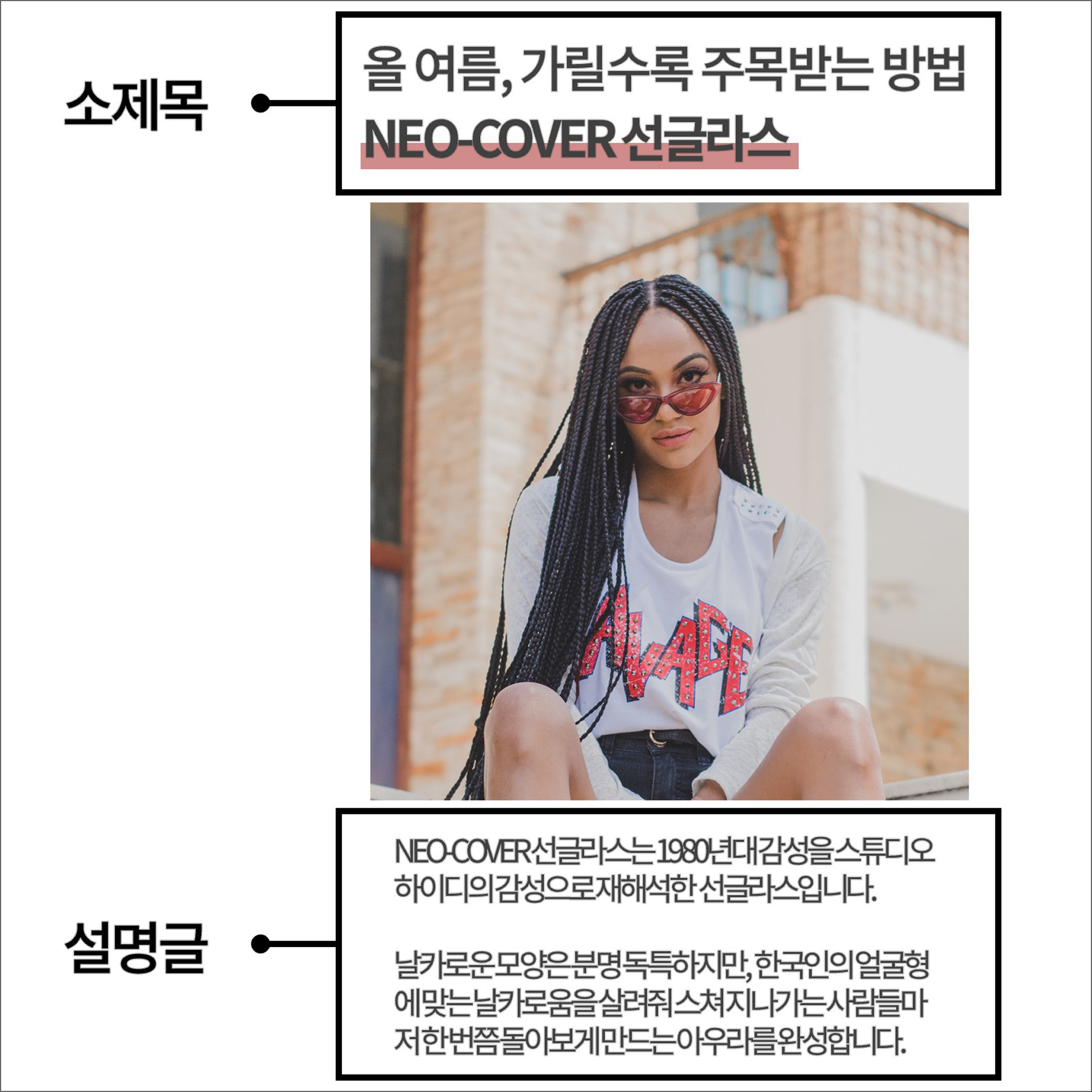
Rule One:
The body text shouldn’t be about what we want to convey,
but what customers want to hear.
As a content director,
this is the area I personally consider most important.
That’s becauseif a product pageis filled only with what I want to say—rather than what customers want to hear—no matter how long or detailed the description is, it won’t lead to a purchase.Let’s take a look at the example descriptionbelow.
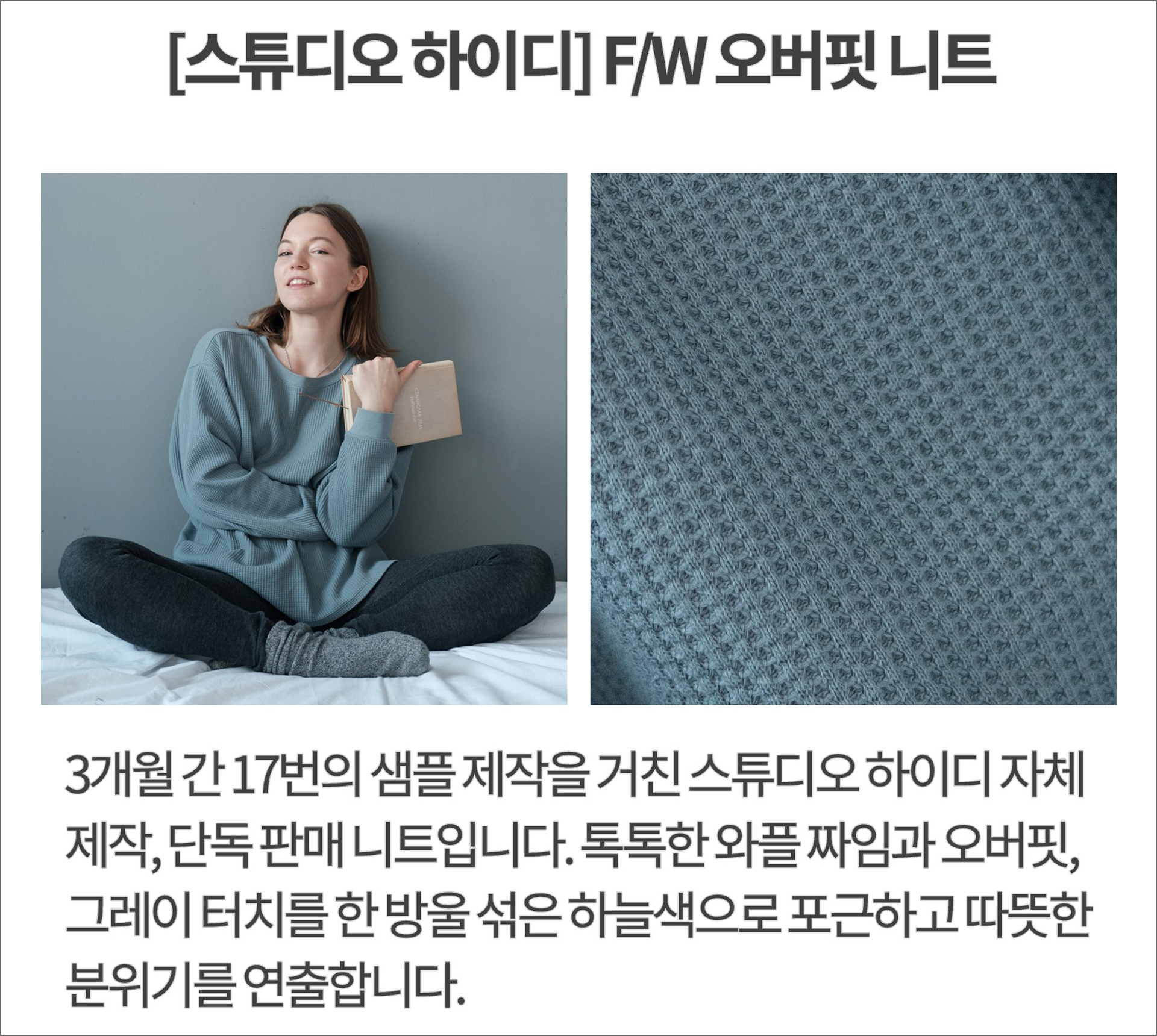
When do you think you’ll be able to wear this outfit?
You probably couldn’t answer that right away.
Although the product’s features are listed in abundance, there’s absolutely no explanation of “how those features actually benefit the customer.” So,from the customer’s perspective, theyend up thinking, “Okay, I get that this shirt has a waffle knit and an oversized fit. But so what?” Unable to see what benefits it offers them, customers will simply leave our product detail page.
Therefore, instead of writing descriptions that focus on what we want to say—namely, listing as many features as possible —we should write descriptions centered on the benefits and convenience those features will bring to the customer.
- If a distinctive waffle weave is the key feature, you need to highlight the convenience from the customer’s perspective—that it’s soft enough to wear on its own without an undershirt.
- If the product is known for its oversized fit, you should explain the convenience of it not feeling constricting.
- If the productis characterized by a sky blue shade with a hint of gray, it’s helpful to explicitly state the benefit customers gain by choosing that color. For example, you could mention that because it’s an easy-care color, everyday stains won’t be very noticeable.
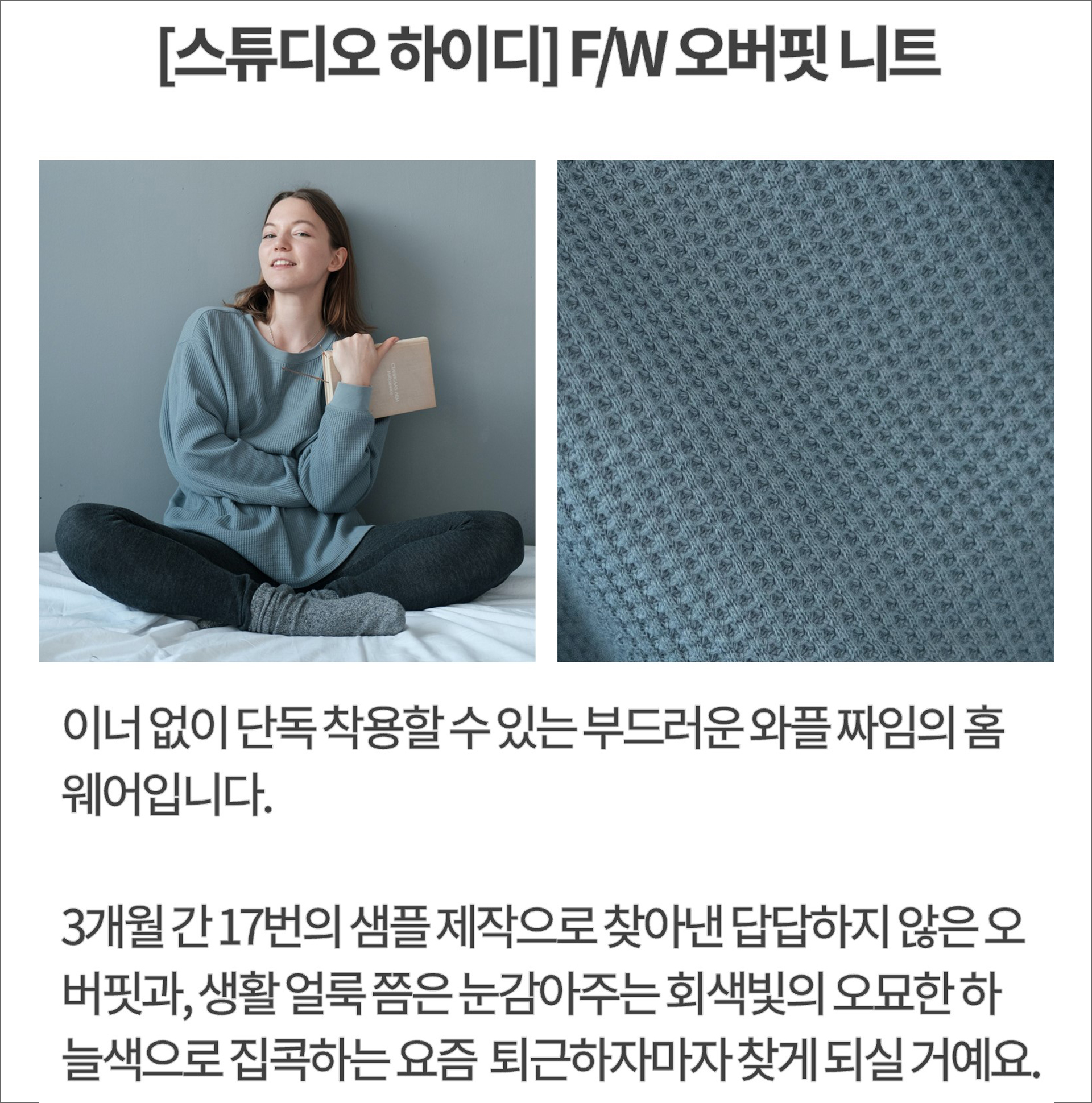
If the benefits customers can gain are made clear,
it becomes much easier to explain when and how to use our product.
Just as we were able to define “loungewear” precisely by compiling conveniences from the customer’s perspective—such as the ability to wear it on its own, the fact that it isn’t stuffy, and not having to worry about everyday stains—customers won’t have to wonder, “Wait a minute, when would I wear this?” so the likelihood of a purchase increases.
Rule Two:
Make sure the core message comes through
make sure the key points are clear.
“Subheadings” are a type of copy that
and present it concisely and boldly.
As customers scroll faster than ever these days, the importance of subheadings is growing. This is because customers decide whether to carefully review a product page or click “Back” to check out another brand’s page by glancing at the subheadings written in large font.
Therefore, first,
make sure the subheadings flow naturally on their own.
It’s easier to understand with an example.
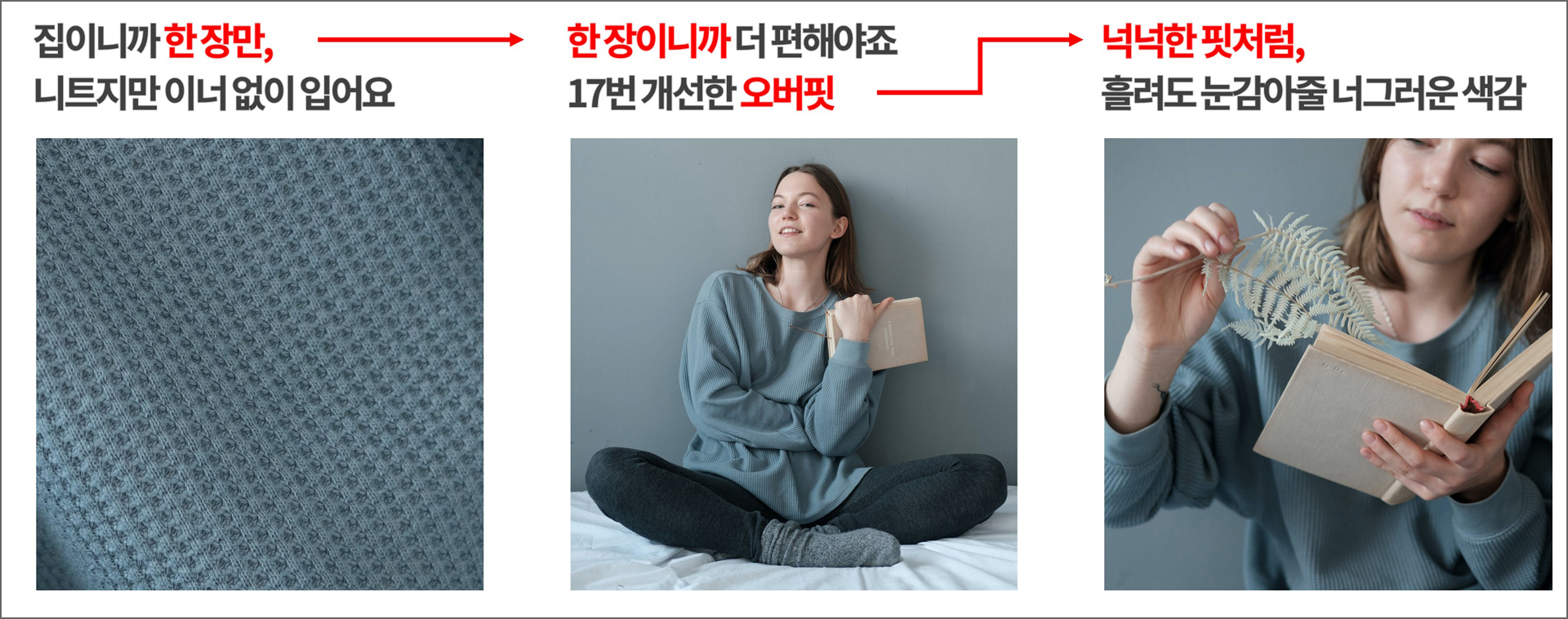
- In the subheading stating “You only need to wear one,” the word “one” was used consistently, and the next subheading continued the flow with “Since it’s just one.”
- Similarly, the term “oversized fit” was linked to the phrase “roomy fit” in the next subheading.
If you use words from the immediately preceding subheading as a connecting thread when writing the next one, you’ll find it easierthan you might thinkto create a natural flow of subheadings on your product detail page.
If you find this approach difficult, simply numbering the subheadings—one, two, three…—will help customers understand the product’s features. At the very least, they’ll be able to remember that there are many advantages, thinking, “Oh, this sweater has several features.”
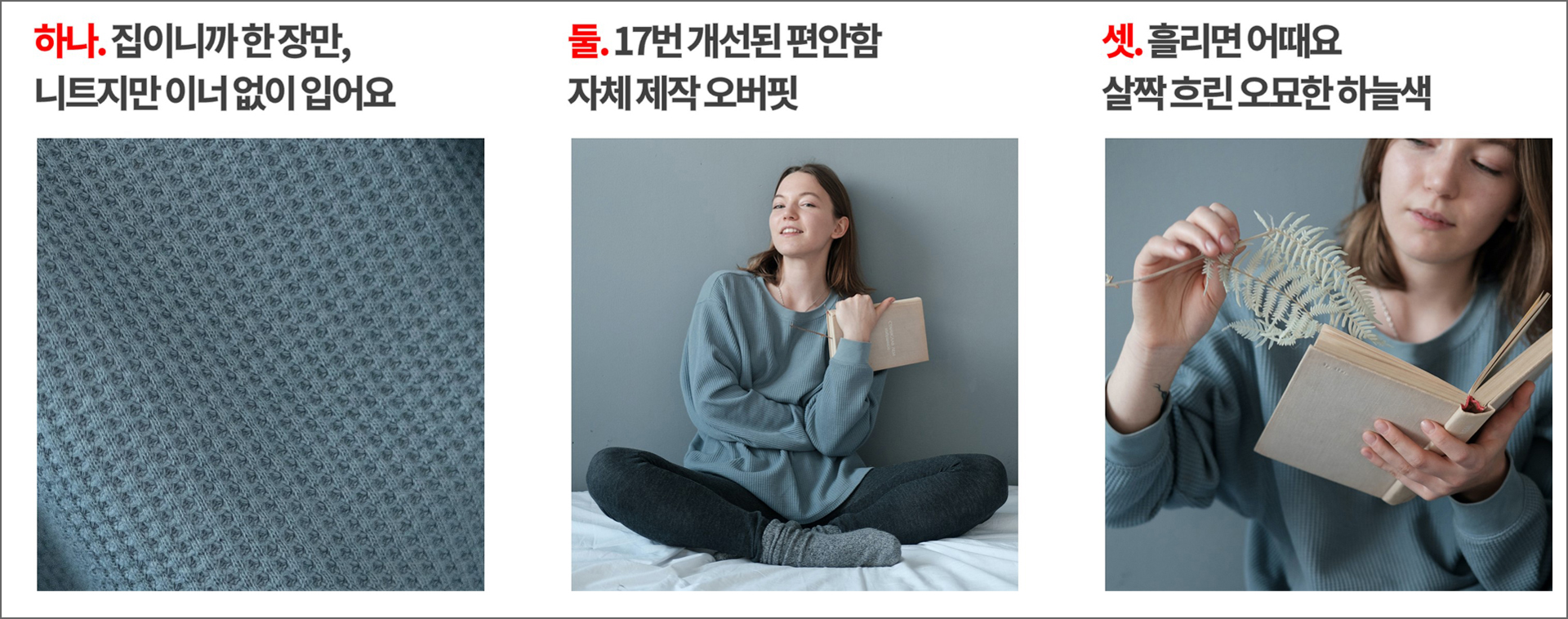
Second, subheadings should serve as a condensed summary of the
in a concise manner.
For example, if we title a subheading “No. 17: Enhanced Comfort, In-House Oversized Fit,” customers will naturally expect a description of the fit. If, instead of a description of the fit, the text then goes on to discuss the sweater’s color, yarn, or fabric quality,
- Rather than thinking, “Oh, this is an unexpected twist,” and reading our product details page more closely,
- they’re far more likely to think, “Wait, what does this even mean?” and click the back button, never to return.
Third, subheadings should be written in the same format as much as possible.
This rule is also useful when designing. If I were to ask you what number comes after “1, 3, 5, 7, 9,” you’d almost certainly answer “11.” That’s because you’ve noticed the pattern of consecutive odd numbers. If a number like “57” or “920” suddenly appeared, you’d be confused—and customers reading the product details page would feel the same way.
If the format or design of the subheadings varies , customers won’t feel a sense of consistency on the product detail page, makingit difficult for them to distinguish betweensubheadings thatconcisely convey the key points and content that provides detailed explanations. Naturally, their understanding will suffer. Furthermore, depending on font size or color, readers may assign different levels of importance to each subheading, leading them to interpret the product in a way that differs from our intended message.
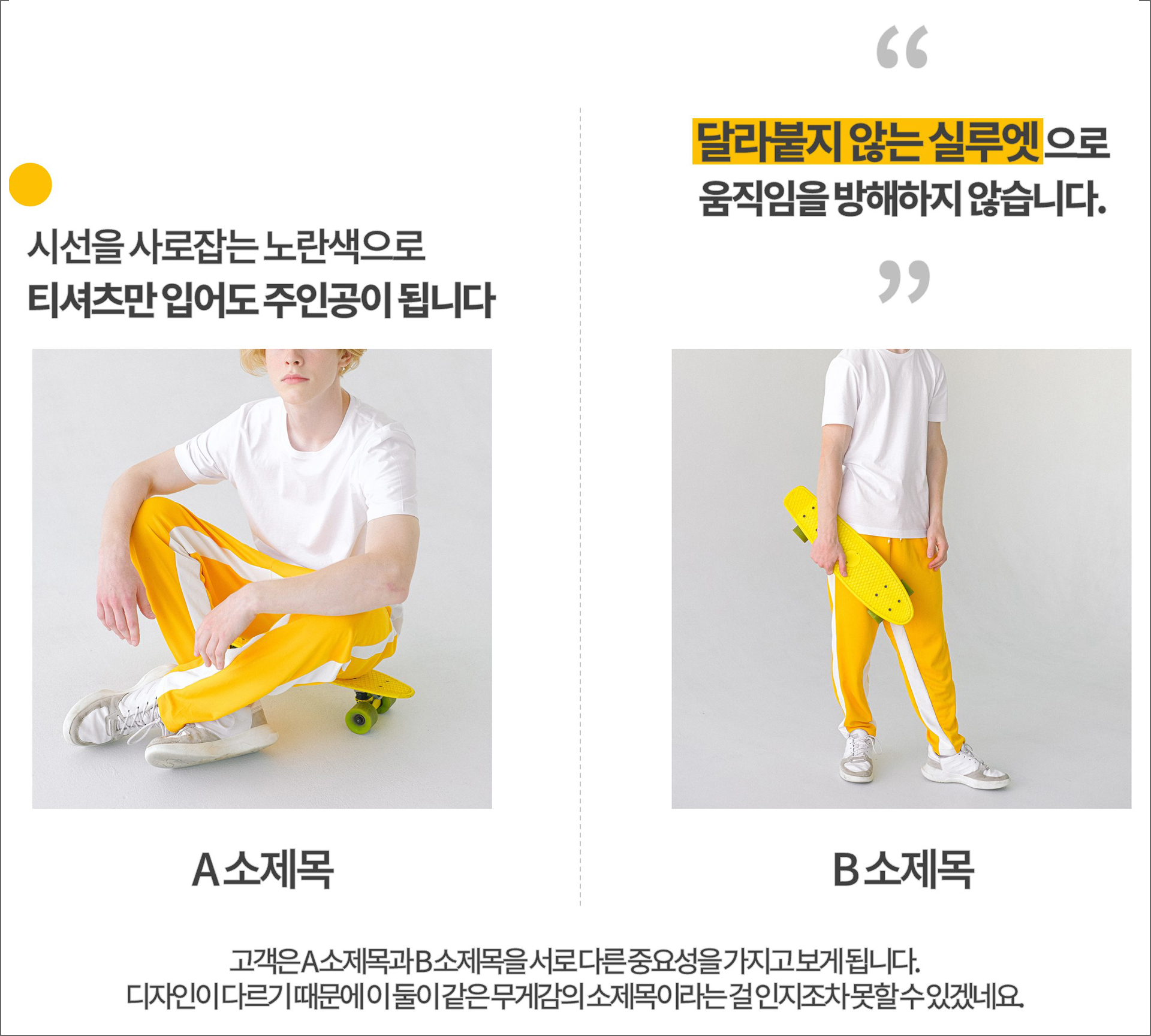
Therefore, it’s best to use the same format and design for subheadings whenever possible. Please remember that when you standardize everything—from font size and weight to accent colors—it increases predictability for customers, allowing them to focus solely on the content of the subheadings.
Rule Three: Both Descriptions and Subheadings
Please use words and a tone that customers are familiar with.
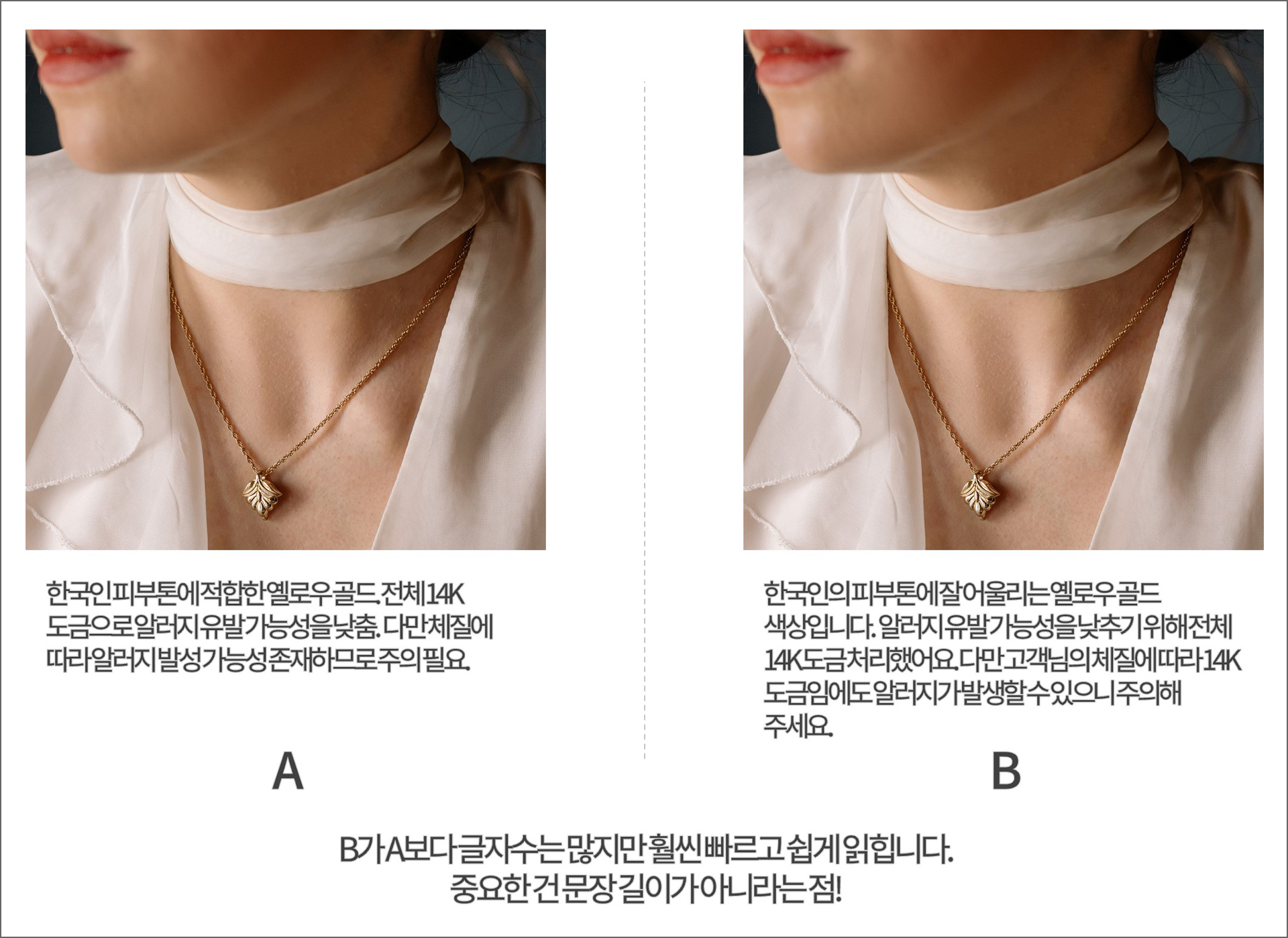
It’s not that customers won’t understand if the product page is written in English, French, or Swahili. Simply straying from the words and tone customers use in their daily lives reduces their comprehension.
For example, customers rarely say, “Rain is expected today. Please bring an umbrella,” instead of “It looks like it’s going to rain today. Don’t forget your umbrella!” It sounds awkward not only to customers but also to us as sellers. This is because in everyday conversation, we rarely end sentences with noun forms like “expected” or “requested” instead of “do” or “do,” and we don’t often express “pack OO” as “carry OO.”
However, it seems particularly common on product detail pages to end sentences with noun forms or to use words and expressions that aren’t colloquial. From a seller’s perspective, this makes sentences shorter and more concise, so they expect customers to grasp the key points. But in reality, customers feel inconvenienced because they have to read through a detail page peppered with words and phrasing they don’t normally use, interpreting each one in terms of expressions they’re familiar with.
There’s no reason for customers to linger on a product page that’s a struggle to read, so we shouldn’t blame them for clicking the “Back” button. Instead of complaining, revising the product page to use everyday, conversational languagewill be far more beneficial for sales.
Try implementing this today.
You’ll see the difference right away.
Glamorous model photos or product photos taken at great expense
do not guarantee sales.
That’s because it’s the text that explains the product features those photos can’t capture.
The same goes for advertising. No matter how hard you run ads to drive traffic to your product detail page, if the page isn’t easy for customers to understand, all that effort will go to waste as visitors simply leave.
Before you assume that you need to spend more money on photos or ads just because your product detail page isn’t generating sales, I recommend revising the text first. You’ll definitely see a difference in sales, even if the product detail page uses the exact same photos and the same advertising budget. Start right now, before you forget the principles I’ve shared. All it takes is a slight tweak to the text—there’s no reason to put it off until tomorrow.
<Content Director’s Column> Series
- [Content Director’s Column #1] Why Product Detail Pages Should Be “Detailed”
- [Content Director’s Column #2] The Order of a Product Detail Page: Let Me Just Set It for You.
- [Content Director Column #3] Step-by-Step Guide to Launching a Product Detail Page
- [Content Director’s Column #4] There’s No Such Target Audience as “Women in Their 20s.”
- [Content Director’s Column #5] Why You Should Write Your Product Detail Page Even Before You’ve Taken Product Photos
- [Content Director Column #6] How to Write a Product Page Summary in 3 Minutes
- [Content Director's Column #7] 3 Ways to Boost Sales by Adding Just One More Line
- [Content Director’s Column #8] How to Instantly Improve Your Product Detail Page Copy by Changing Just a Few Words
- [Content Director Column #9] How to Write Product Descriptions That Let You Charge Fair Prices Amid Price Wars
- [Content Director Column #10] How to Write Ad Copy in 10 Minutes Using ChatGPT
Makers, check out the services you need!
- Learn How to Start a wadiz Project
- Check Out [Maker Events] Open for Registration Now
- Sign Up for [wadiz Funding Courses] Taught by Funding Experts
-
Text/Photos/Editing: Choi Hong-hee
This article is an excerpt from “3 Rules for Writing Product Detail Pages That Boost Sales by Changing Just a Few Words,”originally published on Fashion Post on October 2, 2021.
※ If you share or use any content (text, images, videos, graphics, data, etc.) posted on the wadiz maker center externally, please be sure to cite the source.