[Funding Planner: Week 2, 5-Minute Summary] #1. The Story Opening That Determines the Success or Failure of Your Funding Campaign
This content is
<WADIZ School Funding Planner>
series.
Don't forget to take this with you!
- The wadiz Story (detail page) consists of information on Rewards features, planning and development history, and the maker’s expertise.
- The introduction—or opening—of the Story is a crucial element that determines the success or failure of funding.
- Depending on the characteristics of your Rewards, you should plan either an empathy-driven or an impact-driven opening.
The Funding Planner, previously available only through Wadiz School—here’s a 5-minute summary
Wadiz provides a variety of educational programs to millions of makers through Wadiz School. Among these is a regularly offered three-week course called “Funding Planner.” For makers who understand the basics of funding but find the actual process challenging, we offer three live lectures packed with information to help you refine your project. However, for those who can’t attend the lectures, we’ve prepared the “Maker Tips” series—a 5-minute guide to understanding the key takeaways.
In Part 1 of <WEEK 2>, we’ll explore why a data-driven story opening is so important. You’ll also learn how to plan an opening tailored to your project.
1. The Basic Structure of a wadiz Story
First, how is a wadiz story structured?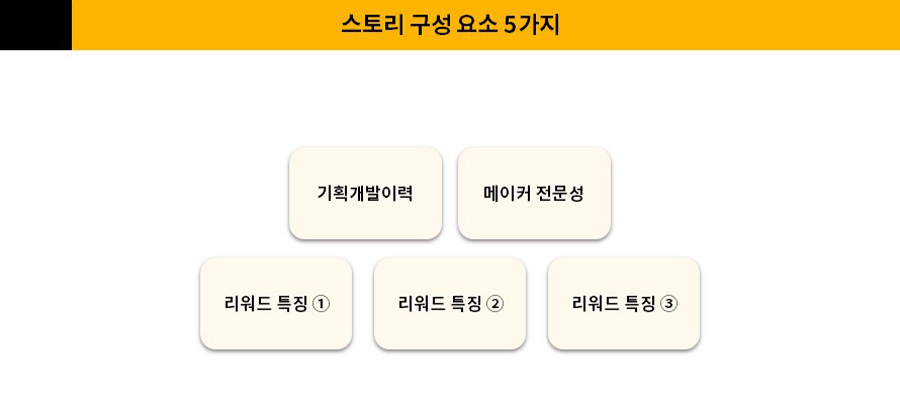
Based on an analysis of projects that successfully concluded within the last six months, wadiz stories typically include 1) Rewards Features, 2) Planning and Development History, and 3) The Maker’s Expertise. 1) “Rewards Features” is, as the name suggests, a section introducing the Rewards. Shall we take a look at the other components?
2) Planning and Development Historyrefers to the story behind the process of creating the product or service. This section reveals the behind-the-scenes story of production, including the inspiration behind the product and the challenges encountered along the way.
3) The Maker’s Expertiserefers to the maker’s background and history, including certificates, qualifications, career, and other activities. Highlighting the maker’s experience related to the Rewards helps build trust in the project.
These are topics you don’t often see on typical e-commerce product detail pages, right? However, on wadiz Story, this content is essential and must be emphasized.
Second, in what order should the Story elements be arranged?
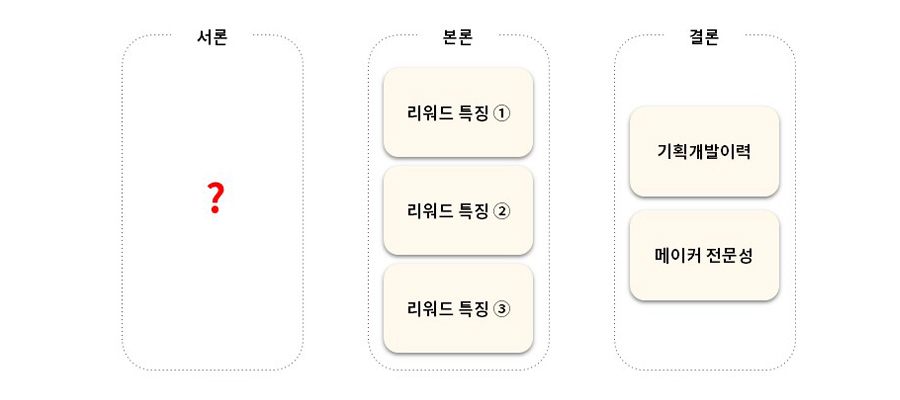
Let’s apply the three essential components to the basic structure of a narrative: introduction, body, and conclusion. First, place the most important Rewards features in the body. Then, support the body with the planning and development history and the maker’s expertise, and wrap up the Story. So, what should the introduction—which opens the Story—contain?
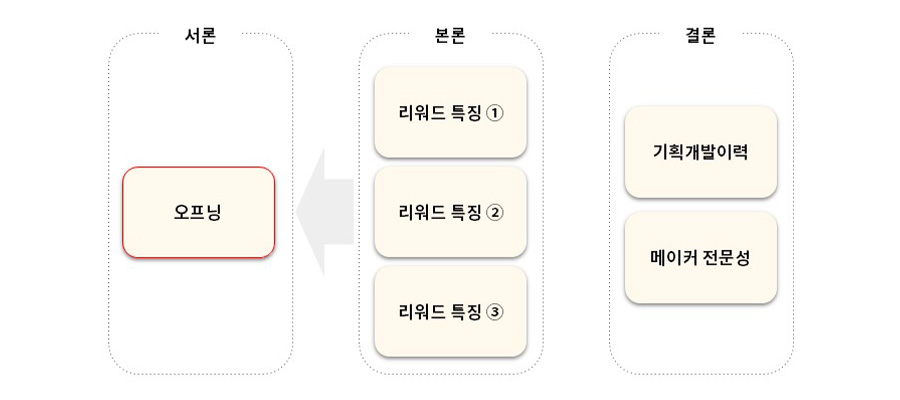 For the introduction, you should plan separate content rather than simply using the three basic components. At wadiz, we call this the “Opening.” Since it’s written based on the maker’s Rewards features, the opening can vary for each project.
2. The Importance of the Opening
First, why do you need to plan separate content for the Opening?
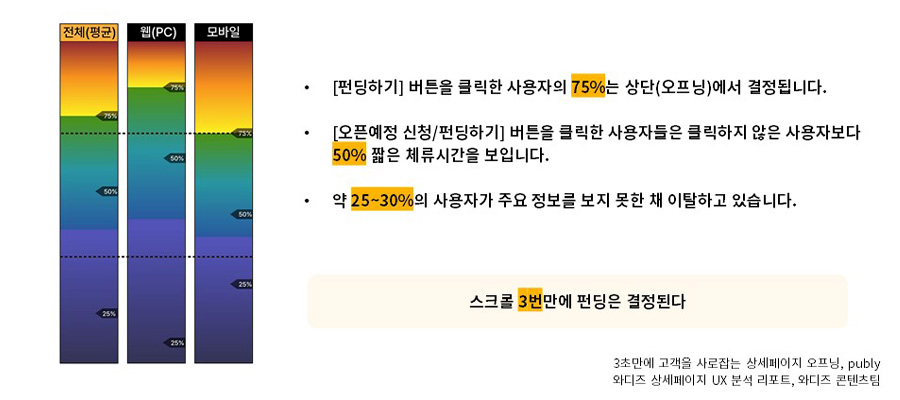
The reason is the Opening is a critical element that can determine the success or failure of your funding campaign. According to wadiz’s internal data, supporters decide whether to provide funding for a campaign within the first three scrolls.
75% of users who clicked the [Fund This Project] button made their decision at the top—that is, in the opening section. If the opening is not used effectively, there is a high likelihood that potential customers will leave without seeing key information.
To ensure that supporters who visit your project keep scrolling and reading without stopping, you need to design an opening that highlights the key features of your Rewards.
Second, how do I plan an opening that suits my project?

First, use the guide provided in Part 5to define the key features of your Rewards. If you can narrow it down to a single positive aspect of the Rewards,, present an inconvenient situation that supporters can relate to and use the concept of “empathy-based opening”, which presents a frustrating situation that supporters can relate to and shows how your product solves it.
If there are two or more positive points, use the “Impact-Type Opening”, which concisely and clearly lists the product’s features. If you try to present a relatable scenario for each feature, you won’t be able to convey the key information within the first three scrolls. We recommend starting by emphasizing multiple positive points in a concise, fast-paced manner.
|
In the next episode, we’ll look at representative examples of both the “Empathy-Driven” and “Impact-Driven” approaches and share more detailed writing tips.
<WADIZ School Funding Planner> Series
Week 2
- The Story Opening That Determines the Success or Failure of Funding
Week 1
- Documents to Submit During the Review Stage
- How to Set Your Funding Goal
- How to Reach Your Target Amount
- How to identify Rewards features that resonate with supporters
Wondering if a new Funding Planner School will be starting soon?
Check it out at wadiz School
Written by Han Ji-hye; Planned and Taught by Joo Hee-jae; Edited by Ryu So-mi