[Funding Planner Week 2: 5-Minute Summary] #2. How to Write a Story Opening: Lessons from Representative Examples
This content is
Episode 7 of the <WADIZ School Funding Planner>
series.
Don't forget to take this with you!
- An empathetic opening is a method that presents a specific situation to help people empathize with the need for Rewards.
- An “impact-driven” opening is a method that helps people easily remember the Rewards when there are many features to highlight.
- For intangible Rewards, craft your opening to highlight the maker’s expertise.
The Funding Planner, previously available only through Wadiz School—here’s a 5-minute summary
Wadiz provides a variety of educational programs to millions of makers through Wadiz School. Among these is a regularly offered three-week course called “Funding Planner.” For makers who understand the basics of funding but find the actual process challenging, we offer three live lectures packed with information to help you refine your project. However, for those who can’t attend the lectures, we’ve prepared the “Maker Tips” series—a 5-minute guide to help you grasp the key takeaways.
In Part 2 of <WEEK 2>, we’ll introduce representative examples of “empathy-driven” and “impact-driven” openings. If you’ve been struggling with how to start your Story, you’ll learn writing techniques you can apply right away.
1. Writing Your Own Story Opening
First, let’s review the two methods for story openings. Think about whether your Maker Reward has one positive point or several, and explore the Story opening strategies that best suit your situation.
|
Positive Aspects of Rewards
|
Opening Strategy
|
Concept
|
|
When You Have Only One
|
Empathetic Opening
|
A concept where an uncomfortable situation that supporters can relate to is presented, and then resolved through my Rewards |
|
When there are multiple options
|
Impact-Driven Opening
|
A concept that concisely and clearly lists the Rewards’ features
|
First, how do you write an empathetic opening?
 Let me share a representative example. Last year-end, the funding amount was over 11 million dollars. Christmas Tree Project, which raised a substantial 1.1 billion won in funding at the end of last year. Since it had a single positive point, the creators used.
First, the positive aspect of this Christmas tree was “high quality”. The reason it stood out was its greater number of branches and fuller appearance compared to other products, as well as its overwhelming number of lights and ornaments that created a sparkling effect. So, how was the opening written?
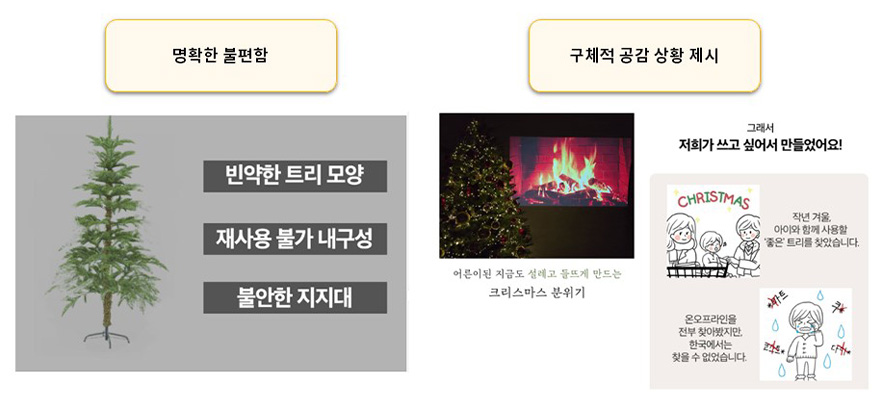 First, to elicit empathy from supporters, by highlighting the inconveniences of existing products. It reminded them of the frustrations associated with flimsy trees—ones that don’t hold their shape, are too fragile to reuse, and shed needles constantly, making cleanup a hassle.
They then emphasized the exciting Christmas atmosphere, leading into the narrative that they began developing the product to create a tree that would satisfy everyone.
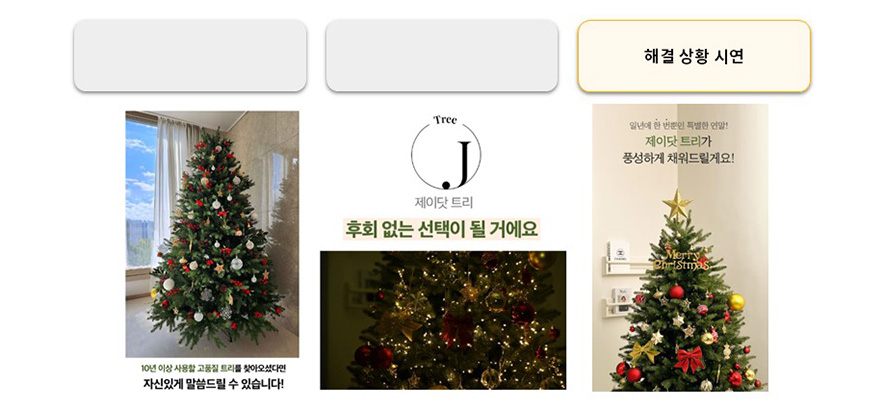
After that, we concluded by showcasing a high-quality tree from a maker that addressed the previously mentioned issues. It was an “empathy-driven opening” that linked a situation supporters could relate to with the need for Rewards.
By presenting a continuous narrative, this approach keeps readers scrolling without stopping until they reach the main body of the text. First, think about what situations the maker’s Rewards might resonate with supporters.
Second, how do you write an “impact-style opening”?
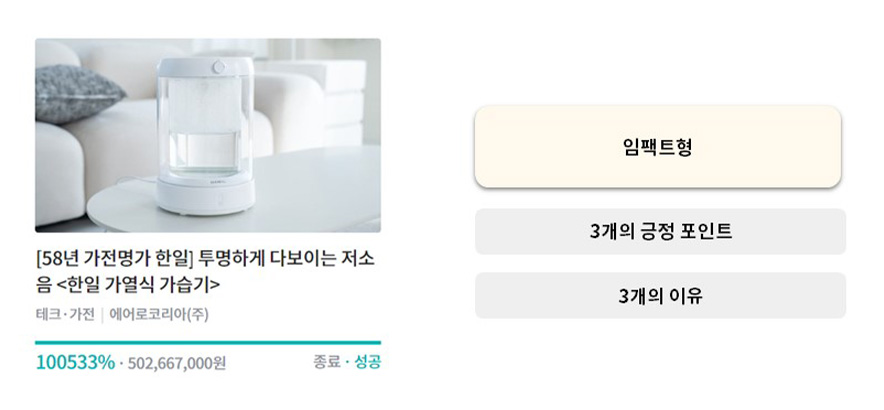
An “impact-driven opening”works wellwhen there are two or more positive points about the product. A prime example is the funding of about 5 million euros. heated humidifier project, which raised approximately 500 million won. This product had three key selling points: safety, efficiency, and design.
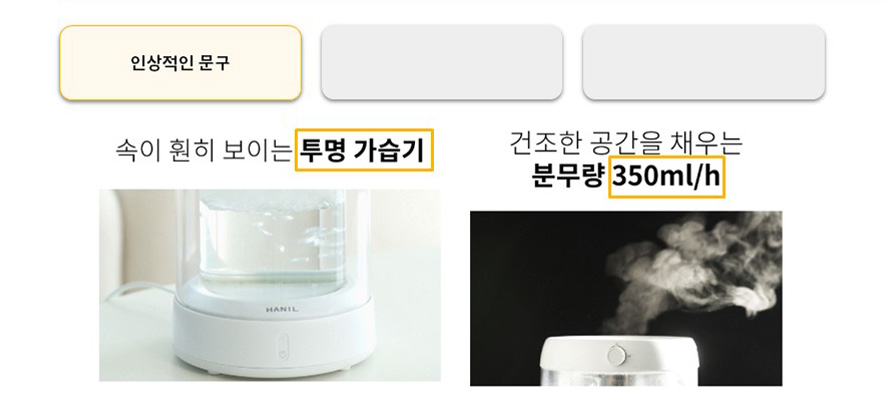
As shown in the photo above, the maker actively used the product’s nickname, “Transparent Humidifier,” right from the opening. They also presented features in a compelling way using specific numbers, such as “350 ml/h mist output.” They began the Story by expressing the product’s features through “impactful phrases.”
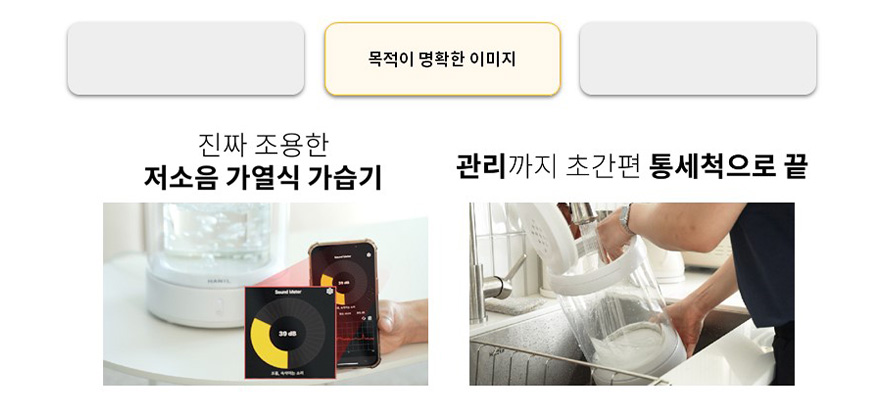 After that, they used images with a clear purpose so that the meaning could be quickly grasped just by looking at the photos. By repeating these memorable phrases and intuitive images in short bursts,allowed supporters to easily and permanently remember numerous positive points. This was an “impact-driven opening” well-suited for situations where there’s a lot to convey within a limited word count.
Wadiz’s TipAs with e-book or class funding campaigns, , try writing your opening to highlight your expertise as a maker. It’s important to build trust by highlighting the maker’s background and experience related to the Rewards right from the start. Take a look at maker Oh Eun-hwan’s “Content Creation Class Funding' by creator Oh Eun-hwan, who structured his opening around these metrics. |
<WADIZ School Funding Planner> Series
Week 2
- Funding Story Openings That Determine the Success or Failure of a Campaign
- How to Write a Story-Based Opening: Key Examples
Week 1
- Documents to Submit During the Review Stage
- How to Set Your Funding Goal
- How to Reach Your Target Amount
- How to Identify Features of Rewards That Resonate with Supporters
Curious about when the next Funding Planner School will start?
Check it out at wadiz School
Written and Edited by Han Ji-hye; Planned and Taught by Ju Hee-jae
-
※ If you share or use any content (text, images, videos, graphics, data, etc.) posted on the wadiz maker center externally, please be sure to cite the source.