[Funding Planner: Week 2, 5-Minute Summary] #3. How to Plan the Main Body of a Story That Persuades Supporters
This content is
Episode 8 of the <WADIZ School Funding Planner>
series.
Don't forget to take this with you!
- The main body of a wadiz story is where you explain the features of the Rewards (products/services) to persuade supporters.
- Plan your content in the order of main heading – subheading – visual – description, tailored to the Rewards’ features.
- We recommend including at least 15 visual elements per Story.
The Funding Planner, previously available only through Wadiz School—here’s a 5-minute summary
Wadiz provides a variety of educational programs to millions of makers through Wadiz School. Among these is a regularly offered three-week course called “Funding Planner.” For makers who understand the basics of funding but find the actual process challenging, we offer three live lectures packed with information to help you refine your project. However, for those who can’t attend the lectures, we’ve prepared the “Maker Tips” series—a 5-minute guide to help you grasp the key takeaways.
In Part 3 of <WEEK 2>, we’ll show you how to plan the main body of your Story. This will help you effectively convey the unique features of your Rewards.
1. Planning the Main Body of Your Story
First, how is the main body of the Story structured?
In Part 2 of Week 2, if you’ve written a story opening (introduction) that matches the features of Rewards, it’s now time to prepare the main body. The main body of the Story is a crucial section for convincing supporters of your Rewards. In particular, if your Rewards have two or more features, you’ll need a well-structured plan to convey them effectively.
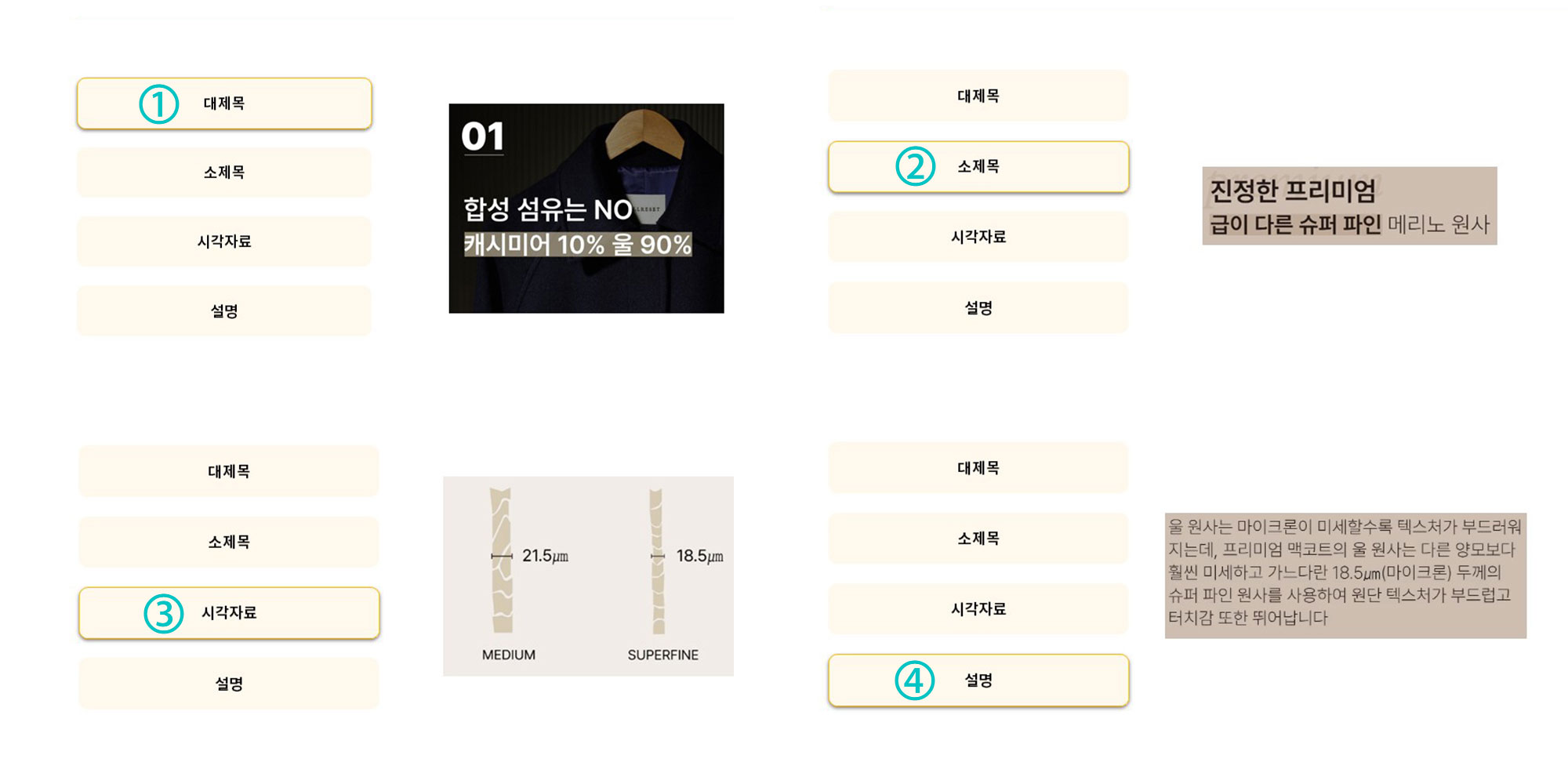
To achieve this, the main body of the story should be structured in the following order: (1) Main heading – (2) Subheading – (3) Visuals – (4) Explanation. First, use the Cashmere McCourt case study below to get a feel for what content should go in each section .
|
Second, I’d like to apply these four components to my own project.
Once you’ve got a feel for these four components, I’ll walk you through the process—from copy planning to final drafting—using the premium cast-iron pot project as an example. This case study focuses on a single key feature of the cast-iron pot—“rust-resistant”—and uses it to structure the main body. Follow the flow carefully, from the main headline to the detailed description.
(1) Main Headline: Copy that encapsulates the Rewards’ key feature
First, use the “Guide Sentence for Identifying Rewards”to determine the features of your product or service. Then, condense this into a single sentence to create the main headline. For the cast-iron pot, the Rewards feature was captured in the concise phrase “rust-proof pot.”

(2) Subheading: Text supporting the main heading
In the subheading, provide the rationale for the rewards feature expressed in the main heading. For the cast-iron pot with its rust-resistant feature, “316 stainless steel” was presented as the high-quality material supporting this claim.

(3) Visuals: Materials that visualize the evidence provided in the subheading
(4) Explanation: A detailed explanation of the visual material
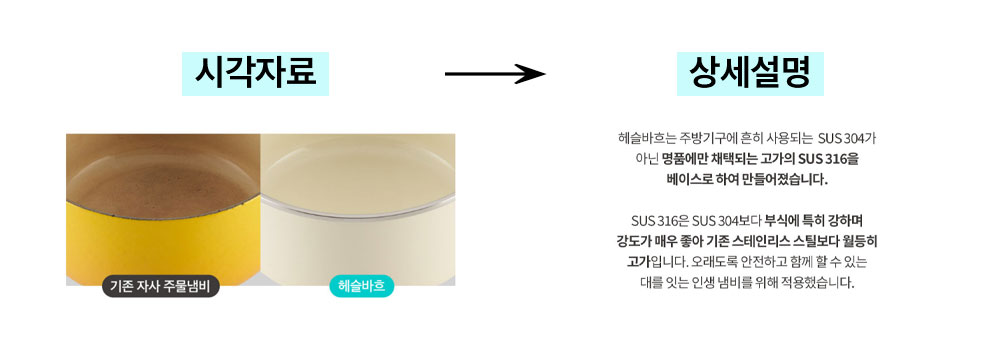
We used visual materials to demonstrate the difference between a cast-iron pot made with “Stainless Steel 316” and a standard pot that isn’t, and concluded by adding a detailed explanation of this material.
To summarize, the main body of the Story the process of clearly explaining the Rewards features you want to highlight to supporters and presenting the evidence supporting your claims. It is through this process that you persuade your supporters. If necessary, repeat the four components above as many times as needed to complete the main body of the Story.
2. Adding Visuals
First, how many visual aids should you prepare?
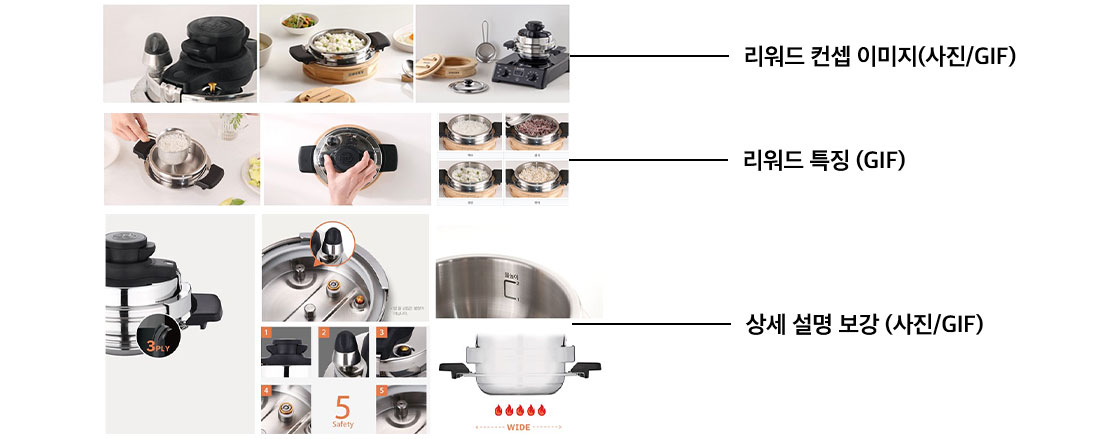
Based on an analysis of numerous successful projects, we recommend including at least 15 visual assets per Story.. Please prepare a total of at least 15 visual assets: 3 concept images showing the Rewards, 3 GIFs that clearly illustrate the Rewards’ features at a glance, and 9 images to supplement the detailed descriptions.
Wadiz’s TipIf you have more to say about your Rewards features, feel free to prepare more than 15 slides. This is because, in a wadiz Story, “what story you want to tell through which images” is more important than the sheer number of photos. |
Second, are design elements required?
No, they are not mandatory. It is not visually appealing design elements, but a solid plan that determines the success or failure of funding. Well-planned stories have a smooth flow, with necessary images placed exactly where they’re needed. This is why supporters perceive such well-planned stories as “attractive.” An engaging story opening and a well-structured main body must come first.
<WADIZ School Funding Planner> Series
Week 2
- The Story Opening That Determines the Success or Failure of Your Funding Campaign
- How to Write a Story Opening: Lessons from Representative Examples
- How to Plan the Main Body of Your Story to Persuade Supporters
Week 1
- Documents to Submit During the Review Process
- How to Set a Target Amount
- How to Reach Your Target Amount
- How to Identify Features of Rewards That Resonate with Supporters
Wondering if a new Funding Planner School will be starting soon?
Check it out at wadiz School
Written and Edited by Han Ji-hye; Planned and Taught by Ju Hee-jae
-
※ If you share or use any content (text, images, videos, graphics, data, etc.) posted on the wadiz maker center externally, please be sure to cite the source.