[Funding Planner: Week 2, 5-Minute Summary] #4. How to Set Advertising Budgets for Promotion and Marketing
This content is
<WADIZ School Funding Planner>
series.
Don't forget to take this with you!
- Promotion and marketing provide an opportunity to introduce your project to a wider audience.
- Allocate 10–30% of the project’s target funding goal toward advertising and marketing expenses.
- Allocate the advertising budget across three phases: the period before the project launches (6–70%), the main project period (3–40%), and events (+a).
The Funding Planner, previously available only through Wadiz School—here’s a 5-minute summary
Wadiz provides a variety of educational programs to millions of makers through Wadiz School. Among these is a regularly offered three-week course called “Funding Planner.” For makers who understand the basics of funding but find the actual process challenging, we offer three live lectures packed with information to help you refine your project. However, for those who can’t attend the lectures, we’ve prepared the “Maker Tips” series—a 5-minute guide to the key takeaways.
In Part 4 of <Week 2>, we’ll cover how to set your advertising budget. Learn the priorities you should consider to use your marketing budget efficiently.
1. The Importance of Funding Promotion and Marketing
First, is promotion and marketing essential?
It’s not mandatory. You can decide whether to proceed based on your own judgment. On wadiz, if your project features a product or service that resonates with supporters and is backed by a compelling Story, it can attract attention even without advertising.
So why invest in advertising? It’s precisely to it helps give projects with excellent planning a boost. Let’s look at a prime example: a Korean and World History Timeline projectwith Rewards priced around 10,000 won each.
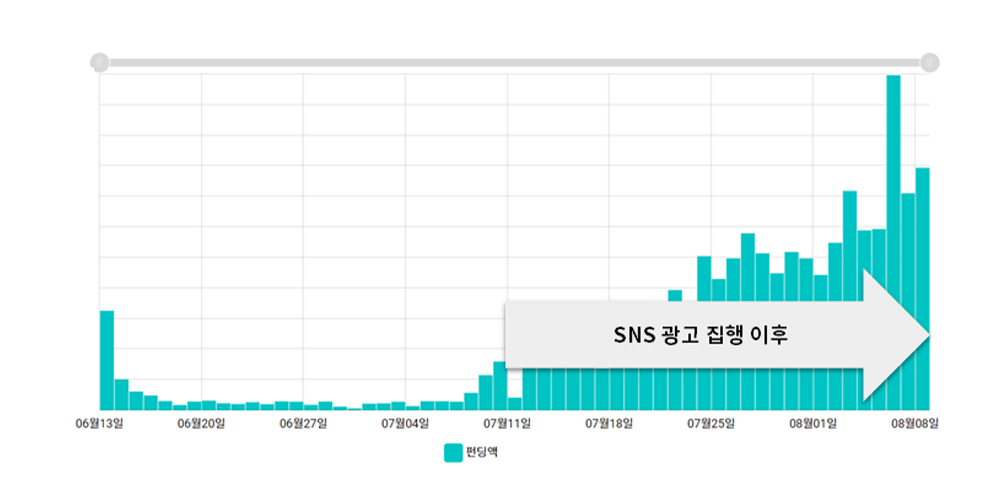
Looking at the daily funding trend, you can see a point where funding skyrocketed. What caused this change? It was the launch of social media ads.
We promoted the project through social media ads targeting students preparing for exams and their parents. Starting with a strong impact right from the launch, the funding trend surged twofold, threefold, and even N-fold thanks to the social media ads. Ultimately, the project was successfully concluded, raising approximately 130 million won. This was a case where the effectiveness of promotion and marketing led to funding amounts that exceeded expectations.
As shown here, promotion and marketing can provide an opportunity for your project to reacha wider audience. While not mandatory, I highly recommend considering it if you want to give your project’s performance a boost.
2. How to Set Your Advertising Budget for Promotion and Marketing
First, how do you set your advertising budget?
It’s important to allocate and manage your budget efficiently for promotion and marketing. Let’s take a look, step by step, at the 5-step process wadiz uses to set advertising budgets.
This installment covers the process up to STEP 3, which helps you calculate your advertising budget relative to your target revenue. Please check out the next installment for Steps 4 and 5.
| 5 Steps to Setting Your Advertising Budget |
|---|
| STEP 1. Set a business-oriented funding goal. |
| STEP 2. Verify that the target amount is appropriate relative to the average order value. |
| STEP 3. Calculate your advertising budget based on your business revenue goal. |
| STEP 4. Identify available advertising products within your budget. |
| STEP 5. Estimate the expected funding amount based on the advertising products. |
Second, how much should you spend on advertising?
To manage your advertising budget efficiently, you’ll need to set a budget first. In funding, you allocate a portion of your target funding amount toward advertising costs. (STEP 1) The target amount should be a “business target amount” that includes production costs, marketing expenses, and net profit—not the “Studio Target Amount” set in Maker Studio.
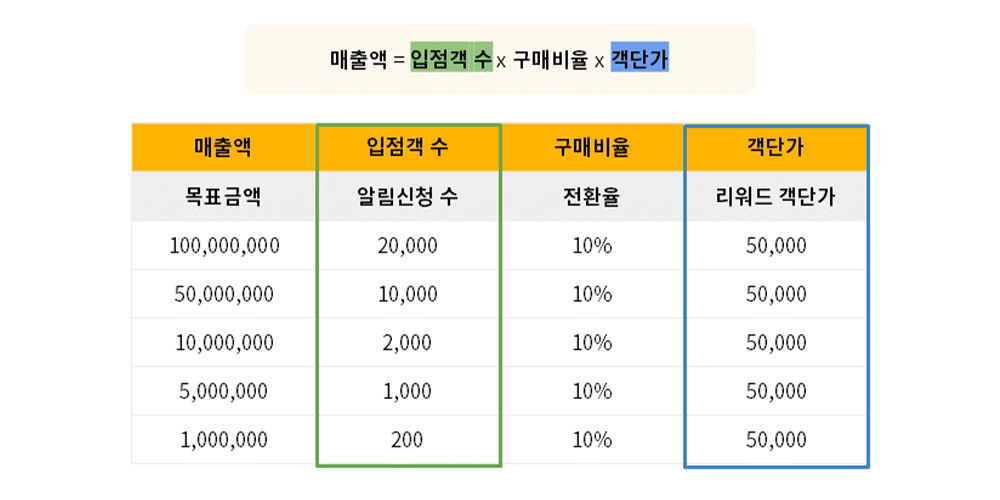 Example based on a 10% conversion rate and an average order value of 50,000 won
Use the calculation guide providedin Part 3 of <Week 1>to determine your business target amount.
- Business Target Amount = Number of Notification Subscribers × Conversion Rate × Average Rewards Value
By plugging the average order value of the product or service you’re preparing and wadiz’s average conversion rate of 10% into the guide, you can plan how many notification subscribers you need to gather based on your target amount. This number of notification subscribers is the pool of potential customers you can reach through advertising. Naturally, the higher your target amount, the more you’ll need to spend on advertising to attract a larger number of notification subscribers. Rewards Check whether your target amount and the number of notification subscribers are within a feasible range relative to the average order value. (STEP 2)
wadiz’s tipPeople who receive notifications when a maker’s funding campaign launches—that is, those who have subscribed to notifications—are meaningful potential customers with a high probability of actually backing the funding campaign. In other words, it’s no exaggeration to say that early funding performance depends on the number of subscribers. That’s why it’s important to invest in advertising to secure this audience. |
Third, I want to use my advertising budget efficiently.
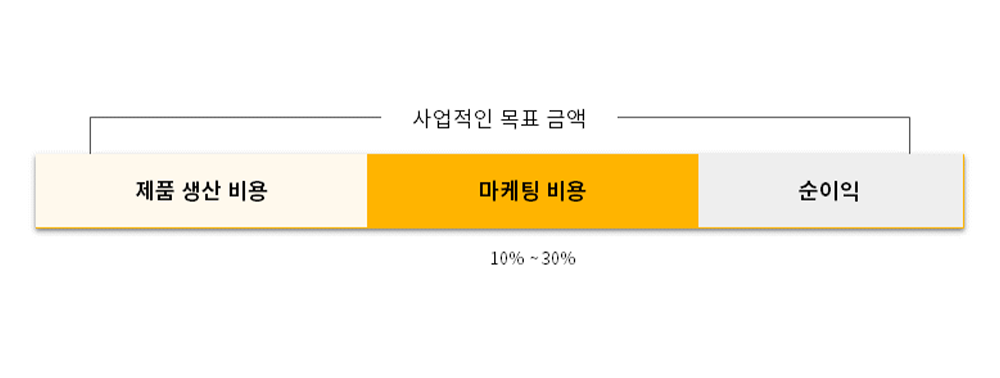 Once you’ve set your business target amount, it’s time to calculate your advertising budget. (STEP 3) At wadiz, we recommend allocating 10–30% of your business target amount to promotion and marketing.
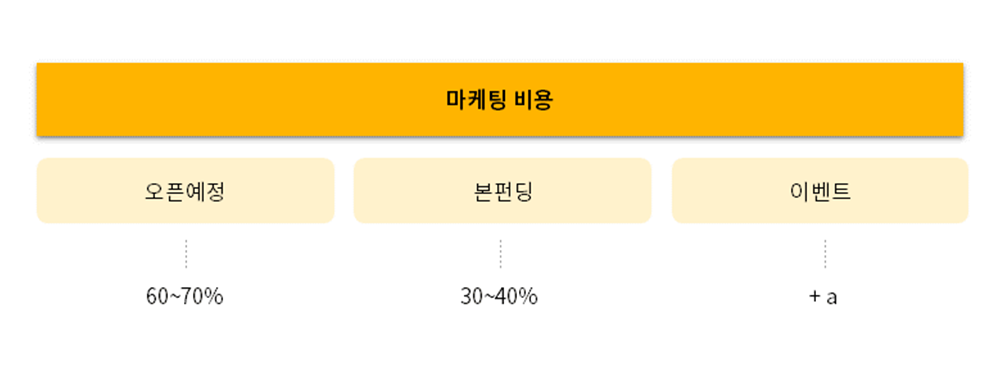
To use this amount more efficiently, please allocate your budget across the following three stages. From your total marketing budget,
- Allocate 6–70% to the period of launching soon
- 3–40% during the main project period
- We recommend allocating +a to events.
The reason for allocating more advertising budget to the period before launching soon than to the main campaign period is to attract the number of notification subscribers who will become your potential customers, as mentioned earlier. You can experiment with various advertising products and creatives during the period before launching soon, then select the most effective ones to run a well-structured campaign during the main campaign period.
Stay tuned for the next installment, where we’ll discuss the recommended ad products and creatives for each period.
<WADIZ School Funding Planner> Series
Week 2
- The Story Opening That Determines the Success of Your Funding Campaign
- How to Write a Story Opening: Lessons from Leading Examples
- How to Plan the Main Body of Your Story to Persuade Supporters
- How to Set Advertising Budgets for Promotion and Marketing
Week 1
- Documents to Submit During the Review Stage
- How to Set Your Funding Goal
- How to Achieve Your Target Fundraising Goal
- How to Identify Features of Rewards That Resonate with Supporters
Wondering if a new Funding Planner School will be starting soon?
Check it out at wadiz School
Written and Edited by Han Ji-hye; Planned and Taught by Ju Hee-jae